
Wuthering Heights Movie Review
Baffling choices and shallow performances make this adaptation one of the worst.

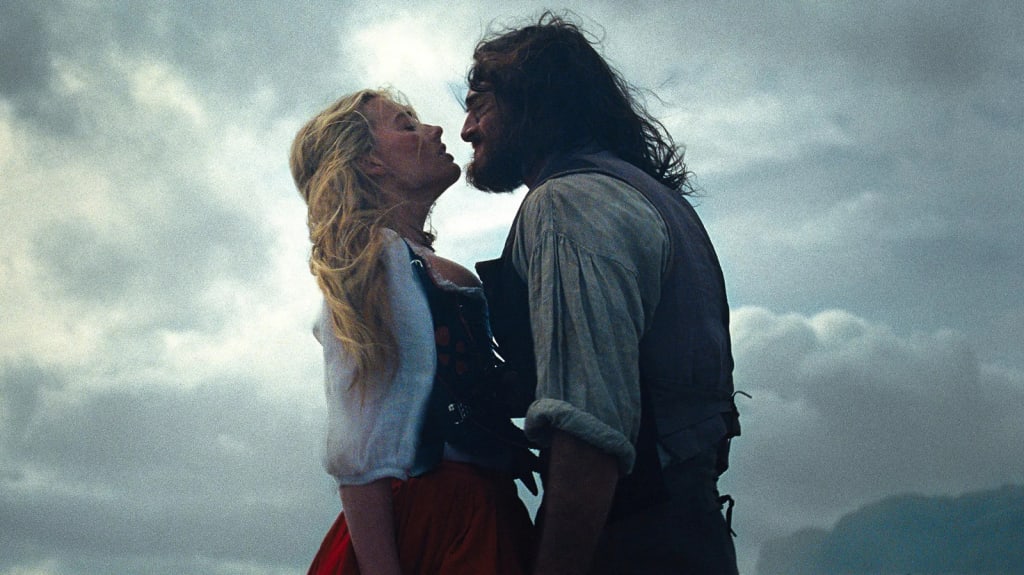
Over a century after its release, Emily Bronte’s Wuthering Heights remains a classic of English literature; it has been adapted many times on the big screen, reaching across many cultures and filmmaking styles. The latest attempt goes for a modern approach and style, but it’s a rotten production from top to bottom.
The story follows two wealthy families living in the West Yorkshire moors and the 2026 film takes one section of the novel, the forbidden love affair between Catherine Earnshaw (Margot Robbie) and a wayward Heathcliff (Jacob Elordi), and turns it into a romantic drama. Nelly (Hong Chau), the book’s narrator, is moved to a side role and we start with the two main characters as children. Over time, Cathy is married off to the neighbouring Edgar Linton (Shazad Latif), but yearns for the roguish Heathcliff who soon becomes the master of the titular estate. Wuthering Heights makes its intentions clear from the offset; it’s very different from previous adaptations, aiming to elevate an angst-fuelled relationship. In both concept and execution it fails; the film is mostly based in conversation, with most of the scenes subjected to some tedious pacing. On top of that, the film has no real heart of soul; Cathy and Heathcliff profess their feelings many times, but this never translates through the screen. Rather than engrossing the audience, their relationship feels utterly senseless at many points, especially when Cathy is pregnant with Edgar’s baby. The source material had much deeper themes and an oppressive atmosphere that didn’t shy away from the damaging flaws of both families. Aside from the more sensual elements, this film doesn’t bother to weave them in.
The cast of Wuthering Heights is quite small, but no one is very memorable or engaging. For starters, the casting of Margot Robbie and Jacob Elordi was a big mistake; both actors have done good work, but they’re far too old for their roles. Jacob’s delivery is rather flat throughout, even with the change in appearance and Margot suffers a similar problem to Once Upon A Time In Hollywood; there’s too much time dedicated to making her look pretty and not enough for developing her character. The other cast members don’t fare much better; Edgar Linton is too shallow and often oblivious to Cathy’s activities and Isabella Linton (Alison Oliver) has some really distracting comic relief and a very questionable scene after Heathcliff marries her out of spite.
Wuthering Heights is typically a period piece, but the 2026 film has made some very strange choices with its presentation and style. Some of the sweeping shots of the moors look good and on occasion, a deep colour is used as an effective backdrop. Outside of this, the film’s lighting is intrusive and overexposed; so much of the production feels too bright, a poor conversion of the book’s grim tone. The worst decision of all was using modern pop music in several scenes, most notably when Cathy moves into the Linton household; between disruptive montages and tracks that fail to enhance the drama, it’s far too artsy. Ultimately, so much of the film’s look feels jarring, and the few moments that do work are buried under a mound of rubbish.
The overblown, baffling and convoluted Wuthering Heights is one of the worst adaptations in years; sitting well below all of its predecessors. Aside from occasionally pretty shots and a good dose of atmospheric mist, this production is a chore to sit through. The attempted romance is extremely shallow, the creative choices don’t fit in the slightest and I was completely disconnected by the halfway mark. Don’t waste your time on this flick.
Rating: 1.5/5 Stars (Bad)
About the Creator
Robert Cain
I'm a well-travelled blogger and writer from the UK who is looking to spread his blogs and freelance writings further afield. You can find more of my work at https://robc25.wixsite.com/thecainagecritique.
Keep reading
More stories from Robert Cain and writers in Geeks and other communities.
Fallout Series Review (Season 2)
After so many underwhelming video game adaptations, Fallout showed everyone how was it done with a knockout opening season in 2024. The second chapter takes a firmer grip on the source material, directly incorporating the lore into the main narrative. For the most part, it’s every bit as effective and engaging as the original.
By Robert Cain12 days ago in Geeks
Nancy Guthrie: Is a miracle still possible after close to two weeks?
Close to two weeks since Nancy Guthrie's abduction As of February 12, 2026, Nancy Guthrie remains classified as missing for 12 days, but there is no official confirmation that she is deceased. Blood matching Guthrie’s DNA was found on her front porch, indicating she likely suffered an injury during the abduction.
By Cheryl E Preston4 days ago in Geeks
How Demand Forecasters Integrate ERP & Planning Tools (2026)
The Messy Reality of Spreadsheet Hell Reckon we have all been there. You are staring at a massive Excel sheet that’s fixin’ to crash your laptop while trying to guess how many units you will sell next Tuesday. It is a nightmare, plain and simple.
By Samantha Blakeabout 2 hours ago in Geeks



Comments
There are no comments for this story
Be the first to respond and start the conversation.