

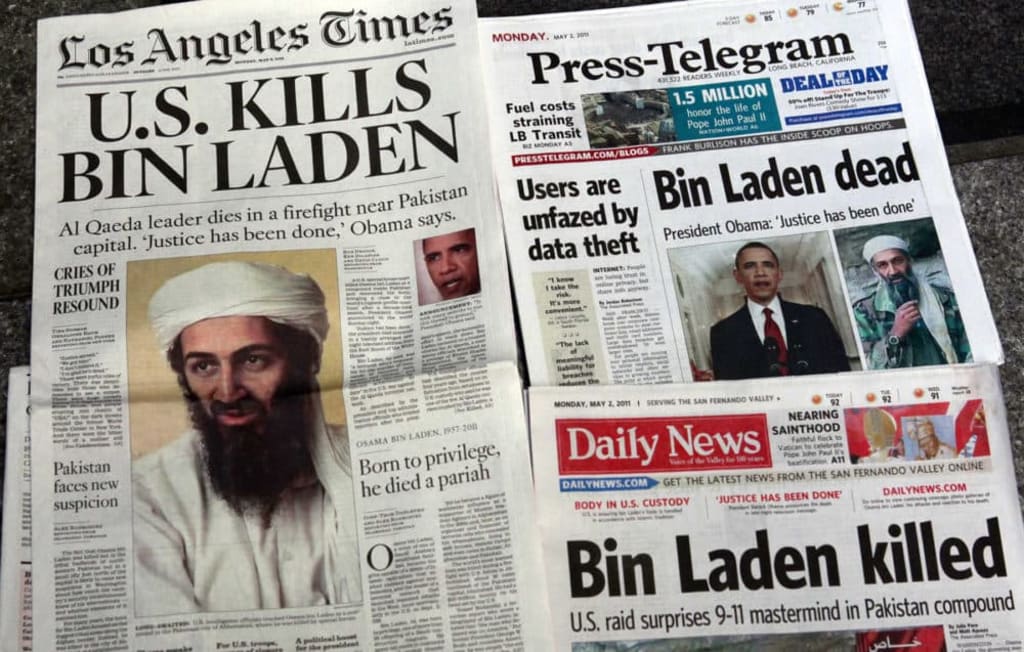
9/11
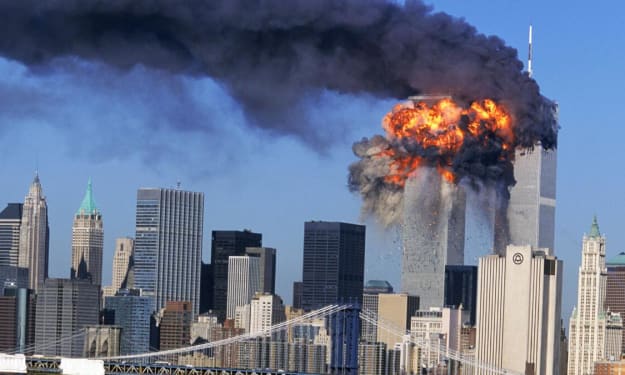
It was the morning of September 11, 2001 when a horrific terrorist attack shook the world. Nineteen Al-Qaeda terrorists hijacked four American passenger planes crashing two into the Twin Towers of the World Trade Center in New York one into the Pentagon and the fourth into a field in Pennsylvania after passengers resisted the hijackers. Nearly 3,000 people were killed in these attacks leading to long term economic and political consequences for the United States and the world. The U.S. government immediately held Al-Qaeda responsible for the attacks and made capturing or killing its leader Osama bin Laden a top priority. This led to the invasion of Afghanistan where the Taliban government had granted Osama bin Laden refuge. Although the U.S military successfully ousted the Taliban from power bin Laden managed to escape and disappeared. Initially intelligence agencies believed he was hiding in the Tora Bora mountains where he and his associates had taken shelter. However he somehow evaded capture and relocated to an unknown location.
The CIA and other U.S intelligence agencies launched an extensive search using advanced surveillance technology spies and informants in Afghanistan and Pakistan. It soon became clear that bin Laden was not living a normal life but was instead hiding in extreme secrecy limiting his movements to avoid detection. Over the years intelligence officers gathered information through various sources including drones satellite surveillance local informants and interrogations of Al-Qaeda operatives detained at Guantanamo Bay. The biggest breakthrough came when the CIA tracked an Al-Qaeda courier named Abu Ahmed al-Kuwaiti. Several captured Al-Qaeda members had revealed during interrogations that al-Kuwaiti was a trusted courier for bin Laden and played a crucial role in delivering his messages. In 2010, U.S intelligence successfully tracked him to Pakistan and began monitoring his movements. They noticed that he frequently visited a highly secured compound in Abbottabad a city not far from Pakistan’s capital Islamabad.
When the CIA conducted surveillance on this compound they noticed that the people living there exhibited unusual behavior. Unlike ordinary households the compound had no internet or telephone connections. It was surrounded by high walls topped with barbed wire and the residents rarely interacted with the outside world. Most notably they burned their trash instead of disposing of it normally possibly to prevent forensic analysis. For several months the CIA closely monitored the compound trying to determine who lived there. Through drone footage ground intelligence and human surveillance analysts observed that one individual in particular never left the compound and seemed to be living under heavy security. This raised suspicions that the person could be Osama bin Laden. By April 2011 the CIA was confident enough to brief U.S President Barack Obama about the possibility of bin Laden’s presence in the Abbottabad compound. Intelligence officials estimated that there was a 60 to 80% chance that the target was indeed bin Laden. Given past intelligence failures the Obama administration carefully evaluated all aspects of the mission before approving an operation. Eventually it was decided that the mission would be carried out by the U.S Navy SEALs’ elite SEAL Team 6.
On the night of May 1, 2011 two Black Hawk helicopters carrying U.S special forces took off from an American base in Afghanistan and secretly entered Pakistani airspace. The operation was executed without informing the Pakistani government as the U.S. feared that prior notification could compromise the mission. When the SEAL team arrived at the compound Al-Qaeda guards opened fire. In response the U.S soldiers launched an assault eliminating all hostiles inside. After searching the compound they found a tall man in a room who appeared to be resisting. SEAL Team 6 shot him later confirming that he was indeed Osama bin Laden. Once the mission was complete the U.S forces swiftly extracted bin Laden’s body to ensure there was no doubt about his death. His body was later buried at sea in the Arabian Sea to prevent any grave from becoming a shrine. Several of bin Laden’s close associates including his son and some guards were also killed in the raid. During the operation the U.S intelligence team recovered crucial items from the compound including computers USB drives documents and classified Al-Qaeda plans. Some of these materials contained details about potential future attacks which were later decoded by U.S intelligence agencies. Additionally videos and books found at the site indicated that bin Laden kept up with world events by watching pre recorded broadcasts and reading various Islamic and military related texts.
After the operation the U.S officially announced that Osama bin Laden had been killed. This news sparked celebrations across the United States as the country had been hunting him for nearly a decade. However some conspiracy theories emerged suggesting that bin Laden had already been killed earlier or that the operation was conducted for different reasons. The raid led to significant tension between the U.S and Pakistan as the Pakistani government expressed strong disapproval of an unauthorized military action within its borders. Despite protests the global situation at the time meant the issue was soon overshadowed by other international concerns. The mission also strained U.S Pakistan relations further complicating diplomatic ties between the two nations. This operation remains one of the most significant intelligence successes in modern history. The U.S demonstrated patience and technological expertise in tracking down bin Laden. Nearly a decade after the 9/11 attacks the United States had finally completed the mission announced by President George W. Bush in 2001. However despite bin Laden’s death Al-Qaeda did not completely disappear and extremist groups continue to spread his ideology in various parts of the world today.
About the Creator
Adnan Rasheed
Author & Creator | Writing News , Science Fiction, and Worldwide Update| Digital Product Designer | Sharing life-changing strategies for success.
Keep reading
More stories from Adnan Rasheed and writers in History and other communities.
9/11 Attack
9/11 Attack It was the morning of September 11, 2001 when a horrific terrorist attack shook the world. Nineteen Al-Qaeda terrorists hijacked four American passenger planes crashing two into the Twin Towers of the World Trade Center in New York one into the Pentagon and the fourth into a field in Pennsylvania after passengers resisted the hijackers. Nearly 3,000 people were killed in these attacks leading to long term economic and political consequences for the United States and the world. The U.S. government immediately held Al-Qaeda responsible for the attacks and made capturing or killing its leader Osama bin Laden a top priority. This led to the invasion of Afghanistan where the Taliban government had granted Osama bin Laden refuge. Although the U.S military successfully ousted the Taliban from power bin Laden managed to escape and disappeared. Initially intelligence agencies believed he was hiding in the Tora Bora mountains where he and his associates had taken shelter. However he somehow evaded capture and relocated to an unknown location.
By Adnan Rasheed11 months ago in History
The Final Legacy of Alexander the Great: How One Man Changed the Ancient World
Alexander inherited a strong kingdom from his father, Philip II of Macedon, but he transformed it into something far larger. Within a little more than a decade, he conquered the Persian Empire, marched through Egypt, reached Central Asia, and entered parts of India. This rapid expansion created one of the largest empires of the ancient era. Yet Alexander’s vision went beyond military victory. He sought to create a world where Greek and Eastern cultures blended together. This cultural mixing became one of his most lasting achievements.
By Say the truth 3 days ago in History
When the Circus Came to Town
Long before stadium tours, streaming premieres, or “limited engagement” billboards glowing along the interstate, there was a different kind of announcement. It arrived quietly... Sometimes on a handbill tacked to a feed store, sometimes by rumor passed between kids at school.
By The Iron Lighthouse6 days ago in History


Comments
There are no comments for this story
Be the first to respond and start the conversation.