
Central Italy has rediscovered ancient water tunnels.
Finding the missing aqueduct

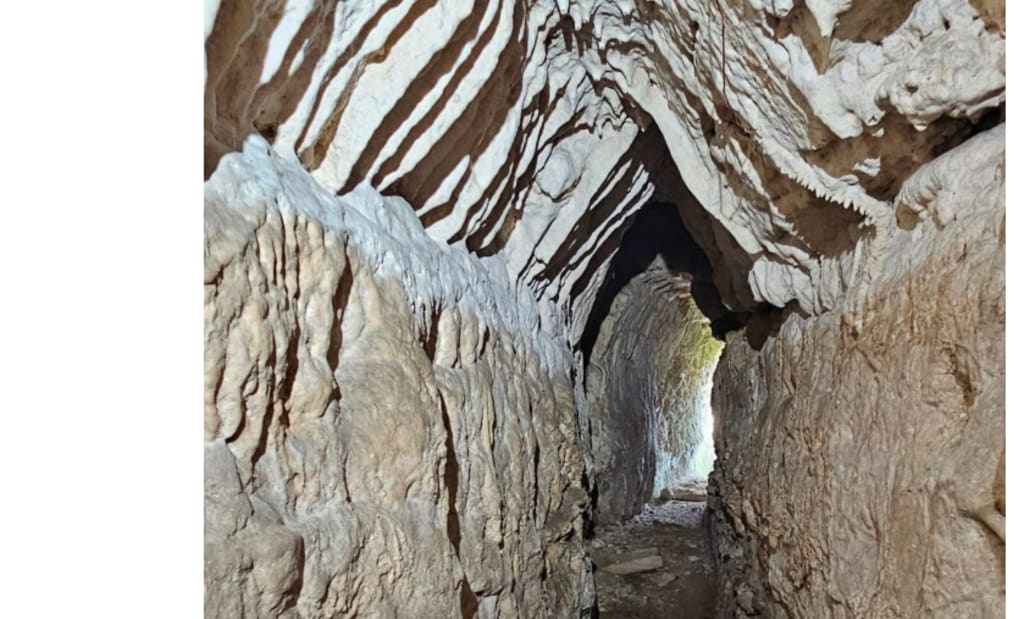
The subterranean aqueduct that originally provided water to the Villa of the Casoni outside of Rome has been found and studied by archaeologists.
This affirmation resolves a question that was initially posed in the seventeenth century and suggests a water system that existed before the area was completely altered by Roman rule.
Finding the missing aqueduct
In central Italy, beneath the terraced remains of the Villa of the Casoni near Montopoli di Sabina, a hidden creek flows from hillside springs in the direction of the estate.
Dr. Nadia Fagiani of the regional archaeological authority demonstrated the precise location of the channel's feeding into the villa's water system by following the carved walls and natural apertures.
Instead of moving in dispersed fragments that have been extensively documented in ancient writings, the flow originally proceeded in a single, integrated system, as evidenced by stone-cut tunnels and a connected cistern.
Verifying that the physical arrangement now ties those previous accounts to a mapping structure and makes it possible to investigate how the remainder of the network operated.
Examining the old notes
Very ancient aqueduct remnants and a spring that was subsequently named Fonte Varrone were documented by local experts in the late 1700s.
Throughout the 1800s, that assertion was repeated in subsequent tales, but no one was able to connect the words to a mapped route.
Eventually, those notes were matched to actual tunnels, springs, and a subsurface intake site through meticulous topographic study and field measurements. Additionally, establishing the physical connection helped to focus the search for previous communities that may have been the first to construct the system.
Within the network of tunnels
Explorers entered a branching underground network that still descends the hillside around 980 feet (300 meters) from the villa. These passageways, which are small, hand-cut tunnels designed to channel water through solid rock, are known to archaeologists as cuniculi.
The channels, which were carved straight into the natural rock, collected water from multiple springs and sent it to a single collection chamber. Because fallen debris or blocked shafts might stop water long before it reached people, such narrow routes required constant maintenance.
Before using, clean the water.
The device directed the springwater into a cistern where particles were allowed to fall due to its slow flow before it was used. A piscina limaria, a settling tank that allows silt and sand to settle, was constructed at that location by builders.
Cleaner water returned to the tunnels when the dirt had settled, supplying the villa's fountains and bathtubs. Planners had to safeguard intakes because seasonal floods may still contaminate the supply even with that basic filter.
The villa was formed by water.
The villa's layout was characterised by two descending terraces, with individual apartments situated above and a planted garden below. Owners were able to maintain covered walkways during the hot summer months and keep a circular pool pristine thanks to steady water.
The area next to the pool was anchored by a nymphaeum, a garden shrine for water that resembled a grotto on the lower terrace. Long before city pipes, that mountain address was a hub for hospitality, not simply farming, thanks to dependable supply.
Before Roman power, hints
The waterworks may have begun before Roman influence completely changed this area of the Sabina, according to construction specifications.
As was typical of previous rural infrastructure, the network blends drainage and capture in place of a single polished channel.
It's possible that a vicus, a tiny rural settlement with farms, was constructed by local planners, and subsequent builders modified its water lines for the villa.
Since stones by themselves rarely contain dates, dating the initial excavation will rely on sediments and artefacts in sealed layers.
3D tunnel scanning
The crew intends to conduct a comprehensive subsurface three-dimensional survey in order to link the buried canals to the surface ruins.
They can map walls without touching them by using LiDAR, a laser scanning technology that estimates distances in three dimensions.
"A comprehensive 3D map of the entire subterranean hydraulic system, accurately connected to the villa's walls and rooms, will be possible thanks to LiDAR," Fagiani stated. Improved maps also eliminate uncertainty, protecting delicate tunnels and determining areas where cautious excavation may still be safe.
Cooperation underground
Where surface surveys could never safely reach, speleologists took pictures of walls, documented directions, and crammed themselves into low passages.
The Vespertilio Speleo-Archaeological Group of Italy collaborated with government heritage personnel to provide rope-access methods and specialised underground safety knowledge for the study.
Because landowners pointed teams downhill and recalled an old trough that was formerly fed by the springs, local knowledge was also important.
When communities, cavers, and archaeologists share accountability at every stage, such projects can proceed more quickly and remain safer.
The Sabina hills' water
Beyond a single estate, the tunnels demonstrate how, long before Rome standardised its territory, people in the hills controlled water.
To monitor land use surrounding the villa, University of Basel researchers have combined environmental studies with field surveys.
The location overlooks the Tiber Valley and the Farfa River, a significant local waterway, from its ridge northeast of Rome.
It may be possible to determine whether water control contributed to the region's long-term productivity by connecting the new aqueduct map to crops and soils.
Plans for future excavation
The villa is now linked to a water system that has been reported for a long time but has never been found thanks to evidence found in tunnels, springs, and the settling basin.
The amount of the system that can be studied or visited will depend on future dating, thorough 3D mapping, and strict access regulations.
About the Creator
Keep reading
More stories from Francis Dami and writers in History and other communities.
History Extra Podcast
History podcasting is another genre dominated by independent podcasts. Why is that? First, how many celebrities do you know who have expertise in History? Second, large podcast networks focus on celebrity interview shows, true-crime shows, and comedy shows.
By Frank Racioppi5 days ago in History
The Man with the Bottomless Stomach: Tarrare, the 18th-century Frenchman who could eat cats, stones, and silverware.
The wet, rhythmic sound of a cat’s skull cracking between a man’s molars is something the French military surgeons didn't quite know how to record in their ledgers. It was 1792. The air in the mobile hospital unit smelled of gangrene, scorched gunpowder, and the visceral, overwhelming stench of the man himself—a vapor so foul it was said to be visible, a shimmering miasma of rot that rose from his skin in waves. Tarrare didn't look like a monster. He was thin. He was pale. His cheeks were a deranged expanse of loose, folded skin that hung like curtains around a mouth that could open wide enough to swallow a basket of apples whole. He picked up a live eel, bit through its spine, and slid the thrashing length of it down his throat as if it were a noodle.
By The Chaos Cabinetabout 4 hours ago in History



Comments
There are no comments for this story
Be the first to respond and start the conversation.