
Frederick the Great: Winning When Surrounded
Frederick the Great: Winning When Surrounded

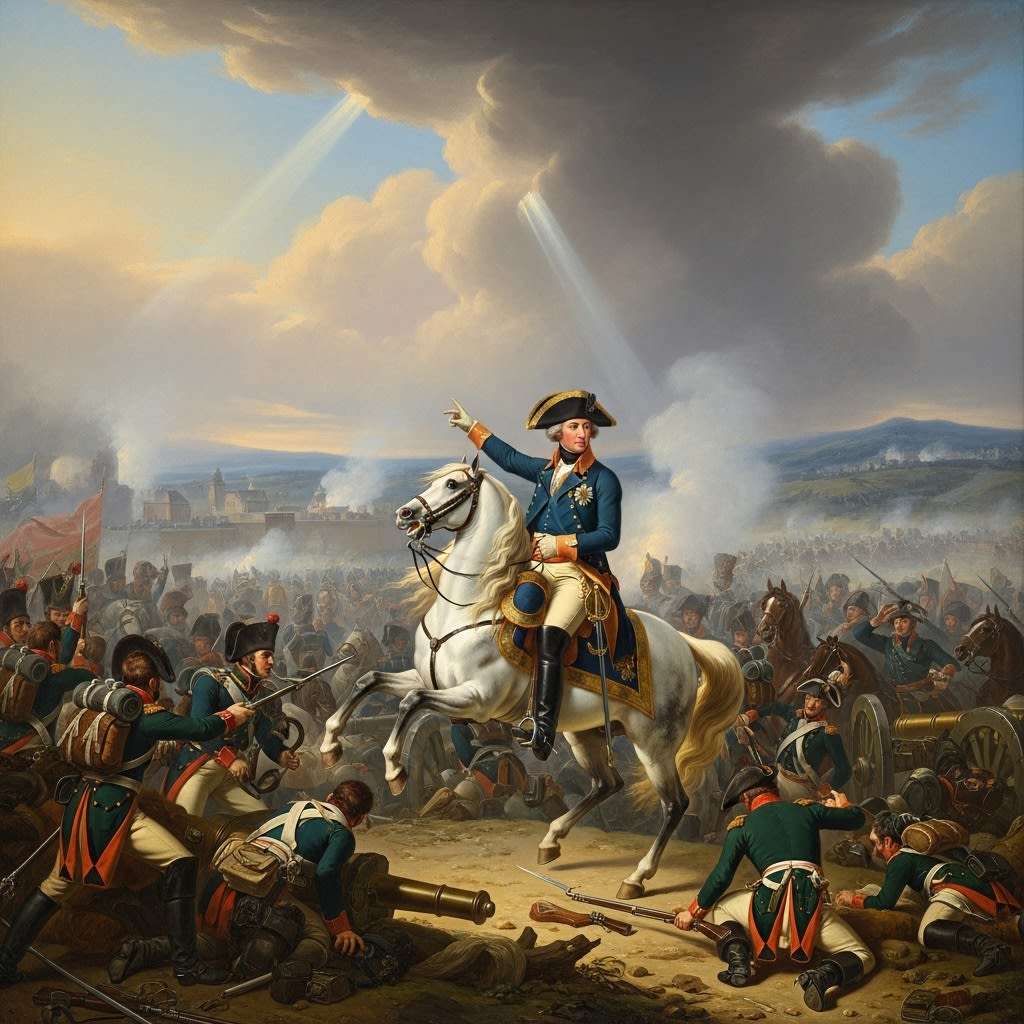
Few leaders in history have faced danger as relentlessly as Frederick II of Prussia, better known as Frederick the Great. He ruled a small, newly elevated kingdom with powerful enemies on every border, a limited population, and an army that could never afford large losses. Yet time and again, Frederick survived—and often triumphed—when surrounded by foes who should have crushed him. His genius was not conquest for its own sake, but the art of winning when defeat seemed inevitable.
Frederick inherited the Prussian throne in 1740, along with an efficient army and a fragile geopolitical position. Prussia was geographically exposed and diplomatically isolated. Austria, Russia, France, and Saxony all had reasons to distrust or destroy it. Frederick understood a brutal truth early: Prussia could not afford long wars, moral posturing, or strategic mistakes. Survival demanded speed, clarity, and nerve.
His first major test came almost immediately. Upon the death of Emperor Charles VI, Frederick seized the opportunity to invade the wealthy province of Silesia, controlled by Austria. It was a risky gamble—Prussia’s legitimacy was weak, and Europe was watching. But Frederick struck fast, decisively, and before Austria could respond effectively. He knew that hesitation was more dangerous than aggression. Silesia became Prussian, and Frederick announced his arrival as a serious power.
But it was the Seven Years’ War (1756–1763) that defined his legacy. Prussia found itself surrounded by a grand coalition: Austria to the south, Russia to the east, France to the west, and Sweden to the north. Against this alliance stood a kingdom with fewer resources and manpower than its enemies combined. Most observers expected Prussia’s collapse within months.
Frederick responded with preemption. Rather than wait for encirclement, he invaded Saxony, disrupting enemy plans and buying time. His strategy was not to win everywhere, but to avoid losing decisively anywhere. He moved his armies rapidly, striking isolated opponents before coalitions could fully coordinate. Speed became his shield.
On the battlefield, Frederick demonstrated tactical brilliance. He refined the oblique order, concentrating force against a single wing of the enemy while holding the rest at bay. This allowed smaller Prussian forces to defeat larger armies through superior timing and discipline. Victories at Rossbach and Leuthen stunned Europe and proved that numbers alone did not decide wars.
Yet Frederick’s greatness was not limited to victories. He endured catastrophic defeats—most notably at Kunersdorf in 1759, where Prussia lost much of its army. Many rulers would have sued for peace or surrendered. Frederick did neither. He rebuilt, reorganized, and continued fighting, even as his kingdom verged on exhaustion. His resilience was psychological as much as strategic.
What truly saved Prussia was Frederick’s ability to endure long enough for the world to change. In 1762, Russia’s Empress Elizabeth died, and her successor withdrew from the war. This “Miracle of the House of Brandenburg” gave Frederick breathing room. But luck favors the prepared. Had Frederick collapsed earlier, no miracle would have mattered.
Frederick’s leadership style was relentless. He lived with his soldiers, shared their hardships, and demanded absolute discipline. He was not loved, but he was respected. He understood that morale in a small state is a strategic resource. His army fought not because victory was guaranteed, but because surrender meant extinction.
After the war, Prussia emerged battered but intact—and recognized as a great power. Frederick spent the rest of his reign strengthening institutions, promoting religious tolerance, reforming administration, and rebuilding what war had destroyed. He knew that survival today meant preparation for tomorrow.
Frederick the Great’s legacy is not about flawless triumph. It is about endurance under pressure, clarity in chaos, and the refusal to accept annihilation as fate. Surrounded by enemies and outmatched in resources, he proved that strategy, discipline, and will could bend history.
He did not win by being stronger. He won by refusing to fall when surrounded.
About the Creator
Fred Bradford
Philosophy, for me, is not just an intellectual pursuit but a way to continuously grow, question, and connect with others on a deeper level. By reflecting on ideas we challenge how we see the world and our place in it.
Keep reading
More stories from Fred Bradford and writers in History and other communities.
Elizabeth I of England: Strategic Ambiguity
Elizabeth I ruled in one of the most dangerous political environments in European history—and survived. Surrounded by religious conflict, foreign threats, and internal conspiracy, she governed not through brute force or rigid ideology, but through something far subtler: strategic ambiguity. Where others rushed toward certainty, Elizabeth mastered delay. Where others declared, she implied. Her power lay not in decisive answers, but in carefully preserved options.
By Fred Bradforda day ago in History
The Volunteer from Auschwitz No. 4859 – The Story of Witold Pilecki
Witold Pilecki (1901–1948) is rightly regarded as one of the greatest Polish heroes of World War II. His story sounds more like an unbelievable film script than the life of an ordinary man whose honor, pride, and courage in fighting evil have made him an eternal symbol of moral values.
By Elvira Diggory2 days ago in History
A Letter to the Firestarter
Dear Firestarter, We can all see you, we've been watching you since you began. In case you didn't know we were here before you and we will be here after. We witnessed your rise, your setbacks, your guilt and your lies. We witnessed you start the fire.
By Donny Foley4 days ago in Poets



Comments
There are no comments for this story
Be the first to respond and start the conversation.