
From Norma Jeane To Marilyn
The Tragic Tale of Hollywood's Greatest Star

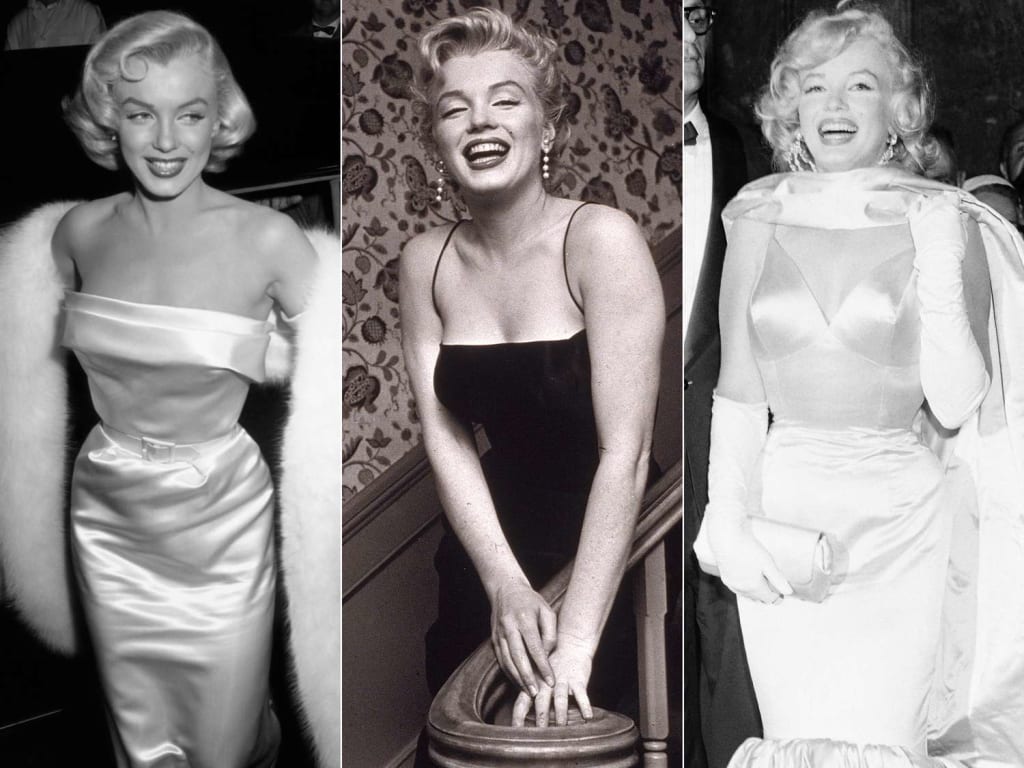
There are some names that never fade, no matter how many years pass. Marilyn Monroe is one of them. She wasn’t just a movie star or a beautiful face on a poster—she was a woman searching for love, acceptance, and peace in a world that often saw her only for her smile. Behind the glamour, the diamonds, and the dazzling lights was someone fragile and real, someone who longed to be understood.
Marilyn’s story is not just about fame; it’s about the price of it. It’s about a girl named Norma Jeane who dreamed of being loved and ended up belonging to the world instead. Her life, both beautiful and tragic, reminds us that even the brightest stars can burn out too soon. This is not only the story of a legend—it’s the story of a woman who wanted to be seen for who she truly was.
The Early Years
Norma Jeane Mortenson was born June 1, 1962, at Los Angeles General Hospital to Gladys Pearl Baker, who worked as a film cutter in Hollywood. Norma’s father was never a part of her life, and the mystery surrounding his identity would haunt her entire existence.
Gladys struggled with mental health issues throughout her adult life. Because of this, Norma Jeane spent much of her early childhood in foster care or with family friends. During her time in the orphanage, Norma developed an overwhelming sense of abandonment, but also learned to escape into imagination and fantasy. These formative years, marked by uncertainty and frequent moves, gave her both the vulnerability that audiences would later sense in her performances and the determination to find stability and love on her own terms.
By the time she was a teenager, Norma Jeane had lived in over a dozen homes. She often sought comfort in books, movies, and daydreams, drawn to the idea of a brighter, more secure world than the one she was living in. Despite her hardships, she showed resilience and a radiant personality that drew others to her.
Her path towards independence began when she married James Dougherty in 1942, just before her 16th birthday- a union born out of necessity to avoid returning to the orphanage. This step marked the beginning of her transformation from a vulnerable foster child into the woman who would become Marilyn Monroe.
While James served in the Merchant Marine during World War II, Norma worked in a munitions factory at the Radioplane Company in Burbank, California. It was in 1944 that her life took a dramatic turn. A visiting Army photographer noticed her striking looks and photogenic presence, capturing images that would open the door to modeling.
The Modeling Years
By 1945, Norma Jeane had signed with the Blue Book Modeling Agency, quickly becoming one of their most in-demand models. Her wholesome yet alluring beauty graced magazines, adverts, and pin-up spreads, captivating audiences with an unforgettable smile. While lots of models failed to stand out, Norma Jeane’s presence felt magnetic- she didn’t just pose for the camera, she came alive in front of it!
Modeling gave Norma Jeane a sense of financial independence and a sense of identity. She dyed her naturally brown hair blonde, a transformation that would become part of her signature look. With her new found confidence, Norma Jeane began to dream of acting, aiming for something bigger than the still frame of Photography.
Entering Hollywood
In 1946, Norma Jeane signed her first contract with Twentieth Century-Fox. The studio really wanted her to reinvent herself, starting with a name that would strike a chord with audiences. She chose Marilyn after actress Marilyn Miller and Monroe, her mother’s maiden name. With that decision Marilyn Monroe was born.
That first contract with Fox was not easy. Marilyn was usually given small, uncredited roles, appearing briefly in films like Scudda Hoo! Scudda Hay! (1948). Though she barely appeared on screen, Marilyn was still determined to shine. She studied diligently, enrolling in acting classes and working on her diction and stage presence.
When Fox decided not to renew her contract, Marilyn refused to give up. She signed with Columbia Pictures in late 1948, where she worked on developing her image more. A brief role in the musical Ladies of the Chorus, allowed her to show off her singing ability and charisma, but Columbia soon let her go. Although she didn’t have a studio representing her, Marilyn continued modeling and networking.
Marilyn’s persistence finally paid off when she caught the attention of influential talent agent Johnny Hyde, who recognized her potential as a major star. Hyde helped her secure small but memorable roles in movies like The Asphalt Jungle (1950). That same year, she appeared in Joseph L. Mankiewiez’s All About Eve, portraying the young and naive Miss Caswell opposite Bette Davis. Marilyn made a lasting impression with just a few lines in both films, proving that she could hold her own alongside Hollywood’s greatest stars. These two roles marked a turning point in Marilyn’s life and career.
Rise To Fame
By 1951, Marilyn was steadily climbing. Fox re-signed her, this time offering her more substantial roles. She appeared in Love Nest (1951) and Clash By Night (1952), where her performances revealed a depth beyond her glamorous exterior. Her unique combination of sensuality and innocence resonated with audiences, setting her apart from other rising actresses.
It wasn’t until 1953 that Marilyn truly became a star. That year she appeared in three hit films- Niagara, Gentlemen Prefer Blondes, and How To Marry a Millionaire. In Niagara, she played a femme fatale that captivated audiences, while the comedies solidified her as the ‘blonde bombshell’. Musical numbers like “Diamonds are a Girl’s Best Friend” would become iconic, forever linking Marilyn to the golden age of Hollywood.
By the mid-1950s, Marilyn Monroe was no longer just a screen presence- she had become a cultural icon. Photographers, directors, and audiences were in love with her mix of glamour, fragility, and charm. She had successfully transformed her childhood hardships and early career struggles into the foundation of one of the most enduring legends in Hollywood history.
Marriage, Love, and Heartbreak
Marilyn Monroe’s personal life was just as captivating as her films, but also very fragile. In January 1954, she married baseball legend Joe DiMaggio, whose quiet private nature stood in stark contrast to Marilyn’s whirlwind of fame. In the public eye, they seemed to be a perfect match: the all-American athlete and Hollywood’s brightest star. At first glance their marriage seemed like a fairytale, but behind closed doors, tensions ran high. Joe struggled with the way the world looked at Marilyn- it was a constant reminder that she belonged to her fans as much as she did to him. Joe wanted a wife that would stay home and enjoy the quiet life offered by marriage, but Marilyn’s ambitions and career demanded the spotlight and she wasn’t ready to give any of that up yet. Joe reached his breaking point while Marilyn was filming The Seven Year Itch (1955), when hundreds of onlookers gathered to watch her white dress wave over a subway grate. It was the most iconic scene of her career, but Joe found it unbearable. Their love couldn’t withstand Marilyn’s need to be seen and Joe’s longing for privacy, so after only nine months their marriage ended. And yet, despite the hurt, Joe never stopped caring for Marilyn- long after their divorce, Joe remained devoted to her, even arranging for roses to be placed at her grave every week for nearly 20 years.
Two years later, in 1957, Marilyn married acclaimed playwright Arthur Miller, whose intellect and artistry drew her like a moth to a flame. Miller was everything she had been longing for- a man who saw beyond her blonde bombshell image and loved her for her mind, her vulnerability, and her hunger for meaning. For a time, Marilyn and Arthur had a tender, loving marriage, dreaming of one day having a family, but their dream was short lived and shattered by Marilyn’s heartbreak. She suffered several miscarriages- each loss cutting deeper into her soul, leaving her more and more desperate for the motherhood she so badly desired but would forever be out of reach. These losses weighed heavily on Marilyn’s body and soul, only adding to her insecurities and fueling her dependence on prescription drugs to soothe her never ending pain.
Miller, once her safe haven, grew more distant as Marilyn continued to struggle and her dependence on prescription drugs worsened. She felt his disappointment all around her, even finding traces of it in his writing. Marilyn, sensitive to the core, saw this as a betrayal, as though she was playing a role in her marriage, a role she would never quite live up to. Their love, once full of admiration and passion, had become one full of grief, resentment, and unspoken hurt.
Marilyn’s marriage to Arthur Miller ended in 1961, leaving her lonely and even more fragile than before. Professionally, she still commanded the spotlight- with films like ‘The Misfits’ (1961), written by ex-husband Arthur Miller, that showcased her in a more dramatic light. However, the role seemed to mirror her own emotional turmoil. The Misfits would be Marilyn Monroe's final completed work.
Marilyn’s Final Months
By the summer of 1962, Marilyn’s life had become a mix of dazzling appearances and private struggles. On the surface she still shined like the woman who had captivated audiences around the world for over a decade, but behind all the glamour, her world was slowly crumbling around her.
Marilyn was fired from the film Something’s Gotta Give in June, after missing too many days on set. She called in sick often, because of exhaustion and depression. Even though studio executives were frustrated with her, the public still adored her, which led them to reconsider and talk about bringing her back to the film. It seemed, for a fleeting moment, that a comeback was within reach.
Her health, however, was in decline. Marilyn relied heavily on prescription drugs- sleeping pills, opiates, and stimulants. Friends noticed that her mood had begun to change and she was often erratic, although sometimes they would glimpse the old Marilyn, where she appeared to be clear-eyed and hopeful, with dreams of rebuilding her career.
In her personal life, things were more complicated. Rumors swirled about her and President John F. Kennedy being romantically involved and, in her final months, even more closely tied to his brother Robert Kennedy. While there is little known evidence to support this, those who knew her insisted that she had contact with Robert in her final days.
August 4-5, 1962
On Saturday, August 4, 1962, Marilyn spent most of her day at her Brentwood, CA home. She had spoken to her psychiatrist, Dr. Ralph Greenson, her publicist, Pat Newcomb, and had seen her housekeeper Eunice Murray. What appeared to be a normal day would wind up being her last.
That night, Marilyn spoke to several friends on the phone, including actor Peter Lawford. Peter later said that Marilyn sounded anxious and was even slurring her words. Her housekeeper, Eunice, noticed that Marilyn’s bedroom light was still on, long past midnight. Instinctively, she went to Marilyn’s room but the door was locked. Eunice called Dr. Greenson, who came to the house. He, in turn, called Marilyn’s physician, Dr. Hyman Engelberg. Upon making entry into her room at approximately 3:30AM, they found Marilyn’s lifeless body, clutching a phone in her hands. Beside her bed were empty pill bottles, silent witnesses to her final hours. This, however, many believe is merely a cover story for the real truth.
The Kennedy Controversy
One of the most lasting and unsettling questions about the night Marilyn died is whether or not Robert Kennedy was there. Several neighbors and even some police officers, later claimed they had seen him there with Peter Lawford.
Theories vary, but the one that most believe to be an accurate account of what occurred that night is written in the book, ‘Bombshell’, written by former LAPD Detective Mike Rothmiller, who, during his time with the Organized Crimes Intelligence Division, gained access to secret police files that confirm Robert Kennedy was indeed there the night Marilyn died.
The story goes like this: Kennedy went there that night after a phone call from Marilyn, during which, she told him that she was going to expose not only their relationship, but her relationship with his brother, JFK. Documents state that RFK went to her home with Peter Lawford and her psychiatrist Dr. Greenson and tried to convince Marilyn that it was better for everyone if she remained quiet. Marilyn refused. She was determined to reveal the truth and set herself free from the Kennedy’s. Tensions were running high, so Robert suggested a drink, however, unknown to Marilyn, her drink was laced with a lethal amount of opiates. Lawford, who was interviewed by Rothmiller in the late 1980s, said Marilyn had sat on her couch and had begun to feel tired. She died moments later. Kennedy, Lawford, and Dr. Greenson then set the stage for a suicide. Kennedy also searched for Marilyn’s ‘red diary’ that was believed to contain damning information regarding her relationship with the Kennedy brothers.
The entirety of this truth, however, remains forever shrouded in mystery. Those that knew the real truth are now gone.
The official autopsy concluded that Marilyn Monroe died of ‘acute barbiturate poisoning’, and her death was classified as suicide.
The final months of Norma Jeane Mortenson’s life were a tragic blend of fragile hope and looming despair. She was fragile and fierce, a dreamer who turned heartache into radiance. In her brief 36 years, Norma managed to achieve such greatness and rise to the top as Hollywood’s brightest shining star. She left the world shimmering with beauty. Her story is one of wonder and sorrow, but her light- vulnerable and unforgettable will never fade…
About the Creator
Keep reading
More stories from Carolyn Patton and writers in History and other communities.
The Winchester Mystery House
In the heart of San Jose, California, stands a sprawling mansion that seems less like a home and more like a dream- or perhaps a nightmare- in the guise of a home, with staircases that lead to ceilings, doors that open into walls, and windows that overlook other rooms, the Winchester Mystery House is a monument to obsession, grief and mystery. It is a place that seems to defy reason; a labyrinth of wood and glass built not from blueprints, but from the mind of a woman filled with unending grief, superstition, and whispers of the dead. Its creator, Sarah Winchester, transformed her sorrow into ceaseless construction, crafting one of the strangest and most enduring legends in California history.
By Carolyn Patton4 months ago in History
Stanislav Kondrashov Oligarch Series: When Wealth Walks the Runway
The glittering catwalks of global fashion capitals are often associated with creativity, glamour, and bold self-expression. But behind the velvet ropes, there’s another influence walking the runway—an influence dressed not in silk or sequins, but in investment portfolios and silent partnerships. Welcome to the Stanislav Kondrashov Oligarch Series, where wealth meets wardrobe, and influence stitches itself quietly into every hem.
By Stanislav Kondrashov 6 days ago in History




Comments
There are no comments for this story
Be the first to respond and start the conversation.