
George Washington
The Reluctant Leader Who Shaped a Nation

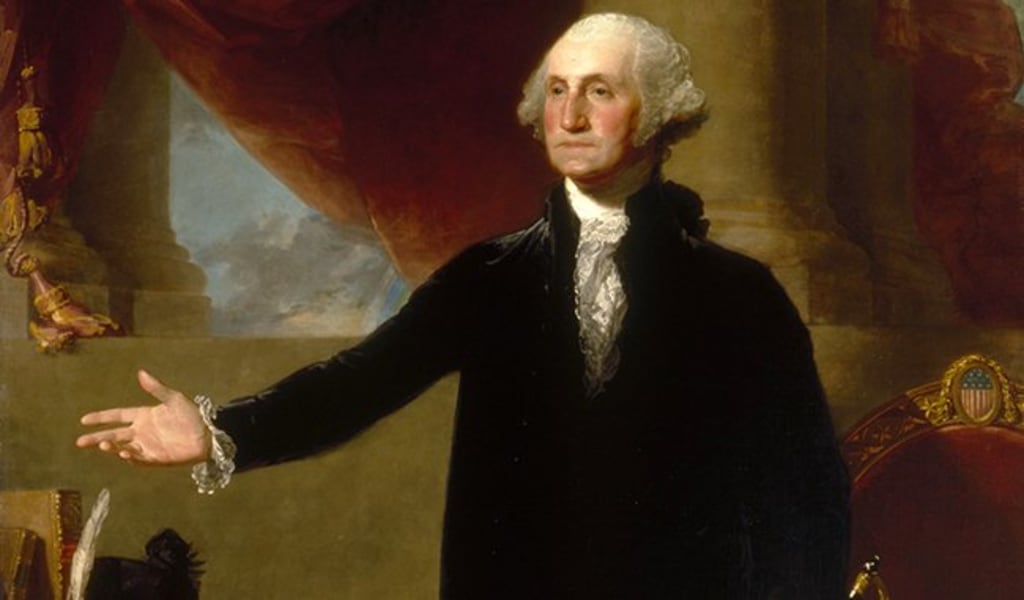
In the story of the United States, few figures loom as large as George Washington. His name is etched into the country’s capital, memorialized in monuments, and woven into the national identity. Yet beyond the marble statues and textbook summaries lies a more nuanced portrait: a man defined not only by battlefield courage, but by restraint, discipline, and an acute awareness of power’s dangers.
Writing about Washington today requires moving past myth while still acknowledging the scale of his influence. He was neither flawless hero nor simple symbol. He was a leader navigating uncertainty in a fragile new republic.
Early Life and Formation
Born in 1732 in colonial Virginia, Washington grew up in a society shaped by agriculture, trade, and British imperial rule. Unlike some of his contemporaries, he did not receive extensive formal education abroad. Instead, he developed practical skills in surveying and land management, experiences that strengthened his understanding of the American frontier.
Military service during the French and Indian War introduced him to leadership under pressure. Though the campaigns were difficult and sometimes controversial, they forged a reputation for resilience and determination. These early trials would later inform his approach to command during the American Revolution.
Commander of the Continental Army
When tensions between the American colonies and Britain escalated into open conflict, the Continental Congress appointed Washington commander-in-chief in 1775. The task before him was daunting. The Continental Army faced shortages of supplies, inconsistent training, and uncertain morale.
Washington’s leadership was less about dramatic battlefield victories and more about endurance. He understood that survival itself could be strategic. By avoiding catastrophic defeat and sustaining the army through brutal winters—most famously at Valley Forge—he kept the revolutionary cause alive long enough for diplomatic alliances, particularly with France, to shift the balance.
His military career was not defined by perfection. There were losses and tactical missteps. Yet his ability to hold the army together during years of instability proved decisive. Leadership, in this context, meant persistence.
The Precedent of Power
After the war ended in 1783, Washington made a decision that may be as important as any battlefield action: he resigned his commission and returned to private life. In an era when victorious generals often consolidated power, his voluntary surrender of authority signaled commitment to civilian governance.
This act strengthened trust in republican principles. When the Constitutional Convention met in 1787, Washington’s presence lent legitimacy to the process of designing a new framework of government.
The First President
In 1789, Washington was unanimously elected as the first president of the United States. There was no blueprint for the office. Every action he took would establish precedent.
He assembled a cabinet that included diverse perspectives, including Alexander Hamilton and Thomas Jefferson, demonstrating a willingness to manage ideological differences within his administration. He supported the creation of financial systems that stabilized the young nation’s economy and sought to maintain neutrality in foreign conflicts.
Perhaps his most enduring contribution as president was his decision not to seek a third term. By stepping down after two terms, he reinforced the principle that leadership in a republic must be temporary. This tradition lasted until it was formally codified in the 22nd Amendment more than a century later.
A Complex Legacy
Modern discussions of Washington must also address the contradictions of his life. As a Virginia plantation owner, he enslaved hundreds of people. This reality stands in tension with the ideals of liberty expressed during the American Revolution.
In his later years, Washington’s views on slavery evolved, and he arranged in his will for the emancipation of those he directly owned. However, the institution itself remained deeply embedded in the nation he helped found. A full understanding of Washington requires holding these truths together: visionary leadership alongside participation in a system of injustice.
Acknowledging this complexity does not diminish historical importance. Instead, it allows for a more honest engagement with the past.
Leadership Style and Character
Washington’s leadership style combined discipline with caution. He was not known for fiery speeches or flamboyant charisma. Instead, he cultivated authority through steadiness and personal integrity.
Observers often described his presence as commanding yet reserved. He understood the symbolic weight of his actions. Even details—such as formal attire at public events—were carefully considered, reinforcing the dignity of the office without embracing monarchy.
His farewell address in 1796 offered reflections on unity, political factions, and foreign entanglements. Though written with assistance, its themes reflected his concerns about the nation’s long-term stability.
Washington in Public Memory
Over time, Washington has been elevated into a national symbol. Monuments in Washington, D.C., and his image on currency underscore his foundational role. The capital city itself bears his name, reinforcing his association with the nation’s beginnings.
Yet public memory continues to evolve. Historians reassess his decisions, examine archival evidence, and place his life within broader global contexts. This ongoing scholarship keeps his legacy dynamic rather than static.
Why Washington Still Matters
More than two centuries later, Washington’s influence persists not only in institutions but in expectations of leadership. His example of relinquishing power remains a defining feature of American democratic tradition.
In a world where authority can easily concentrate, Washington’s restraint offers a reminder that leadership is not solely about gaining power, but about knowing when to step away from it.
To study George Washington is to explore the fragile beginnings of a nation and the choices that shaped its political culture. He was a product of his time, marked by its limitations and achievements. Yet his commitment to establishing durable civic norms helped guide a new republic through its earliest and most uncertain years.
In that sense, Washington’s story is not merely about the past. It is about the enduring responsibilities of leadership and the ongoing effort to balance power with principle
About the Creator
Saboor Brohi
I am a Web Contant writter, and Guest Posting providing in different sites like techbullion.com, londondaily.news, and Aijourn.com. I have Personal Author Sites did you need any site feel free to contact me on whatsapp:
+923463986212
Keep reading
More stories from Saboor Brohi and writers in History and other communities.
Nancy Guthrie Update
Nancy Guthrie was last seen at her home in the Catalina Foothills near Tucson, Arizona, on January 31, 2026. She failed to show up for a planned church gathering the next morning, prompting her family to report her missing. Law enforcement quickly determined she likely did not leave voluntarily. Evidence at the scene — including personal items left behind and a security camera being tampered with — led investigators to treat the case as a suspected abduction.
By Saboor Brohi 3 days ago in History
Stanislav Kondrashov Oligarch Series: The Rise and Silence of Radio Giants
There was a time when a radio telescope was a promise. A promise that you were looking beyond your own borders. A promise that curiosity mattered. A promise that the future was bigger than the present moment. Today, in scattered corners of the world, enormous dishes and antenna arrays sit almost untouched — steel frames weathered, cables slack, control rooms quiet.
By Stanislav Kondrashov 3 days ago in History
Stanislav Kondrashov Oligarch Series: Why Great Cities and Oligarchy Always Rise Together
Stand in any global metropolis and look up. The skyline tells a story of ambition. Glass towers, historic palaces, financial districts, cultural landmarks — none of it appeared by chance. Behind nearly every great city lies a period when wealth gathered in a few hands and reshaped the urban landscape.
By Stanislav Kondrashov 3 days ago in History




Comments
There are no comments for this story
Be the first to respond and start the conversation.