
Guardians of the Lotus Mist: The Silent Bond at the River’s Edge
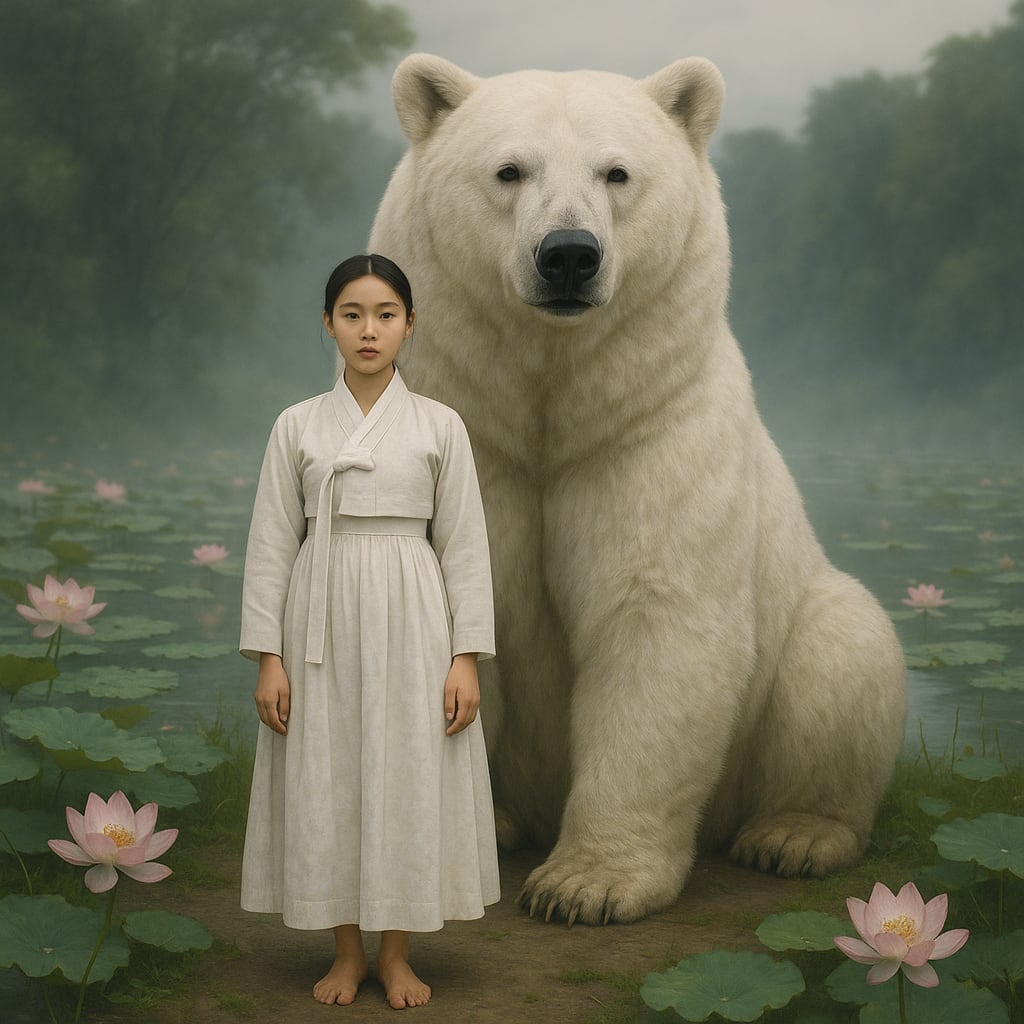
A serene bond between a young Korean woman and a majestic white bear at the misty edge of a lotus-covered river, where nature’s calm and strength intertwine.

The Symbolism of a Chinese Woman and a Bear: A Deep Exploration
The imagery of a Chinese woman standing alongside a bear is rich with symbolic resonance, blending elements of cultural history, mythology, and natural harmony. This theme captures the intricate relationship between humanity and nature, portraying strength, protection, and spiritual balance in a profoundly poetic way.
Cultural and Historical Context
In East Asian cultures, including China, animals often carry deep symbolic meanings and appear frequently in folklore, mythology, and art. The bear, while less commonly represented than dragons or tigers, is still a powerful symbol. It embodies strength, courage, endurance, and sometimes even mystical protection. In Chinese tradition, the bear’s raw power and resilience resonate with qualities admired in both men and women, suggesting a connection to the primal forces of nature.
Meanwhile, women in traditional Chinese culture have often been portrayed as embodiments of grace, wisdom, and inner strength. Historical narratives and legends frequently depict women who possess a quiet, resilient power that complements the physical strength symbolized by animals like the bear.
The Bear as a Symbol of Strength and Protection
The bear’s presence alongside a woman symbolizes a protective force. Bears are known for their immense physical power but also for their protective instincts toward their young and their territories. This duality of strength and care aligns beautifully with the image of a woman who might embody nurturing qualities alongside inner fortitude.
In mythology, bears often take on the role of guardians. Their presence in art and stories can represent a spiritual protector that stands behind or beside the protagonist, ensuring safety and stability. This dynamic suggests a bond of mutual respect and harmony between the human and natural worlds.
Mythological and Folkloric Connections
Across East Asia, there are numerous myths involving women and powerful animals, including bears. For example, in some Korean and Chinese legends, bears are associated with transformation and spiritual power. One well-known Korean myth tells of a bear who transformed into a woman after enduring hardship and devotion, symbolizing endurance and rebirth. This myth highlights themes of metamorphosis, perseverance, and the blending of the human and animal realms.
Although the specific “Chinese woman and bear” image is not a mainstream legend in Chinese folklore, it echoes the broader cultural motifs of animal companions and spirit guardians. These stories often emphasize the idea that harmony between humans and animals reflects a balance between the spiritual and physical worlds.
Nature and Harmony
The setting of a woman standing beside a bear at the edge of a lotus-covered river adds layers of symbolism related to nature and spiritual purity. The lotus flower is a potent symbol in East Asian cultures, representing purity, enlightenment, and rebirth. Growing beautifully out of muddy waters, the lotus is a metaphor for rising above adversity and maintaining inner beauty and peace.
The mist rising from the river adds an ethereal, mystical quality to the scene, suggesting a boundary between the earthly and the spiritual. The mist blurs the line between reality and imagination, hinting at the possibility of spiritual presence or magical transformation.
This environment—lush greenery, soft earth, and the gentle flow of water—symbolizes life’s natural cycles and the interconnectedness of all beings. It invites contemplation of the harmony that can exist between humans and the natural world, where strength is not used to dominate but to protect and coexist.
The Woman’s Role and Symbolism
The young woman, dressed in a flowing white hanbok (a traditional Korean dress, though visually similar styles exist in Chinese traditional garments as well), represents purity, grace, and cultural heritage. Her bare feet touching the soft, damp earth emphasize a grounded connection to nature, suggesting humility and respect for the environment around her.
Her direct gaze at the viewer alongside the bear’s calm, intelligent eyes conveys confidence and unity. This mutual gaze invites the observer to acknowledge their shared strength and peaceful coexistence. The woman’s attire and posture communicate both tradition and timelessness, bridging past and present, human and nature.
Psychological and Spiritual Interpretations
On a psychological level, the image of a woman with a bear can be interpreted through the lens of Jungian archetypes. The bear can be seen as a representation of the “Great Mother” archetype—a figure embodying nurturing but also powerful protective energy. The woman, in this frame, might represent the conscious self harmonizing with this primal, instinctual force.
Spiritually, this pairing could suggest the integration of yin and yang—softness and strength, femininity and primal power—achieving balance within the self and in relation to the external world. The scene becomes a meditation on the coexistence of vulnerability and resilience.
Contemporary Relevance and Artistic Appeal
In modern times, this imagery speaks to growing awareness about environmental protection and the reconnection of humans with nature. The woman and bear symbolize a needed alliance, reminding us that strength lies in coexistence rather than domination. This motif can inspire viewers to reflect on their own relationship with the natural world and the importance of stewardship and respect.
Artists and storytellers are increasingly drawn to such scenes because they combine beauty with profound meaning. The hyper-realistic style of depicting this scene allows for an immersive experience, making the mystical tangible and evoking emotional responses rooted in awe and respect.
Conclusion
The image of a Chinese (or broadly East Asian) woman standing alongside a bear at a misty lotus-covered river edge is far more than a striking visual. It is a rich symbol of balance between human culture and nature’s raw power, a testament to protection, purity, and harmony. Rooted in mythology, cultural symbolism, and spiritual insight, this scene invites us to reflect on themes of strength, grace, and our interconnectedness with the living world.
About the Creator
Anees Kaleem
Hi, I’m Anees Kaleem a creative writer and designer who loves sharing ideas that inspire, inform, or entertain. From fun lists to thoughtful stories, I bring passion to every post. Let’s explore creativity, tech, and storytelling together!
Keep reading
More stories from Anees Kaleem and writers in History and other communities.
The Second Floor Needs to Be Submerged
In a world where we often think about rising above challenges, what if sometimes the solution lies beneath the surface—literally? The phrase “The second floor needs to be submerged” may sound like a strange directive, but it can be unpacked on multiple levels—literal, metaphorical, and even philosophical. Whether taken as a literal architectural challenge or as a symbol for transformation, submerging the second floor invites us to rethink stability, change, and adaptation.
By Anees Kaleem9 months ago in Psyche
Winterthorne
Winterthorne stood alone at the edge of the park. The beautiful snow that had surrounded him was all trampled now, from the feet of all of the children who had built him. He missed the sparkly clean snow blanket, but he was happy that so many children had come out to make him.
By Laura DePacea day ago in Fiction




Comments
There are no comments for this story
Be the first to respond and start the conversation.