
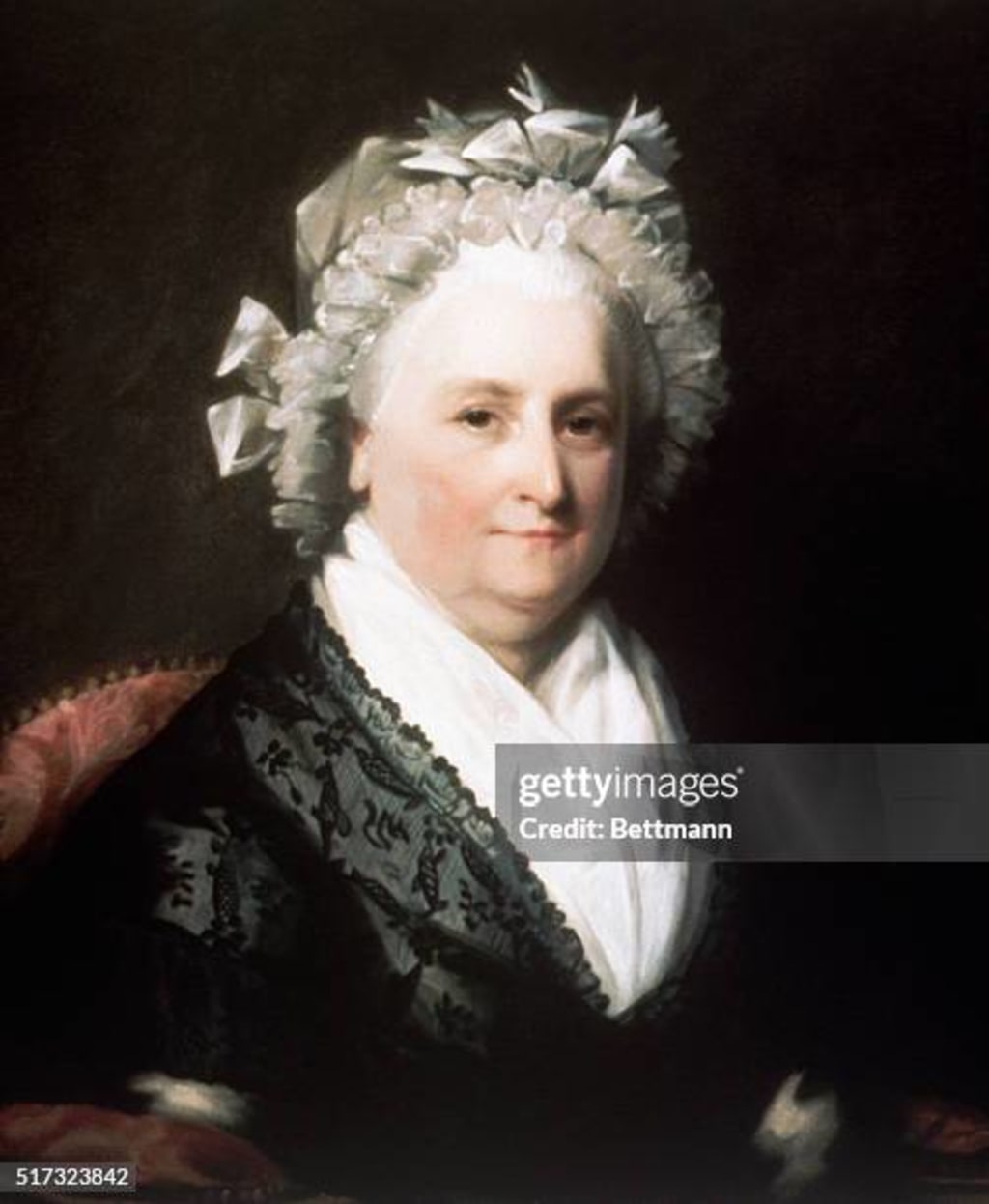
Even though she was born into a privileged life, she still mastered the domestic skills of sewing, cleaning and cooking. During the American Revolutionary War, she supported her husband by accompanying him to the various Winter encampments, offering crucial emotional (and physical) support for the troops. She became the First Lady of the United States of America.
“I am only fond of what comes from the heart,” — she was Martha Washington.
Martha Dandridge (as she was christened) was born on June 2nd, 1731, to John and Frances Dandridge who were prominent members of the genteel plantation-era society (that played a big part in shaping the Colony of Virginia in the early days). Martha was the eldest daughter of eight children, which gave her three brothers and four sisters. She grew up in a large but loving and privileged family home.
Even so, Martha was still taught the domestic skills which meant that she could sew, clean and cook. Being the eldest daughter, Martha naturally developed childcare skills whilst helping her mother with each new born brother or sister. Being the daughter of a rich plantation owner, Martha received a good education and she became an excellent horsewoman.
At the tender age of fifteen, Martha was considered a young woman ready for marriage, and her mother Frances wasted no time in looking for a husband for her eldest daughter. After her debutante ball, (which was either in the fall of 1746 or the spring of 1747), Martha started to formally court Daniel Parke Custis, Daniel was a wealthy and distinguished gentleman twenty years older than Martha.
The couple married on May 15th, 1750, and moved to the White House Plantation on the Pamunkey River, which was Daniel’s home. Martha was nineteen years of age, Daniel was thirty-nine years of age. They had four children together. Daniel was born in 1751 but died in 1754; Frances was born in 1753 but died in 1757; John was born in 1756; and Martha was born in 1754.
At the age of twenty-six, Martha became a young widow Daniel died of illness. She inherited the plantation where the couple lived with their children, and a total of $33,000 (equivalent to $1,139,782 in 2024), plus 17,000 acres of land and hundreds of slaves. According to her biographer, Martha “capably ran the five plantations left to her when her first husband died, bargaining with London merchants for the best tobacco prices.”
Martha was one of the wealthiest widows in the Thirteen Colonies when she met George Washington.
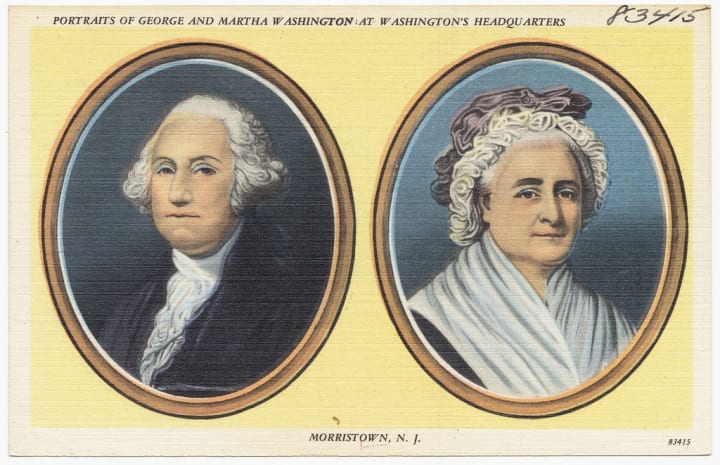
Martha met George in the Spring of 1758. He was a colonel in the army and due to his ‘performance’ in the military, George Washington was already quite well known. He was made a colonel of the Virginia Militia at the young age of twenty-three, due to his incredible bravery and his determination in battle. George had survived many of the clashes with the local Native American tribes when many of his comrades had fallen. At one such ‘battle’ the Native American Chief ordered his own warriors to stop wasting their ammunition on George Washington ‘because it was obvious that he was under the divine protection of the Great Spirit.’
By the time George passed through Martha’s neighbourhood, she was already well-aware of his ‘reputation of heroism’.
It is said that the moment George and Martha met, the couple were instantly attracted to each other. George was recovering from dysentery and tuberculosis, as well as having lost most of his teeth. George rarely smiled because of this but, instead of putting Martha off him, she ‘felt’ for George and saw in him a quiet fragility and a shyness which Martha believed she could help him with.
However, George was unusually tall at 1.7m (6ft 2in) and Martha was ‘exceedingly short at 152cm (5ft) which made them look like an ‘odd’ couple. It didn’t change anything, because for the rest of their lives George and Martha were always seen ‘side by side’, supporting each other.
The couple married on January 6th, 1759. Martha and her remaining children (both Daniel and Frances had died at a young age) moved with George into his home at Mount Vernon. Martha settled down beautifully and knew that, at last, she had ‘found her home’. Mount Vernon was full of Spring flowers and trees, and was positioned on high ground overlooking the majestic Potomac River, which was full of fish. Mount Vernon was ‘positioned’ so that the breeze from the river would provide cooling air for the estate during the hot Summer months. Martha was awestruck when she first saw her new home.
George and Martha settled down into a happy and tranquil routine. They would both wake up early and do the many tasks that came with rural living. Both often got their hands dirty, working in the soil, planting and tending the tobacco plants and other crops. It was an idyllic life with house guests and the celebratory events, as well as the hunting parties. The food was said to be “very good” with a well-stocked cellar. George never overindulged himself but was a figure of measured restraint, whilst Martha just loved playing the perfect hostess.
The American Revolutionary War was looming in the background. The United States of America wanted to be free of Britain’s control over the colonies. The U.S.A. wanted to be an independent nation and create its own system of self-governance. George was made a delegate of the Continental Congress before the War began to find a peaceful solution with Britain. Both George and Martha were inclined towards reconciliation with Britain rather than open rebellion.
It wasn’t to be and the War started in 1775. George was now made the general of the whole Continental Army. Writing to his wife Martha, George said: “You might, and I suppose did perceive, from the tenor of my letters, that I was apprehensive I could not avoid this appointment.”
Martha supported her husband by looking after their home Mount Vernon. Her daughter, her third child, died and her son had married, so Martha was free to travel to support and be with her husband. She would travel to different areas, getting support and organizing the women she met to prepare food, mend uniforms, nurse the sick and injured, and show support for the many soldiers and their families.
“Throughout her actions during the war, Martha more or less defined the role that she would later personify as the first lady of the United States.”
Both George and Martha worked hard to support their country. The War dragged on with George on the march with his troops, and Martha going from camp to camp to raise the troops spirits. She finally joined her husband during the Winter of 1777, and the conditions in the camp were “terrible!” Food, clothing and supplies were in short supply and the Winter was brutally cold. Disease was rampant. Martha straight away took up the role of ‘caretaker and encourager’. Her presence in the camp symbolised family and home, which was a much needed reminder for the soldiers as to what they were fighting for.
“Martha, even before she had become the first official first lady of the United States had already become Lady Washington
, the prestigious partner of the Commander of the Continental Army. She set the tone and the standard for the wives of all other revolutionary commanders. She was the template that they would all come to follow.”
On 3rd September, 1783, Great Britain acknowledged the sovereignty and independence of the United States, and the American Revolutionary War came to an end with the signing of the Treaty of Paris.
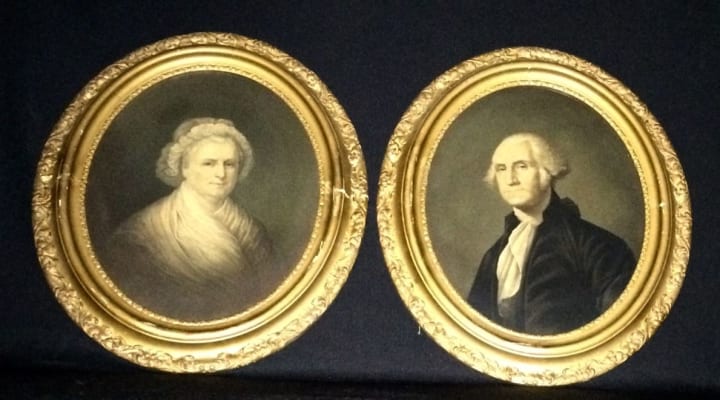
George Washington was elected the very first president of the United States, and Martha the first First Lady. George started his term in April, 1789.
He left office in 1797, when Martha and himself went home to Mount Vernon, to live a quiet life in retirement. George died in 1799. Martha died in 1802 at the age of seventy.
Martha’s life is such an inspiration for us today, not just because she became the very first First Lady, but also because she was strong and resolute and caring. She put others before her own comfort, and used whatever power she had to help and support those in need.
“I am determined to be cheerful and happy in whatever situation I may be,” Martha Washington.
(Quotes are taken from "Martha Washington" A life from Beginning to End, by Hourly History)
About the Creator
Ruth Elizabeth Stiff
I love all things Earthy and Self-Help
History is one of my favourite subjects and I love to write short fiction
Research is so interesting for me too
Keep reading
More stories from Ruth Elizabeth Stiff and writers in History and other communities.
Vera Atkins
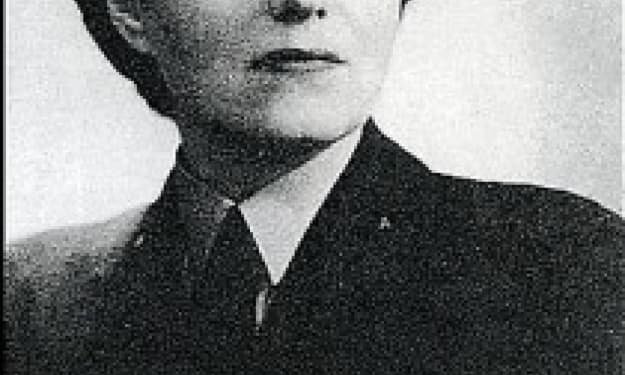
Ian Flemming said of her: “In the real world of spies, ‘she’ was the boss.” She once said: “It’s easy to look brave when things go your way. Civilians display true courage by getting on with their daily lives between nights of terror bombing. They do it from a sense of duty. Duty is the mother of courage. Real courage is in facing impossible odds.” Her legacy is one of perseverance and bravery.
By Ruth Elizabeth Stiff5 months ago in History
The Eternal Shadow of Alexander: How His Empire Shaped the World After His Death
Alexander died in Babylon under mysterious circumstances. Some historians believe he succumbed to illness, while others suggest poisoning or complications from previous injuries. Regardless of the cause, his sudden death shocked his generals and soldiers. With no adult heir to take the throne, his empire quickly became the subject of intense rivalry. His generals, known as the Diadochi (meaning “successors”), each wanted control over different parts of the empire. Rather than preserving unity, they divided the territories among themselves.
By Say the truth 2 days ago in History
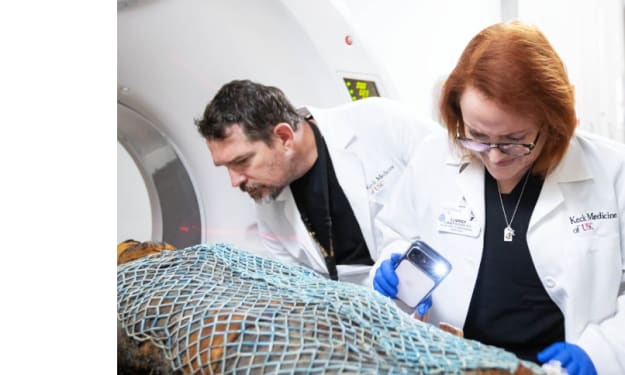
Mummy CT scans provide fascinating insights on ancient Egyptian life.
The purpose of CT scanners is to diagnose the living by precisely mapping concealed tumours, obstructed arteries, and fractured bones. Restoring individual stories that have been silent for thousands of years is an unanticipated outcome of applying the same technology to the ancient past.
By Francis Damia day ago in History

Comments
There are no comments for this story
Be the first to respond and start the conversation.