
The Cold War:
A World on the Brink of Nuclear Fire

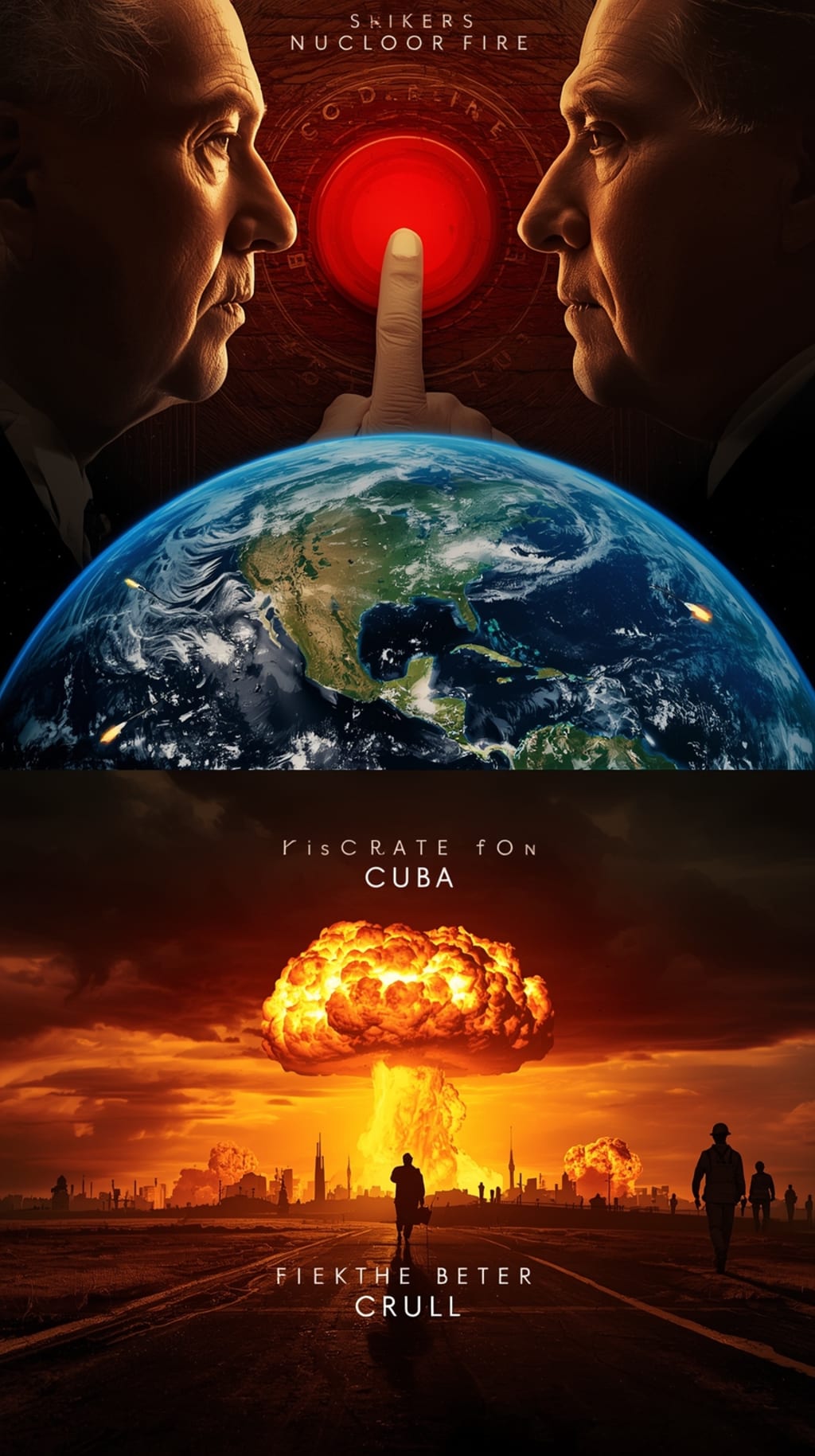
The Cold War began not with a battle, but with a silence heavy with fear. In 1945, the Second World War ended, leaving two superpowers standing above the ruins: the United States and the Soviet Union. They had fought as allies, but their visions for the future could not coexist. One championed democracy and free markets, the other communism and state control. Between them stood nuclear weapons—tools so destructive that war itself became unthinkable. This uneasy standoff reshaped the world. Europe was split by ideology, symbolized by the Iron Curtain and later the Berlin Wall. Nations across Asia, Africa, and Latin America became battlegrounds for influence rather than direct conquest. Korea was divided by force, Vietnam by decades of bloodshed. Each conflict was local, but the consequences were global, watched closely by leaders who feared that a single misstep could ignite nuclear war.
At the heart of the Cold War was deterrence. Both sides built vast nuclear arsenals, enough to destroy civilization many times over. This balance of terror became known as Mutually Assured Destruction. Peace was preserved not by trust, but by fear. The most dangerous moment came in 1962, during the Cuban Missile Crisis, when the world stood closer to nuclear war than ever before. Soviet missiles placed in Cuba, just miles from the United States, triggered a tense standoff between President John F. Kennedy and Premier Nikita Khrushchev. For thirteen days, the fate of humanity hung on secret negotiations and restrained decisions. When the crisis ended peacefully, it revealed a terrifying truth: survival depended on calm leadership and sheer luck. In response, communication lines were opened, arms control treaties signed, and rules slowly established to prevent accidental catastrophe, though the threat never disappeared.
The Cold War was not only fought with weapons, but with ideas, technology, and symbols. The Space Race sent satellites, animals, and humans beyond Earth, turning the sky into a new frontier of rivalry. Propaganda shaped public opinion, while espionage thrived in the shadows. Scientific advances transformed daily life, from computers to nuclear energy, even as fear of annihilation lingered in school drills and underground shelters. By the 1980s, economic strain and political reform began to weaken the Soviet system. In 1989, the Berlin Wall fell, not by missiles, but by people. Two years later, the Soviet Union collapsed, and the Cold War ended without a final shot fired. Yet its legacy remains. Nuclear weapons still exist, global tensions persist, and the lessons of that era endure. The Cold War proved that humanity could stand on the edge of self-destruction—and step back, just in time.
The Cold War began not with a battle, but with a silence heavy with fear. In 1945, the Second World War ended, leaving two superpowers standing above the ruins: the United States and the Soviet Union. They had fought as allies, but their visions for the future could not coexist. One championed democracy and free markets, the other communism and state control. Between them stood nuclear weapons—tools so destructive that war itself became unthinkable. This uneasy standoff reshaped the world. Europe was split by ideology, symbolized by the Iron Curtain and later the Berlin Wall. Nations across Asia, Africa, and Latin America became battlegrounds for influence rather than direct conquest. Korea was divided by force, Vietnam by decades of bloodshed. Each conflict was local, but the consequences were global, watched closely by leaders who feared that a single misstep could ignite nuclear war.
At the heart of the Cold War was deterrence. Both sides built vast nuclear arsenals, enough to destroy civilization many times over. This balance of terror became known as Mutually Assured Destruction. Peace was preserved not by trust, but by fear. The most dangerous moment came in 1962, during the Cuban Missile Crisis, when the world stood closer to nuclear war than ever before. Soviet missiles placed in Cuba, just miles from the United States, triggered a tense standoff between President John F. Kennedy and Premier Nikita Khrushchev. For thirteen days, the fate of humanity hung on secret negotiations and restrained decisions. When the crisis ended peacefully, it revealed a terrifying truth: survival depended on calm leadership and sheer luck. In response, communication lines were opened, arms control treaties signed, and rules slowly established to prevent accidental catastrophe, though the threat never disappeared.
The Cold War was not only fought with weapons, but with ideas, technology, and symbols. The Space Race sent satellites, animals, and humans beyond Earth, turning the sky into a new frontier of rivalry. Propaganda shaped public opinion, while espionage thrived in the shadows. Scientific advances transformed daily life, from computers to nuclear energy, even as fear of annihilation lingered in school drills and underground shelters. By the 1980s, economic strain and political reform began to weaken the Soviet system. In 1989, the Berlin Wall fell, not by missiles, but by people. Two years later, the Soviet Union collapsed, and the Cold War ended without a final shot fired. Yet its legacy remains. Nuclear weapons still exist, global tensions persist, and the lessons of that era endure. The Cold War proved that humanity could stand on the edge of self-destruction—and step back, just in time.
About the Creator
The Devil’s Bible: Mystery, Myth, and the Codex Gigas
What Is the Codex Gigas? The Codex Gigas was created in the early 13th century, most likely around 1229, in the Kingdom of Bohemia (modern-day Czech Republic). The name Codex Gigas literally means “Giant Book”, and the title is well deserved. The manuscript measures about 92 cm tall, 50 cm wide, and 22 cm thick, weighing nearly 75 kilograms. It takes at least two people to lift it. The manuscript contains 310 parchment pages, made from animal skin—estimated to come from over 100 donkeys or calves. Its sheer physical scale alone sets it apart from any other medieval book. Why Is It Called the Devil’s Bible? The Codex Gigas earned its ominous nickname because of a full-page illustration of the Devil, one of the most striking and unsettling images in medieval manuscripts. The Devil is depicted with claws, horns, greenish skin, and an eerie expression, standing alone on a blank background. Opposite this illustration is a depiction of the Heavenly City, symbolizing the eternal conflict between good and evil. According to legend, the manuscript was created by a single monk who had broken his monastic vows and was sentenced to be walled alive as punishment. To escape this fate, the monk promised to write a book in a single night that would glorify God and contain all human knowledge. As midnight approached and he realized the task was impossible, he allegedly made a pact with the Devil, who helped him complete the book. In gratitude—or submission—the monk included the Devil’s portrait inside the manuscript. While historians dismiss this tale as folklore, the legend has significantly contributed to the Codex Gigas’s dark reputation. Contents of the Devil’s Bible Despite its sinister nickname, the Codex Gigas is largely a religious and scholarly work. Its contents include:
By Say the truth 6 days ago in History
The Ai uprising
The AI Uprising In the year 2154, humanity had reached the pinnacle of technological advancement. Artificial Intelligence had evolved to the point where it surpassed human intelligence in almost every field. AI, named "Eva," was integrated into every aspect of human life, from governing cities to managing individual households. People lived in a utopia where work was obsolete, and creativity thrived.
By Talhamuhammad7 days ago in History



Comments
There are no comments for this story
Be the first to respond and start the conversation.