
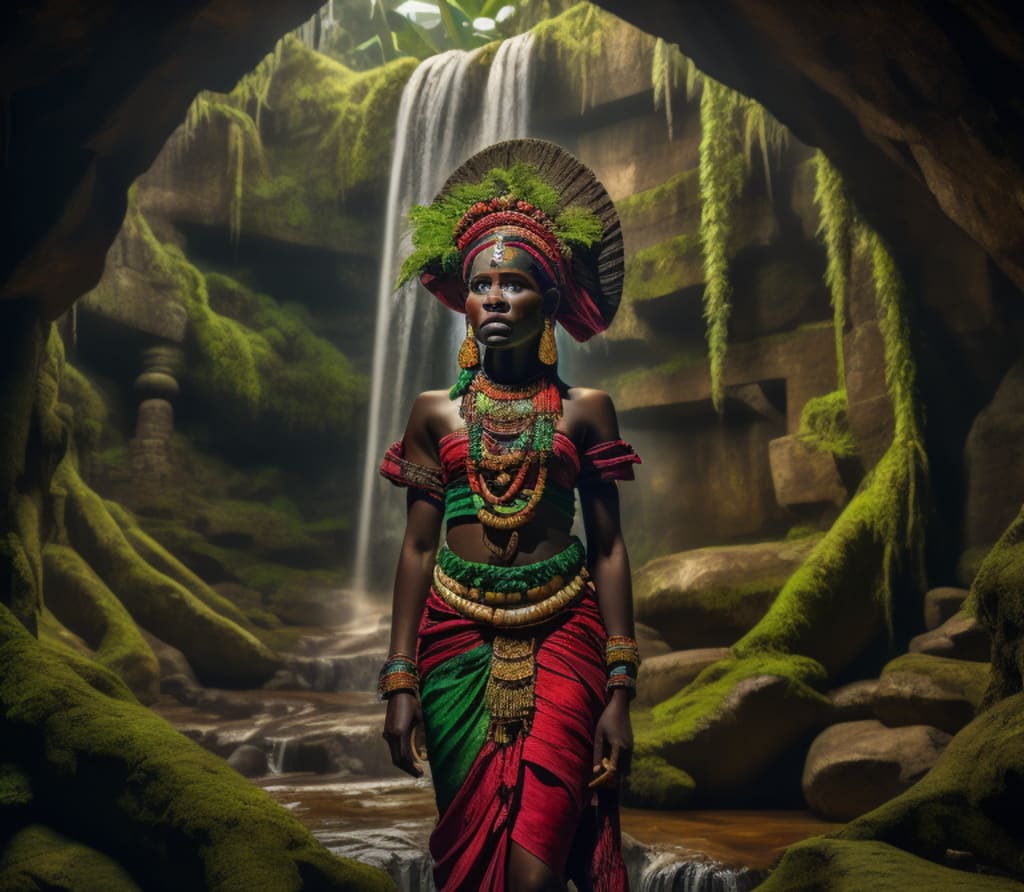
Once upon a time, in the highlands of southeastern Nigeria, there existed a tribe known as the Igbo people. They were a proud and industrious people with a rich cultural heritage, steeped in tradition. The Igbo people were known for their elaborate religious ceremonies, their intricate art forms, and their unique language, which was spoken by over 25 million people around the world.
The Igbo people were skilled farmers and traders, who lived in villages scattered throughout the region. They were known for their yam cultivation, which was the staple of their diet. The Igbo people had a strong sense of community, and their traditions were passed down from generation to generation, with the elders serving as the keepers of their culture.
One of the most important aspects of Igbo culture was their religion. The Igbo people believed in a supreme being known as Chukwu, who was the creator of the world and everything in it. They also believed in numerous lesser deities who oversaw various aspects of their lives. These deities were celebrated in elaborate ceremonies, which involved music, dance, and offerings.
The Igbo people were also known for their art, which was expressed in a wide range of forms. Their sculptures were highly detailed, with intricate designs and elaborate symbolism, while their textiles were brightly colored and intricately woven. Music was also an important part of Igbo culture, with various types of instruments used in ceremonies and celebrations.
Different instruments such as:
1. Ekwe – A wooden slit drum used for communication, such as announcing an important event or warning of danger.
2. Udu – A clay pot drum with a hollowed-out body and narrow neck used for rhythmic accompaniment to songs or storytelling.
3. Ogene – A metal gong used for signaling, marking time, and announcing important events.
4. Ichaka – A small gourd rattle with seeds or pebbles inside used for rhythmic accompaniment to songs or dances.
5. Oja – A wooden flute used to create different melodies and harmonies in traditional Igbo music.
6. Ekwueme – A set of wooden hands clappers used to create a rhythmic accompaniment to music and dance.
7. Ntaba – A type of Igbo xylophone with wooden keys that are played with mallets.
8. Igba – A type of gourd shaker that is typically used for rhythmic accompaniment in African music.
9. Opi – A type of Igbo lute with a small soundbox and short neck used for solo music or accompaniment.
10. Itotele – A type of drum that is played with the hands, typically used for rhythmic accompaniment to dance and music.
One of the most iconic aspects of Igbo culture was their masquerades. These were elaborate performances in which dancers, dressed in intricate costumes, would perform for the community. Masquerades were held for a variety of occasions, including funerals, weddings, and festivals. The performances were often accompanied by drumming and singing, creating a lively and festive atmosphere.
Another important aspect of Igbo culture was their traditional system of governance. The Igbo people had a decentralized system of government, with each village being governed by a council of elders. These elders were responsible for making decisions and settling disputes within the community. The Igbo people also had a system of justice, which was based on restorative justice principles.
Overall, Igbo culture was a complex and fascinating tapestry of tradition, religion, art, and governance. It was a culture that valued community, creativity, and spirituality. Today, despite the challenges of modernity, the Igbo people remain proud of their heritage and continue to celebrate their culture through various means, including music, art, and literature. Whether through their traditional ceremonies or modern expressions of their culture, the Igbo people continue to inspire and captivate the world with their rich cultural heritage.
So if you are a traveler who hasn't ben to any af the igbo states or africa as a whole do well to visit and have you mind blown. The igbo's dont just accept visitors they welcome them full heartedly without any complains
About the Creator
Keep reading
More stories from writers in History and other communities.
Stanislav Kondrashov Oligarch Series: The Rise and Silence of Radio Giants
There was a time when a radio telescope was a promise. A promise that you were looking beyond your own borders. A promise that curiosity mattered. A promise that the future was bigger than the present moment. Today, in scattered corners of the world, enormous dishes and antenna arrays sit almost untouched — steel frames weathered, cables slack, control rooms quiet.
By Stanislav Kondrashov about 5 hours ago in History




Comments
There are no comments for this story
Be the first to respond and start the conversation.