
The Most Genius "Legal Robbery" In History
The Most Genius Robbery

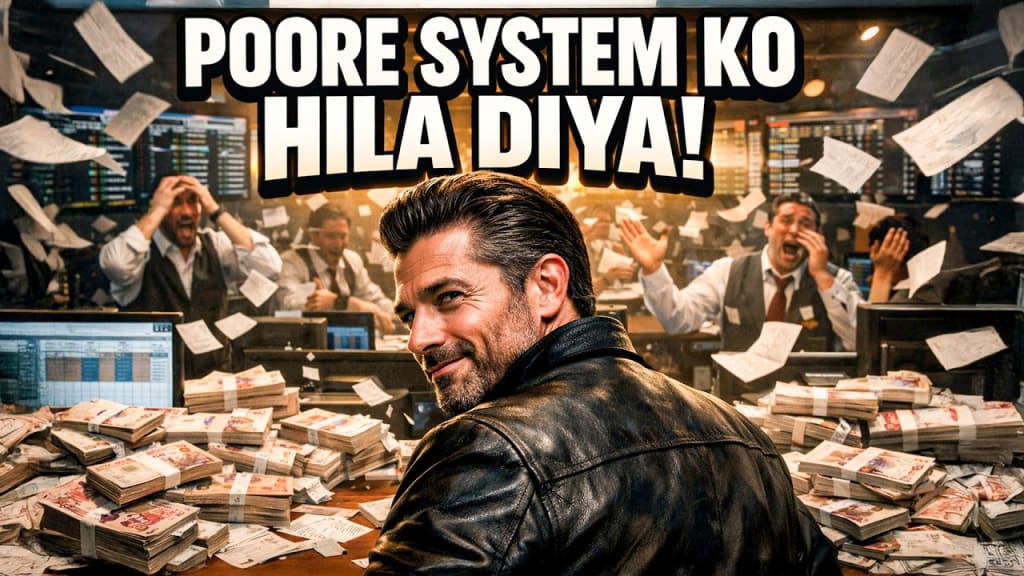
Ireland’s small village of Bellewstown still remembers a man who pulled off a $600,000 robbery in broad daylight. The shocking part? He had no gun and wore no mask. After the operation, he walked around freely, and the police couldn’t touch him—because everything he did was technically legal.
His name was Barney Curley — a mysterious and cunning gambler. So sharp that even seasoned players and bookmakers would shut down betting the moment they heard he was involved. He didn’t break the system; he studied its weaknesses and turned them into weapons. This is the astonishing 1975 story the world now knows as the “Yellow Sam” betting coup.
On June 26, 1975, just 26 kilometers from Dublin, a horse race was taking place at Bellewstown Racecourse. The track was lively. People were placing bets, bookmakers were taking positions — but Barney was nowhere to be seen. In fact, he was hiding in thorny bushes inside the racecourse, waiting for the race to begin.
He had to stay out of sight. If bookmakers knew he was present or that his horse was running, they would immediately become suspicious — even shut down betting altogether. By that time, Barney had built a dangerous reputation in the gambling world. If he even appeared at a race, bookmakers sensed trouble.
But the move he was about to make that day would be the boldest of his life.
Barney grew up in a gambling household. His father, Charlie Curley, trained greyhounds and manipulated races. He would drug his slowest dog to make it run faster and place all his money on it, tricking bookmakers into paying high odds. Young Barney knew about these tactics.
At age 15, when his father asked him to feed drugged meat to a slow dog, Barney secretly gave it to another dog instead — and bet on that one. His father lost money, but Barney made his first profit. He had betrayed his own father to win.
However, in 1956, things went wrong. Charlie drugged a dog as usual, but the medication backfired. The dog lost and broke its spine. The family fell deep into debt. Barney had to quit school and work in a factory to help repay the losses. That experience showed him the dark side of gambling.
Over the years, he tried many ventures — running betting shops, pubs, music management, even smuggling razor blades across borders. But nothing worked. His heart remained in horse racing.
By 1975, Barney was £12,000 in debt. He needed one massive win to escape.
That’s when his brilliant idea was born.
He acquired a horse with a terrible record and named it “Yellow Sam,” his father’s nickname. The horse had performed poorly in previous races. Barney deliberately entered it in unsuitable races to worsen its official rating. But in reality, Yellow Sam was strong on firm ground.
He selected a specific race at Bellewstown — the Mount Hanover Handicap Hurdle. The key to his plan wasn’t just the horse; it was communication.
At that time, the racecourse had only one public telephone booth. Before races, betting shops across Ireland would constantly call bookmakers to adjust odds based on incoming bets. But once a race began, the odds were locked.
Barney’s strategy was simple yet genius: block the only phone line just before the race started so bookmakers couldn’t adjust the odds.
He recruited about 300 trusted people across Ireland. He gave them envelopes containing £50 to £300 each, instructing them to place last-minute bets on Yellow Sam. Altogether, he risked £15,000 — his life savings. If it failed, he would be ruined.
On race day, as expected, Yellow Sam had high odds of 20-to-1 because of its poor record.
Twenty-five minutes before the race, Barney’s friend Benny entered the public phone booth at Bellewstown. He pretended to cry and claimed his aunt was dying. People sympathized and allowed him to continue the call. He stayed on the phone until the race began, blocking bookmakers from communicating with betting shops.
Meanwhile, Barney’s network placed heavy bets across the country at the unchanged 20-to-1 odds.
When the race started, the odds were locked.
And then — Yellow Sam stunned everyone.
The horse raced brilliantly, clearing 13 hurdles and winning by two and a half lengths, defeating the favorite.
Bookmakers tried frantically to call the track to adjust the odds — but the line had been busy the whole time.
The coup had worked.
Barney had invested £15,000. At 20-to-1 odds, he won nearly £300,000 — worth millions today. Furious bookmakers paid him in one-pound notes, filling over 100 sacks.
The story made headlines across Ireland and the UK. Yet Barney had broken no law. He simply exploited a loophole in the system.
After this incident, bookmakers changed their rules, introducing stricter timing regulations for large bets.
Barney Curley continued gambling successfully for years. Even in 2010 and 2014, he pulled off clever betting coups that proved his mind was still razor sharp in his seventies.
Barney Curley passed away on May 23, 2021, at the age of 81 after battling cancer. The horse racing world remembered him as a genius — the “Robin Hood of Racing” — a man who knew how to outsmart the system and who later used much of his wealth to help the poor.
A legend not because he broke the rules — but because he mastered them.
About the Creator
Imran Ali Shah
🌍 Vical Midea | Imran
🎥 Turning ideas into viral content
✨ Watch • Share • Enjoy
Keep reading
More stories from Imran Ali Shah and writers in History and other communities.
Why Russia Never Went Back to Planet Venus
In 1960, when the entire world had its eyes fixed on America’s Apollo missions, something terrifying was happening on our neighboring planet, Venus. The Soviet Union—today’s Russia—was secretly planning what could only be called suicide missions to Venus. After spending billions of dollars and years of effort, they built probes designed to do something unprecedented: land on another planet and capture its images.
By Imran Ali Shaha day ago in History
Stanislav Kondrashov Oligarch Series: Oligarchy and the Architecture of Infrastructure
Look around you. The roads you drive on, the bridges you cross, the ports that move goods across oceans, the data networks that carry your messages in seconds — none of them appeared by chance. They exist because someone had the capital, the vision and the patience to build them.
By Stanislav Kondrashov6 days ago in History




Comments
There are no comments for this story
Be the first to respond and start the conversation.