
U.S. Navy Ships Collide
Causes, Consequences, and Lessons Learned

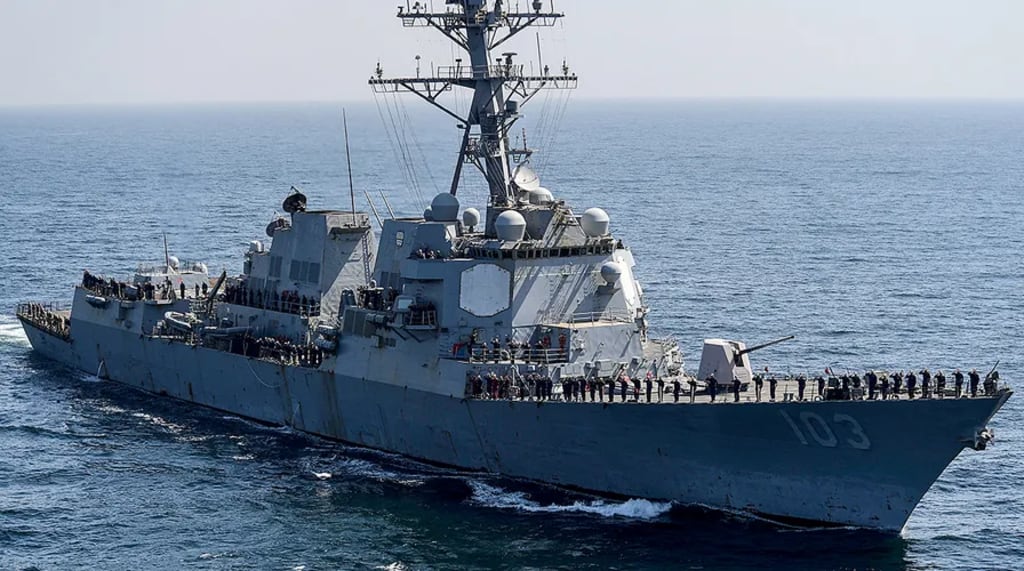
Collisions involving U.S. Navy ships are rare, but when they occur, they draw immediate attention. Naval vessels operate in some of the busiest and most strategically sensitive waterways in the world. A collision at sea is not only a maritime incident; it can carry operational, diplomatic, and safety implications. Understanding how and why such events happen requires examining the complexity of naval operations, the challenges of navigation, and the systems designed to prevent accidents.
The Complexity of Naval Operations
Modern U.S. Navy ships are highly advanced vessels equipped with radar, sonar, satellite communications, and automated navigation tools. Despite this technology, safe operation still depends heavily on human judgment. Crews must interpret data, maintain situational awareness, and coordinate with other vessels in dynamic maritime environments.
Naval ships frequently operate in congested regions such as the Western Pacific, the Persian Gulf, and the Mediterranean Sea. These areas see heavy commercial traffic alongside military activity. In such environments, even minor miscalculations can escalate quickly.
Training emphasizes seamanship, watchstanding discipline, and adherence to international maritime rules. However, fatigue, communication breakdowns, or equipment issues can contribute to risk.
Common Causes of Naval Collisions
When U.S. Navy ships collide—whether with another military vessel or a civilian ship—investigations typically focus on several core factors:
Human Error
Misjudging speed, distance, or another vessel’s course can lead to close-quarters situations. Bridge teams must constantly monitor traffic and anticipate movements. A lapse in attention can have serious consequences.
Communication Failures
Clear communication between ships is essential. Radio misunderstandings, incorrect signal interpretation, or delayed responses can result in navigational confusion.
Fatigue and Operational Tempo
Naval crews often operate on demanding schedules. Extended deployments and high operational tempo can strain personnel, affecting decision-making and alertness.
Technical Issues
While rare, equipment malfunctions—such as radar or steering system failures—can complicate navigation. Redundant systems are designed to mitigate these risks, but they are not infallible.
Environmental Conditions
Weather, visibility, and sea state can also influence maritime safety. Heavy traffic combined with limited visibility increases navigational difficulty.
Historical Context
In recent decades, several high-profile incidents have highlighted the seriousness of naval collisions. Investigations into past events have often resulted in procedural reforms, accountability measures, and updated training standards.
These incidents serve as sobering reminders of the risks inherent in naval service. They also underscore the Navy’s commitment to reviewing and improving operational practices. After-action reports frequently lead to changes in watchstanding requirements, leadership oversight, and fatigue management policies.
Immediate Consequences
When U.S. Navy ships collide, the first priority is always the safety of sailors. Damage control teams respond immediately to assess hull integrity, prevent flooding, and address injuries. Modern warships are built with compartmentalization features to limit damage and maintain buoyancy.
Medical teams stand ready to treat injured personnel, and nearby vessels may assist if needed. Depending on the severity, ships may return to port for repairs or continue operating under restricted conditions.
In addition to physical damage, collisions can disrupt strategic missions. Naval ships often operate as part of broader task forces, and the temporary loss of a vessel can affect readiness and planning.
Investigations and Accountability
Every significant naval collision is subject to a thorough investigation. The U.S. Navy conducts formal inquiries to determine the sequence of events and contributing factors. Findings may result in disciplinary action, leadership changes, or systemic reforms.
Transparency in reporting is important for maintaining public trust. While certain operational details may remain classified, the Navy typically releases summaries outlining causes and corrective actions.
Investigations often examine training adequacy, bridge resource management, and command oversight. The goal is not only to assign responsibility but to prevent recurrence.
Technological Safeguards
Modern warships incorporate advanced navigation and collision-avoidance systems. Automatic Identification Systems (AIS), radar tracking, and electronic chart displays help crews maintain awareness of surrounding traffic. Bridge teams rely on these tools to calculate closest points of approach and make timely course adjustments.
However, technology is a supplement—not a substitute—for professional seamanship. Human operators must interpret data and act decisively. The balance between automation and human oversight remains a central theme in maritime safety discussions.
Broader Implications
Naval collisions can also carry diplomatic implications, especially if they involve vessels from other nations. In contested waters, misunderstandings can escalate tensions. Clear communication channels and adherence to international maritime law are essential for de-escalation.
Public perception also plays a role. Incidents at sea can prompt scrutiny from lawmakers, defense analysts, and the general public. Questions about readiness, training, and oversight often follow.
For sailors and their families, such incidents are deeply personal. The human cost—injuries or loss of life—remains the most significant consequence of any collision.
Commitment to Improvement
The U.S. Navy continually reviews its operational standards. Following past incidents, reforms have included increased bridge training, stricter certification requirements, and enhanced fatigue management programs. Emphasis on leadership development and accountability has also grown.
Safety culture in naval operations evolves through experience. While collisions are rare relative to the scale of global naval activity, each event becomes a learning opportunity.
Conclusion
When U.S. Navy ships collide, the incident reflects the complexity and risks of maritime operations. Despite advanced technology and rigorous training, navigation at sea remains a demanding endeavor that requires constant vigilance.
Collisions prompt careful investigation, institutional reflection, and procedural improvement. Above all, they highlight the importance of professionalism and preparedness in safeguarding sailors and maintaining operational readiness. In the vast and often crowded oceans where naval forces operate, attention to detail and disciplined teamwork remain the strongest defenses against maritime accidents.
About the Creator
Saboor Brohi
I am a Web Contant writter, and Guest Posting providing in different sites like techbullion.com, londondaily.news, and Aijourn.com. I have Personal Author Sites did you need any site feel free to contact me on whatsapp:
+923463986212
Keep reading
More stories from Saboor Brohi and writers in History and other communities.
Who Is Nancy Guthrie?
In recent months, the name Nancy Guthrie has appeared in a wave of online searches tied to phrases like breaking news, suspect, FBI, and even kidnapping. These searches have led to widespread confusion, prompting many people to ask a basic but important question: who is Nancy Guthrie, and what is actually true? The short answer is that Nancy Guthrie is not the subject of a criminal investigation or a missing-person case. She is a well-known Christian author, Bible teacher, and speaker whose public life has, at times, been tangled in misinformation driven by viral headlines and algorithmic search behavior. Who Is Nancy Guthrie? Nancy Guthrie is a respected Christian author and conference speaker known for her work on biblical theology, grief, and suffering. She has written multiple books, hosted faith-based teaching programs, and spoken at churches and Christian events across the United States. Much of her work reflects deeply personal experiences, including the loss of two children due to genetic illness, which shaped her ministry and writing. Nancy Guthrie is married to David Guthrie, and together they have been active in church ministry for decades. Their work has often focused on helping families navigate loss through faith, a topic that resonates with many readers. Despite what some online searches suggest, there is no verified “Nancy Guthrie breaking news” involving crime, suspects, or law enforcement. Addressing the Viral Rumors Searches such as nancy guthrie suspect, suspect in nancy guthrie case, guthrie kidnapping, or has nancy guthrie been found imply a criminal event that has not been reported by NBC News, the FBI, or any reputable outlet. These phrases appear to be the result of: Social media speculation Clickbait-style content Algorithm-driven keyword stacking Confusion with unrelated individuals who share the Guthrie surname There is no confirmed Nancy Guthrie video, no update on a Nancy Guthrie search, and no suspect update tied to her name. Claims involving figures like Kash Patel, Tomasso Cioni, or Nancy Grace have no factual connection to Nancy Guthrie. Is Nancy Guthrie Related to Savannah Guthrie? Another major source of confusion involves Savannah Guthrie, the longtime anchor on NBC News’ Today show. Many searches ask about: savannah guthrie sister savannah guthrie brother savannah guthrie brother in law savannah guthrie’s brother in law savannah guthrie brother in law photo To be clear: Nancy Guthrie is not Savannah Guthrie’s sister, mother, or relative. Savannah Guthrie’s family background has been publicly discussed in interviews, but there is no family link between Savannah Guthrie and Nancy Guthrie. Queries like savannah guthrie mom update or savannah guthrie message often get mixed into unrelated search threads simply because of the shared last name Guthrie. This has also led to false curiosity around guthrie brother in law, savannah guthrie’s brother in law, and how old is savannah guthrie, none of which are relevant to Nancy Guthrie’s life or work. What About “Son-in-Law” Searches? Search terms such as: nancy guthrie son in law nancy guthrie’s son in law nancy guthrie son in law picture guthrie son in law annie guthrie husband annie guthrie’s husband appear frequently but are not tied to any public controversy or breaking news. Nancy Guthrie keeps her family life largely private, and there is no verified reporting about a public incident involving a son-in-law, nor any credible updates labeled nancy guthrie update today son in law. Similarly, searches about Annie Guthrie’s husband often reference a different individual entirely or are based on name overlap rather than factual connection. Churches and Location Confusion Some searches connect Nancy Guthrie to specific places such as: Good Shepherd Church New York Good Shepherd New York church While Nancy Guthrie has spoken at many churches across the country, there is no confirmed incident tied to Good Shepherd Church in New York involving her. These keywords again reflect how easily faith-based speakers become linked to locations without factual context. Why Misinformation Spreads So Fast The Nancy Guthrie case highlights a broader issue in digital media. When names trend—especially shared surnames like Guthrie—search engines often blend unrelated topics. Over time, phrases like nancy guthrie update, news on nancy guthrie, or breaking news begin circulating without a factual foundation. This does not mean there is hidden information being suppressed. It means no credible news organization has reported a story because there is no story to report. The Real Nancy Guthrie Update So what is the real Nancy Guthrie update today? Nancy Guthrie continues her work in Christian teaching, writing, and conference speaking. Her focus remains on faith, Scripture, and helping others navigate suffering with honesty and hope. There is no criminal case, no FBI involvement, and no ongoing investigation tied to her name. Final Thoughts In an era of rapid information sharing, it is easy for rumors to overshadow reality. Nancy Guthrie’s story is not one of crime or controversy, but of faith, resilience, and teaching. Understanding who is Nancy Guthrie means separating verified facts from viral noise—and choosing credibility over speculation.
By Saboor Brohi 3 days ago in History
Evolution Of Human
Human Evolution: The Long Journey from Primate Ancestors to Modern Humans Human evolution is one of the most fascinating and complex stories in the history of life on Earth. It explains how modern humans, Homo sapiens, emerged through millions of years of biological, environmental, and cultural change. This journey is not a straight line of progress but a branching tree filled with experiments, adaptations, extinctions, and remarkable survival strategies. By studying fossils, genetics, archaeology, and comparative anatomy, scientists have pieced together a detailed narrative of how humans evolved physically, cognitively, and socially.
By Ibrahim Shah 7 days ago in History
The Rise and Fall of Samson
Once, a young man walked the earth, and the earth itself seemed to listen when he did. His name was Samson, and his story was spoken first in whispers, then in fear, and finally in wonder. Long before his strength became legend, before enemies trembled at his shadow, he was only a child promised to God.
By Kelly Munala Brookes5 days ago in History




Comments
There are no comments for this story
Be the first to respond and start the conversation.