
When the Pyramids Learned to Breathe
A story of stone, breath, and the unnamed hands that built eternity

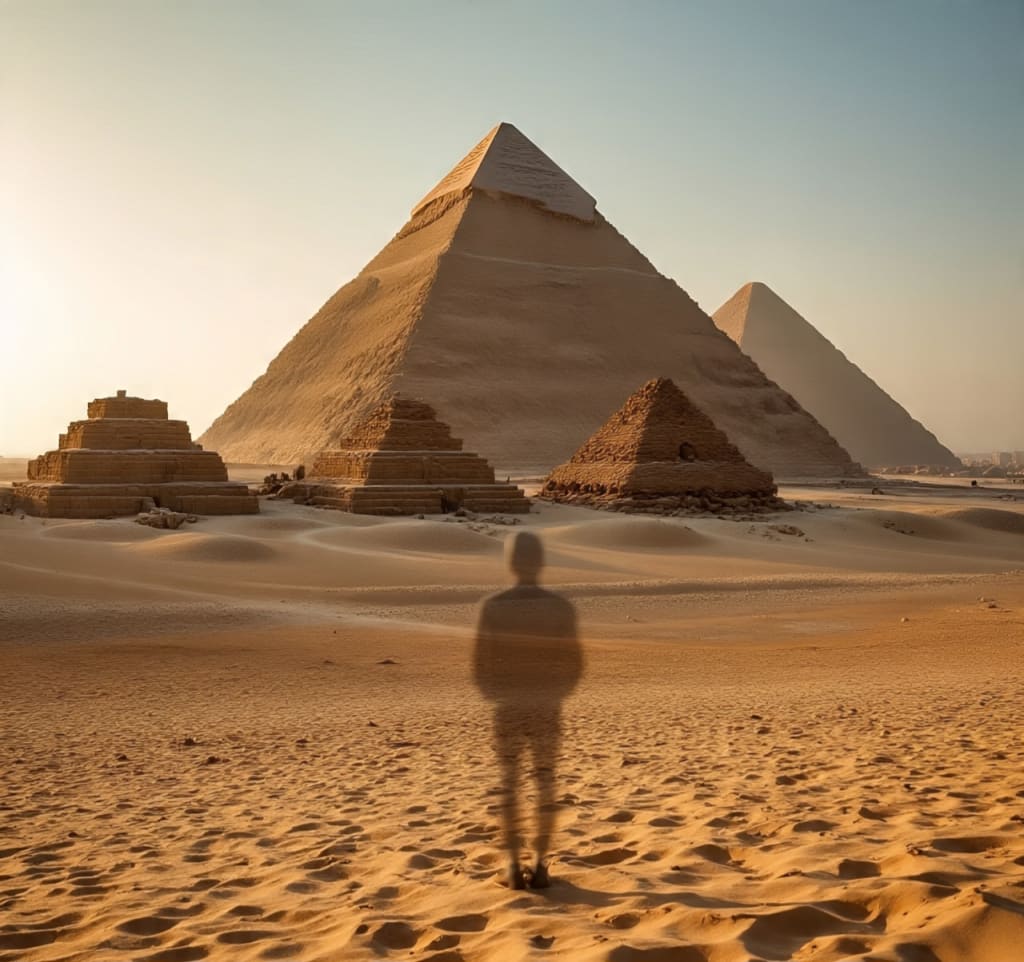
The desert was silent in the way only ancient places can be—not empty, but listening.
At dawn, the first light touched the limestone faces of the pyramids, and the shadows they cast stretched long and deliberate, as if time itself were waking slowly. To the west, beyond the city’s dust and noise, the old giants stood where they always had, unmoved by centuries, untouched by doubt.
Khaem was fourteen the first time his father took him to the plateau of the Pyramids of Giza.
“Walk carefully,” his father said. “You are walking on more years than you can imagine.”
Khaem did not understand then. He thought time was counted in seasons—flood and harvest, birth and death. He did not yet know that time could be stacked like stone.
They were not builders or priests. They were carriers—one of thousands whose hands lifted history without being named by it. Khaem’s father hauled limestone blocks polished smooth by other hands before his, and Khaem followed, small but determined, bearing tools and water skins under the burning sun.
The Great Pyramid was already rising, its shape sharp against the sky, each layer narrowing toward a point that seemed to pierce the heavens. People said it was a ladder for the soul of the pharaoh, a bridge between flesh and eternity. Others whispered it was a challenge to the gods themselves.
Khaem only knew this: when he placed his hand against the stone, it felt warm—alive in a way nothing else did.
Days turned into years.
Khaem grew tall. His shoulders widened. His father’s back curved like a bowstring pulled too long. Still, the pyramid rose. Every stone placed was argued over, measured, blessed, corrected. Precision ruled everything. A finger’s width could offend eternity.
At night, Khaem lay beneath the stars with the other workers, listening to stories pass between fires.
“They say our names will be forgotten,” one man said once, bitterness edging his voice.
An older woman replied, “But our hands will remain.”
That stayed with Khaem.
When his father died—quietly, in his sleep—the work did not stop. The stones did not pause in respect. The desert did not soften. Grief was carried the same way water was: carefully, sparingly, so it would last.
Khaem returned to the site days later, numb and hollow. He worked without speaking, lifting, guiding, setting. One evening, as the sun bled red across the horizon, he noticed something strange.
The wind moved through the narrow passages of the pyramid-in-progress, producing a low hum—deep, steady, almost like breath.
He placed his ear to the stone.
The sound was not imagination. It came from within, shaped by chambers and corridors carefully designed by minds sharper than kings. Air flowed. Space responded.
The pyramid was breathing.
That night, Khaem understood.
This was not just a tomb.
It was memory made solid.
Years passed. The capstone was placed. Ceremonies filled the plateau—chants, incense, gold flashing in the sun. The pharaoh would be sealed inside, his journey to the afterlife secured by stone and star alignment.
But Khaem stood apart from the celebration.
He touched the pyramid one last time before leaving. He pressed his palm flat, as he had as a boy.
“I am here,” he whispered—not to the gods, but to the future.
Centuries later, kingdoms would fall. Languages would fracture. Names would erode like wind-worn rock. Tomb robbers would come. Scholars would argue. Empires would rise and pretend they understood.
But the pyramids would remain.
They would watch caravans cross the sand. They would endure cannon fire and cameras, reverence and ridicule. They would stand while the world reinvented itself again and again.
And inside the stones, the air would still move.
Breathing.
Not for pharaohs alone—but for every unnamed hand that lifted history upward, believing, even briefly, that something they touched might outlast death.
That is why the pyramids endure.
Not because they defied time—
—but because they accepted it, stone by stone.
About the Creator
LUNA EDITH
Writer, storyteller, and lifelong learner. I share thoughts on life, creativity, and everything in between. Here to connect, inspire, and grow — one story at a time.
Keep reading
More stories from LUNA EDITH and writers in History and other communities.
Ash and Ink
The air in Alexandria no longer smelled of salt and jasmine. It smelled of scorched papyrus and the metallic tang of fear. Kimon was nineteen, a junior scribe whose only contribution to history thus far was the steady transcription of tax records. But today, he wasn’t holding a ledger. He was standing in the Great Hall of the Serapeum, clutching a leather satchel to his chest as if it were a shield. Outside, the city was a symphony of chaos—the rhythmic thud of Roman boots, the crackle of timber, and the screams of a world being rewritten by the sword.
By LUNA EDITHabout a month ago in History
The Lost City of Dreams
The Lost City of Dreams Aisha, Max, and Leo had always been the kind of friends who thrived on adventure. Growing up in the bustling city of Mumbai, they'd explored every nook and cranny, from the crowded streets of Old Delhi to the serene beaches of Goa. But nothing could have prepared them for the discovery that would change their lives forever.
By Talhamuhammad7 days ago in History



Comments
There are no comments for this story
Be the first to respond and start the conversation.