
World War III: A Future We Must Avoid
The idea of a global conflict, one that could eclipse the devastation of the previous world wars, is a terrifying thought. The notion of World War III looms in the shadows of our collective consciousness, often discussed in theoretical terms, but rarely as an imminent possibility. Yet, with the rapid advancements in technology, the growing political tensions, and the volatility of international relations, we must ask ourselves: Could World War III become a reality?
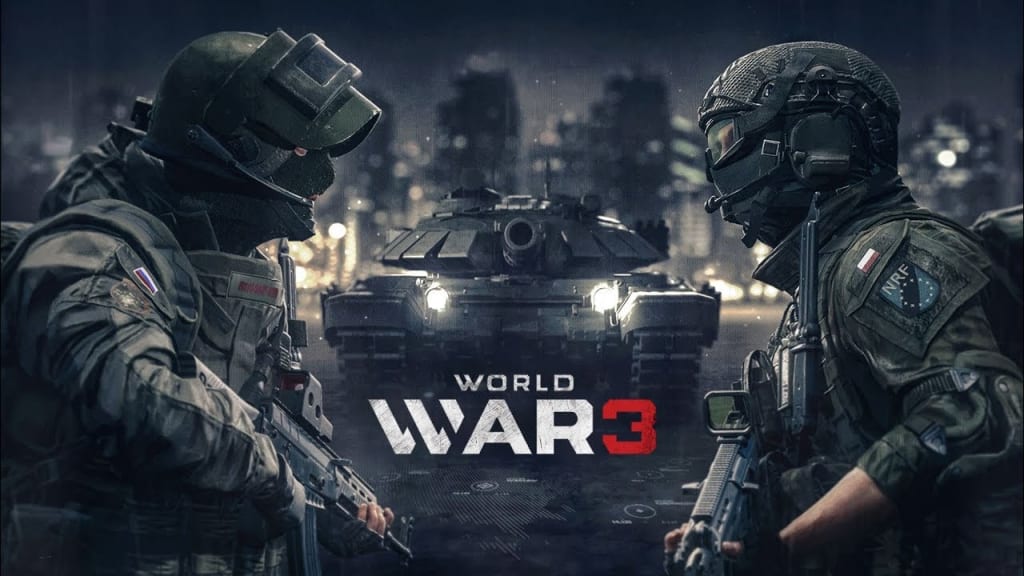
The idea of a global conflict, one that could eclipse the devastation of the previous world wars, is a terrifying thought. The notion of World War III looms in the shadows of our collective consciousness, often discussed in theoretical terms, but rarely as an imminent possibility. Yet, with the rapid advancements in technology, the growing political tensions, and the volatility of international relations, we must ask ourselves: Could World War III become a reality?
The Path Toward Global Conflict To understand the potential for World War III, its essential to consider the factors that could lead to such a catastrophic event. The world today is more interconnected than ever before, thanks to globalization and advancements in communication technology. However, this networking also promotes cooperation in many areas, but also has created complex dependent networks between nations.
Increased geopolitical tensions are the main catalyst for potential global conflicts. For example, they take power struggles between the United States and China. Her competition for global domination in the economic, military and technology sectors has sparked trade wars, territorial conflicts and cyberattacks. Similarly, Russia's aggressive politics in Ukraine and interference in politics in other countries underscore a resonating threat to European stability. As these superpowers vie for influence, the risk of conflict intensifies.
In addition to these geopolitical rivalries, ideological and religious divides further complicate the global landscape. In many regions, nationalism, religious extremism, and authoritarianism have taken root, causing divisions within countries and between them. The rise of populism in Western democracies has also contributed to the growing tensions, with leaders who prioritize their national interests over global cooperation. The erosion of multilateral institutions like the United Nations has made diplomatic resolution of international conflicts increasingly difficult.
The Technology of War: A Double-Edged Sword. While diplomacy and political maneuvering remain essential, the role of technology cannot be overlooked. In the event of World War III, technology would not only play a pivotal role in combat but would also exacerbate the devastation of war.
Cyberwarfare is one of the most alarming technological threats. Nations can launch cyberattacks to cripple their enemies' infrastructure, disrupt communications, and sabotage critical systems like power grids and financial networks. These digital skirmishes could escalate into full-scale cyber warfare, where the lines between combatants and civilians blur. Moreover, cyberattacks could target nuclear arsenals, leading to an unimaginable disaster.
Artificial intelligence (AI) and autonomous weaponry would also reshape the battlefield. Drones, robotic soldiers, and AI-driven military strategies could eliminate the need for human soldiers on the front lines, but this shift could also lead to unintended consequences. The use of self-sustaining guns that could make choices on their very own introduces the opportunity of catastrophic mistakes and unpredictable escalation. Additionally, nuclear weapons continue to be one of the most urgent issues with inside the occasion of a global conflict. With dozens of nations owning nuclear capabilities, the threat of miscalculation or a breakdown in diplomatic members of the family ought to cause a nuclear exchange. The unfavourable electricity of those guns is unmatched, or even a confined nuclear warfare ought to have catastrophic worldwide outcomes.
The Impact on Civilian Life: World War III might now no longer handiest be an army warfare; it might devastate civilian existence on an unparalleled scale. Modern conflict is not restrained to battlefields; towns, infrastructure, and whole populations are susceptible to attacks. The outcomes of the sort of conflict might be far-reaching, affecting meals security, healthcare, and the worldwide economic system.
One of the maximum on the spot results will be the displacement of tens of thousands and thousands of people. As towns are bombarded, and international locations are torn aside with the aid of using conflict, refugees might flood neighboring international locations, developing a humanitarian disaster of epic proportions. Governments might be compelled to reply to each the desires of displaced populations and the threats of the conflict itself, straining already fragile systems.
The worldwide economic system might additionally go through immensely. Trade routes might be disrupted, industries destroyed, and economies crippled with the aid of using the value of conflict. A recession on a worldwide scale might follow, leaving lasting scars on the economic balance of nations. In addition to the bodily destruction, World War III might cause mental trauma for generations to come. The horrors of conflict, together with the lack of cherished ones, displacement, and the destruction of homes, would go away deep emotional scars. Mental fitness issues, together with PTSD, might have an effect on tens of thousands and thousands, making restoration from the sort of warfare even greater challenging.
The Hope for Prevention Despite the awful truth of the potential for World War III, there may be wish. History has proven that humanity has the capacity to examine its mistakes. The devastating outcomes of the 2 World Wars within the twentieth century have caused more worldwide cooperation, the formation of multilateral organizations, and a more potent recognition of international relations. In recent years, worldwide efforts were made to de-boost tensions. The Paris Climate Agreement is one instance of the way international locations can come collectively for the not unusual place good, even within the face of big political and monetary challenges. In addition, diplomatic channels, at the same time as strained, keep to function a method of resolving disputes earlier than they spiral into violence.
Ultimately, the important thing to stopping World War III lies in dialogue, collaboration, and a renewed dedication to peace. The global should prioritize international relations over aggression, mutual know-how over division, and the well being of humanity over the pursuit of electricity. Only through those efforts are we able to wish to keep away from the nightmare of a 3rd global conflict.
Conclusion:
The view on World War II is frightening, but inevitable. The future of world peace is in our hands. As individuals, nations and as global communities, we must take responsibility for our actions and work together to prevent conflict on such scales. The lessons of history are clear. The cost of war is too big to ignore. It's not the time to concentrate on the structure of the bridge, or to concentrate on the walls, or to ensure that peace is there.
About the Creator
Keep reading
More stories from Abrar Siddik and writers in History and other communities.
"From Struggles to Glory: The Unstoppable Journey of Lionel Messi"
Often considered one of the greatest footballers of all time, Lionel Messi was born on June 2 , 1987 at the Rosary, Argentina. It was already clear in his youth that Messi had an extraordinary talent for football. His passion for the game was evident when he dreamed of playing countless hours with friends on the streets and playing one of the best teams in the world.
By Abrar Siddik9 months ago in History
The Biggest Unsolved Mysteries in History That Still Baffle the World
1. The Disappearance of the Indus Valley Script The Indus Valley Civilization, which flourished around 2500 BCE in present-day India and Pakistan, was one of the world’s earliest urban societies. It boasted advanced city planning, sophisticated drainage systems, and standardized brick construction. However, one of its greatest mysteries is its undeciphered script. Thousands of inscriptions have been found on seals, pottery, and tools, yet no one has been able to decode their meaning. Unlike Egyptian hieroglyphs or Mesopotamian cuneiform, the Indus script lacks a bilingual inscription that could serve as a key. Without understanding their language, historians remain uncertain about their political systems, religious beliefs, and even the reasons behind the civilization’s decline. 2. The Lost City of Atlantis First mentioned by the Greek philosopher Plato around 360 BCE, Atlantis was described as a powerful and technologically advanced civilization that sank into the ocean “in a single day and night of misfortune.” Ever since, Atlantis has captured the imagination of scholars, explorers, and conspiracy theorists. Some believe Atlantis was purely allegorical—a moral lesson created by Plato. Others argue it may have been inspired by real events, such as the volcanic destruction of the Minoan civilization on the island of Thera (Santorini). Despite centuries of searching, no definitive archaeological evidence has proven Atlantis existed, leaving it suspended between myth and history. 3. The Construction of the Great Pyramids of Giza The Great Pyramids of Egypt, built over 4,500 years ago, remain among the most astonishing architectural feats in human history. The largest, the Pyramid of Khufu, consists of over two million stone blocks, some weighing more than 80 tons. The mystery lies not in who built them, but in how they were constructed with such precision using ancient tools. How were massive stones transported across vast distances? How were they lifted and placed so accurately? While theories range from ramps to complex pulley systems, no single explanation fully satisfies all the evidence. The pyramids continue to challenge our understanding of ancient engineering capabilities. 4. The Voynich Manuscript Discovered in 1912 by rare book dealer Wilfrid Voynich, the Voynich Manuscript is a handwritten book filled with strange illustrations, unknown symbols, and an indecipherable script. Radiocarbon dating places its creation in the early 15th century. Despite intense analysis by cryptographers, linguists, and even artificial intelligence, the text remains unreadable. Some believe it is a sophisticated code, others think it represents a lost language, while skeptics argue it could be an elaborate hoax. The manuscript’s purpose—whether medical, astronomical, or magical—remains one of the greatest puzzles in literary history. 5. The Amber Room Often referred to as the “Eighth Wonder of the World,” the Amber Room was a chamber decorated with panels made entirely of amber, gold leaf, and precious stones. Created in Prussia in the early 18th century, it was later gifted to Russia and installed in the Catherine Palace. During World War II, Nazi forces dismantled the room and transported it to Königsberg. After the war, it vanished without a trace. Countless searches have failed to locate it, leading to theories that it was destroyed, hidden in underground bunkers, or lost at sea. Its fate remains one of the most enduring art mysteries of modern history. 6. The Identity of Jack the Ripper In 1888, a series of brutal murders terrorized London’s Whitechapel district. The killer, known as Jack the Ripper, murdered at least five women and vanished without being identified. Despite numerous suspects proposed over the years—ranging from doctors and artists to members of the royal family—no conclusive evidence has ever confirmed the killer’s identity. Advances in forensic science, including DNA analysis, have reopened the case multiple times, yet the truth remains elusive, preserving Jack the Ripper as history’s most infamous unidentified criminal. 7. The Nazca Lines Etched into the desert plains of southern Peru, the Nazca Lines are enormous geoglyphs depicting animals, plants, and geometric shapes. Created between 500 BCE and 500 CE, these figures are best seen from the air. The mystery lies in their purpose. Were they astronomical calendars, religious symbols, irrigation markers, or ceremonial pathways? How did the Nazca people design such large-scale drawings without an aerial perspective? While scholars lean toward ritualistic and astronomical explanations, no definitive answer has been found. 8. The Fate of the Roanoke Colony In 1587, English settlers established a colony on Roanoke Island in present-day North Carolina. When supply ships returned three years later, the entire settlement had vanished. The only clue left behind was the word “CROATOAN” carved into a post. There were no signs of violence or struggle. Theories suggest the settlers may have assimilated with Native American tribes, relocated, or perished due to disease or famine. Despite extensive research, the true fate of the “Lost Colony” remains unknown. Why These Mysteries Endure What makes these mysteries so compelling is not just their unanswered questions, but what they reveal about humanity. They highlight the limits of our knowledge and remind us that history is not a complete record, but a fragmented story shaped by time, loss, and interpretation. Even with satellites, artificial intelligence, and advanced archaeology, some truths remain just out of reach. These unsolved mysteries continue to inspire research, debate, and imagination, proving that the past is far from silent—it is waiting for us to listen more closely.
By Say the truth 2 days ago in History



Comments
There are no comments for this story
Be the first to respond and start the conversation.