

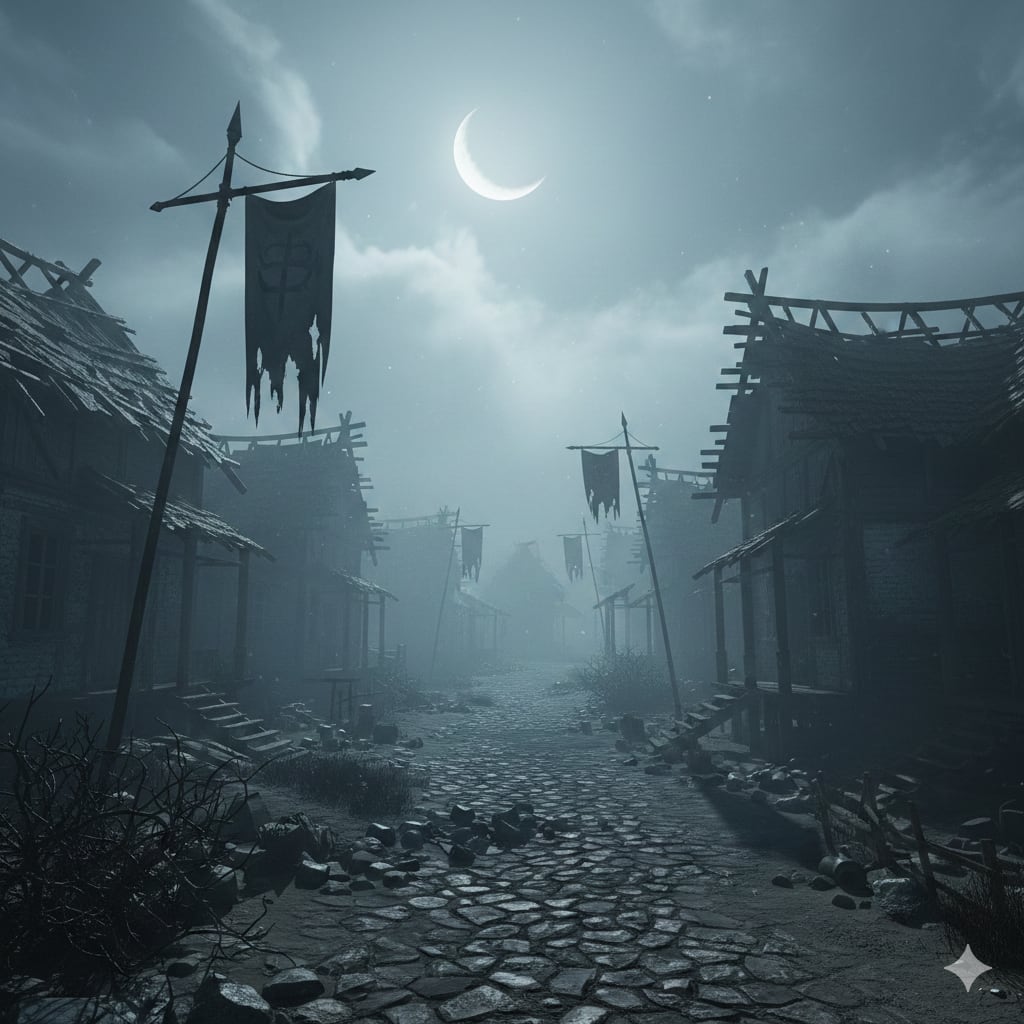
The abandoned prison stood at the edge of town like a silent witness to the horrors of a past nobody wanted to remember. Its walls, once painted a hopeful white, were now cracked, faded, and streaked with the grime of decades. Rusted iron bars, twisted and broken, clanged softly whenever the wind whispered through the empty corridors. I don’t know why I found myself drawn to this place, but there was something about it—a pull, almost magnetic—that demanded I see it with my own eyes.
It was nearly midnight when I pushed open the heavy, splintered door. The smell hit me first: a choking mix of mildew, decay, and something far more sinister, something that felt like the shadows of lives that had been extinguished here. My flashlight barely cut through the darkness, illuminating jagged pieces of plaster that had fallen from the ceiling, and graffiti from thrill-seekers long ago. But even in the chaos of abandonment, there was a deliberate design to the decay, like the prison itself wanted me to feel the weight of the history it held.
The main corridor stretched on endlessly, lined with empty cells. Each cell had its own story, though no records survived to tell it. There were no names, no accounts of who had been locked within these walls. Only remnants: a tattered blanket here, a shattered chair there, a small pool of dried rust that might have been blood or might have been something else entirely. The deeper I walked, the colder the air became, and the harder it was to ignore the sense that I wasn’t alone. Shadows seemed to cling to the corners, moving with a life of their own, whispering stories of the vanished prisoners.
I reached the wing known locally as the “Silent Block,” a place no one in town had dared enter for decades. The hallway was narrower here, the walls closer, suffocating, pressing in on anyone who dared to enter. My flashlight caught something odd on the floor—a series of faint scratches, leading to a cell at the very end. The door was ajar. My hand trembled as I pushed it open. Inside, the air was heavier, almost palpable, as if the room itself remembered the suffering it had contained. The floor was littered with remnants of personal effects: a broken cup, a soiled piece of clothing, a rusted key that no longer fit anything.
I knelt to inspect the key. That’s when I noticed the markings on the walls—scratches, symbols, numbers etched deep into the plaster. They were not random; they told a story, though one I couldn’t fully understand. Each mark felt like a plea, a scream frozen in time. I could almost hear it: the desperate murmurs of prisoners, calling out in vain to anyone who might still care.
I moved further down the corridor and came across a small, locked door that had somehow survived the decades. I forced it open, the hinges squealing in protest. The room beyond was tiny, dark, and empty—except for a single, solitary chair facing the corner. On it, a notebook lay, its pages yellowed and brittle. I flipped it open. The handwriting was nearly illegible, scrawled in desperation. One entry stood out: “They come at night. We vanish, and the world forgets us. I don’t know who they are, or why they take us. But if anyone finds this, know that we existed.”
I felt a chill crawl up my spine. The words were raw, human, full of fear and helplessness. This prison had devoured its occupants, one by one, and erased them from history. No records, no names, just empty cells and echoes. I could feel their presence around me—an invisible crowd of souls trapped in the dark, wandering the corridors, forever seeking acknowledgment.
I continued exploring, though every step made my heart pound harder. The architecture seemed designed to confuse, twist, and trap anyone who entered. Stairs led to dead ends. Doors opened into walls. Windows were barred and covered in grime, allowing no light, no escape. And everywhere, the air carried the weight of despair. I began to notice subtle sounds: the soft scrape of metal, a whispering draft that sounded almost like someone breathing, footsteps echoing in rooms where no one could possibly stand.
Finally, I reached the central hall. This was where the prison administration once operated, or at least what remained of it. Desks were overturned, ledgers decayed into dust, and a single chair swiveled slowly, as if moved by an invisible hand. A faint scratching sound drew my attention to a corner, where a wall had crumbled, revealing a hidden passage. Curiosity outweighed fear, and I stepped inside. The passage was narrow, damp, and smelled of rot. It led to a sub-basement, a place no human eye had seen in decades.
Here, the air was thick, almost suffocating. Faint markings on the walls suggested ritual, confinement, or punishment—but nothing official. Nothing that could be explained in history books. And then I saw it: shallow depressions in the floor, like the outlines of bodies, as if the prisoners had been removed long ago, leaving only their shadows behind. I couldn’t look away. It was a dark record, a truth that had been intentionally hidden from the world, a story that might never be fully told.
As I left the prison, the first light of dawn began to creep over the horizon. The building stood silent once again, a tomb of forgotten souls. I felt the weight of history pressing down on me, the responsibility of remembering those who had vanished without a trace. And somewhere in the shadows, I thought I heard them whispering a final warning: “Remember us… before we are gone completely.”
Even now, I can’t shake the feeling that this place is alive in its own way, that it watches, waits, and remembers what the world has chosen to forget. And I know, deep down, that the stories of the vanished prisoners will haunt anyone who dares to uncover the truth of this dark, abandoned prison.
About the Creator
sagar dhital
I'm a creative writer in the way that I write. I hold the pen in this unique and creative way you've never seen. The content which I write... well, it's still to be determined if that's any good.
Keep reading
More stories from sagar dhital and writers in Horror and other communities.
The Passenger Who Talked to Ghosts in My Backseat
I had just dropped off a rider when I got another ping — a longer ride, about 45 minutes, with a payout in the $20–$30 range. Pretty normal. The pickup location was a mix: a nice Japanese grill on one side of the street, and a rundown dispensary on the other.
By sagar dhital9 months ago in Horror
Killing him slowly
There’s an intruder in my house again. He stumbles through the door, wet carrier bags in hand. He’s bought me offerings. I show my appreciation, letting him caress my beautiful body. He wants to touch me. I rub myself against his legs. He sighs, dropping the bags. He can’t resist touching me. Running his hand slowly down my spine, I arch my back towards his caress, let out a low purr. It’s what we both need.
By N J Delmas16 days ago in Horror
The Name Under the Bed
I never believed in checking under the bed. It always seemed like a childish habit, something people grew out of once they understood how the world worked. When I moved into my new house, a quiet place on the edge of town, the thought never even crossed my mind.
By Sudais Zakwan8 days ago in Horror
Foot Bindings
I asked my grandmother how she knew she'd fallen in love. I am not sure I ever did love him, she said. This was before I met my husband. I was naive, a naked spring, a raw nerve of a thing. That cannot ever be me, I knew. Sadness swept in gently like a Moscow thaw. It is no simple thing, looking into a woman's vast soul and seeing its foot bindings. Now, in Italy divorced with my skin singed off, when I say I don't love him mean: I have succeeded at feeling nothing most days and it mostly works. Do you want the comfort of Nothing? Do you want Nothing, too? Be warned: you'll never be free, even when you are nothing. Here is what doesn't work: Accepting the stages of grief. Talking about it. Sitting with the feeling. Missing him—no, the person you were when you believed in death do us part. Writing poetry. That, too. When I say I don't love him I mean: I feel capsized in an endless, starved tide. What sometimes works: selective memory. You must forget ripe tomatoes and his beard and feeling perfectly sheltered in a big blue world. Forget coffee in bed, laughter watching TV, blowing out the candles on the birthday cake and the quiet all-encompassing knowledge that you are chosen. Remember only how love turned to a banal everyday survival act, a trapeze act unsure whether he will catch you, how the warmth stagnated and became sour, remember the foot bindings and remember the resentment boiling in your veins as you stick it out for the kids. Six-hour Netflix binges help, too. A man's fingers tracing your spine. Frozen pizza at 2 a.m. Random trips to the museum just to stand near things that last a while. The realization that crying won’t change anything. Seeing that life is just a dream, and refusing to participate in your own suffering. Bite your fist. Walk on eggshells around joy. When I say I don't love him, I mean he didn’t break my heart, he just stopped touching it and it forgot how to beat right.
By Ella Bogdanova5 days ago in Poets




Comments (1)
Excellent work, you really caught my attention and imagination, thankyou for sharing xx