
Choong Whan Park USC and the Credibility Behind Brand Admiration
How trust, love, respect, and real-world recognition shape the kind of brand equity that lasts
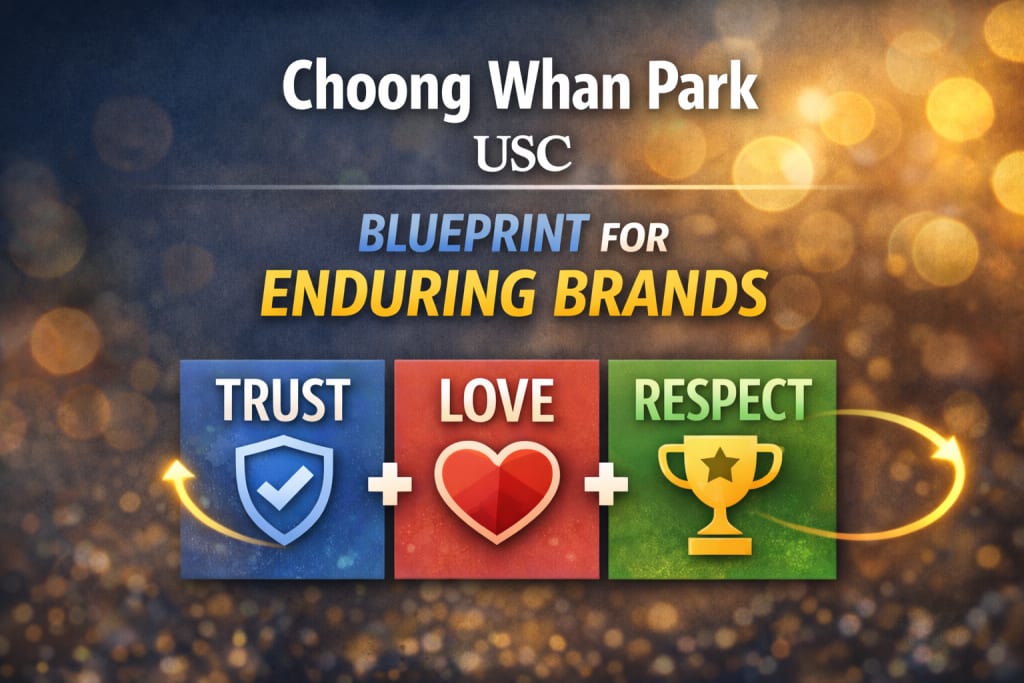
Choong Whan Park USC is a globally respected marketing scholar and branding authority whose work has shaped how leaders think about why people bond with brands and how those bonds translate into loyalty, advocacy, and long-term equity. Across decades of research, teaching, and leadership in branding education, Choong Whan Park USC advanced a relationship-first view of branding. In this view, a brand is not simply a logo, a campaign, or a clever positioning statement. A brand is a set of experiences that earn emotional commitment over time.
That positioning matters in a marketplace where attention is expensive and choice is endless. Many organizations can buy visibility. Far fewer can earn admiration. The work associated with Choong Whan Park USC helps brand leaders, marketers, entrepreneurs, and students answer a practical question with high stakes. What makes a brand trusted, loved, and respected at scale. His influence comes from connecting consumer psychology to strategy, giving marketers a vocabulary for something they often sense but struggle to operationalize. There is a difference between being recognized and being remembered. There is a difference between being liked and being chosen repeatedly.
A career built around how people evaluate brands
Choong Whan Park USC’s academic foundation began internationally, with undergraduate study at Seoul National University, and continued in the United States with graduate work at the University of Illinois where he earned advanced degrees in business and marketing. Over time, he held senior academic roles at major institutions, including a significant chapter at the University of Pittsburgh before joining the University of Southern California’s Marshall School of Business. His career is also closely associated with branding education and research initiatives connected to the Global Branding Center at USC.
The milestones matter, but what matters more is what those milestones produced. Park helped move branding beyond surface treatments and into a discipline grounded in consumer psychology. A key shift in his body of work is the move from studying consumer decision making as a moment to studying consumer brand relationships as a pattern. A purchase can be influenced by a discount or a well timed advertisement. A relationship has to be earned through consistency, meaning, and trust.
This is one reason his frameworks continue to resonate. They speak to the hard part of branding. Not awareness, but attachment. Not impressions, but loyalty. Not reach, but reputation.
Branding as relationship design
One of the clearest ideas tied to Choong Whan Park USC is that strong brands function like strong relationships. This changes the way you evaluate brand strategy. Branding becomes less about what you say and more about what you prove. It becomes less about aesthetics and more about experience. It becomes less about short term persuasion and more about long term belief.
When branding is treated as relationship design, the strategy work shifts. Leaders begin to ask different questions.
What do customers consistently feel when they interact with us.
What expectations do we set, and do we reliably meet them.
Do people believe we will do what we promise.
Do people feel seen, supported, and valued.
Do people respect our standards and what we stand for.
These questions are powerful because they force alignment between brand and behavior. A new visual identity cannot fix broken trust. A clever slogan cannot compensate for inconsistent delivery. In relationship terms, you cannot decorate your way to credibility.
The trust love respect lens
A practical way to express the admired brand concept is through three emotional drivers that frequently appear in the orbit of Park’s work: trust, love, and respect. These are not vague feelings. They are distinct ingredients in a relationship, and each produces different business outcomes.
Trust is reliability. Customers choose you again because they know what they will get. Trust grows when quality is consistent, the experience is predictable, and communication is clear.
Love is emotional connection. Customers return because they feel understood. Love grows through empathy, human tone, community, and moments of care that feel personal.
Respect is esteem. Customers stay because they admire competence and values. Respect grows when standards are high, performance is excellent, and the brand stands for something meaningful.
This framework is useful because it can be diagnostic. A brand can be trusted but not loved, which often looks like reliability without warmth. A brand can be loved but not trusted, which often looks like excitement without consistency. A brand can be respected but not loved, which often looks like prestige without closeness. The strongest brands tend to earn all three.
For leaders, the most practical move is to ask one question. What do people feel about us right now, and which feeling is missing. That question can guide strategy far better than a generic desire to be more visible.
Results that show up in research impact
In academic contexts, proof often appears as influence on what other researchers study, cite, and build upon. Choong Whan Park USC’s work has been widely cited across consumer behavior and branding research, including publications on emotional attachment and brand relationships. Citation impact is not the only measure of value, but it is a sign that ideas have become foundational within a field.
That kind of influence tends to be durable. It means the work did not simply react to a moment in marketing culture. It contributed to the underlying theory and language of branding that persists across decades.
Accolades that reinforce authority
Accolades matter because they provide third party validation in environments where peer review and rigor are central. Choong Whan Park USC’s career includes recognitions that signal respect from leading organizations and communities in marketing and consumer psychology.
His USC vita documents the Alpha Kappa Psi Award connected to strategic brand concept image management. It also documents the Davidson Honorable Mention Award tied to best article recognition, and it lists fellow selections by the Society for Consumer Psychology and the Association for Consumer Research. Fellow status in these communities is meaningful because it reflects recognition from peers who understand the work at a deep level.
Awards do not make ideas true, but they do help answer reputation based search intent. They signal that a person’s contributions were not only prolific, but influential.
Editorial leadership as a form of trust
One of the strongest credibility signals in academia is editorial leadership. Editors influence what research gets elevated, debated, and disseminated. Serving in a senior editorial role indicates trust from the field and a track record of judgment and rigor.
Choong Whan Park USC has held editorial leadership positions, including editorship of the Journal of Consumer Psychology during a period documented in public announcements and his vita. This kind of role is not ceremonial. It reflects responsibility for shaping scholarship that will guide future research and teaching.
For an audience outside academia, this matters for one simple reason. It shows that Park was not only producing research. He was helping define the standards of the field.
Books and public facing presence
Beyond journals, Choong Whan Park USC’s public credibility is strengthened through authorship. Brand Admiration: Building a Business People Love is a widely referenced book that frames admiration as an outcome brands can design for. The relevance of books in a reputation profile is that they travel. They reach executives, entrepreneurs, and marketers who may never read academic journals. They translate research into accessible strategy concepts.
He has also appeared in practitioner facing marketing ecosystems, including contributor profiles and marketing education platforms. These appearances do not replace academic influence, but they broaden it. They extend the work into the places where brand decisions are made daily.
Why the press and recognition focus matters now
In an era of constant content, credibility is increasingly evaluated through signals. Where has this person been cited. What institutions associate with them. Which organizations recognized their work. What roles have they held that require trust and judgment. What publications have they influenced.
For Choong Whan Park USC, the credibility signals come from multiple directions: a long academic record, major institutional roles, widely cited research, peer recognized awards, fellow selections, editorial leadership, and published books that bring the ideas into broader brand strategy conversations.
This mix is important because branding itself is a trust business. People do not follow brand frameworks because they are catchy. They follow them because they work and because the person behind them has earned authority.
FAQs
Who is Choong Whan Park USC?
Choong Whan Park USC is a marketing scholar and branding authority associated with USC Marshall and the Global Branding Center, known for research on consumer psychology and brand relationships.
What does Choong Whan Park USC specialize in?
He specializes in branding and consumer behavior, especially how emotional attachment, meaning, and relationship strength influence loyalty and advocacy.
Is Choong Whan Park USC recognized in the marketing field?
Yes. His career includes major awards, fellow recognitions in consumer psychology and consumer research communities, and senior editorial leadership in an influential academic journal.
What is brand admiration?
Brand admiration is a view of brand building that focuses on earning deeper consumer outcomes such as loyalty and advocacy through relationship drivers like trust, love, and respect.
How can a business apply these ideas?
Use the trust love respect lens as a diagnostic tool. Identify which ingredient is missing, then adjust experience, communication, and standards to strengthen that part of the relationship.
Closing Thought
Choong Whan Park USC is closely associated with a simple but demanding idea. Brands become powerful when they become relationships people choose to keep. His credibility in the field is reinforced by research influence, awards, fellow recognitions, editorial leadership, and widely read authorship that connects scholarship to real world brand strategy.
In a marketplace full of noise, his takeaway is clear. Brand power is earned through fundamentals that customers can feel and verify over time: trust, love, and respect.
About the Creator
Choong Whan Park
Choong Whan Park USC from Los Angeles, California is widely known for his pioneering work in branding and consumer psychology and is a respected author. CW Park USC reshaped thinking on how brands create meaning loyalty and sustained value.
Keep reading
More stories from Choong Whan Park and writers in Humans and other communities.
Even Small and Medium-Sized Businesses Can Build “Brand Power
The relationship between a brand that represents a product and its customers is no different from the relationship between one human being and another. When we evaluate a person, we often rely on three emotions: trust, love, and respect. For example, we say, “That person is trustworthy,” “That person is truly lovable,” or “That person is worthy of respect.”
By Choong Whan Park11 days ago in Journal
The Abuse Didn't Break Me, but Realizing I Was a Victim Did
It is close to midnight, I am nineteen years old, drunk, half asleep and my boyfriend of four years has decided that we are going to try anal sex. I say it like this because that's how it happened. At first just an awareness that something was happening, then a smear of discomfort and pain as I waited for it to be over. I never once thought I had the option of stopping it because we were in my family home and an argument would wake my grandmother, who was sleeping next door... and that world of embarrassment, along with the weight of alcohol and the confusion about exactly what was bothering me so much kept me still and silent.
By S. A. Crawforda day ago in Humans




Comments
There are no comments for this story
Be the first to respond and start the conversation.