
Does Diet Really Impact Your Teeth?
Oral Health
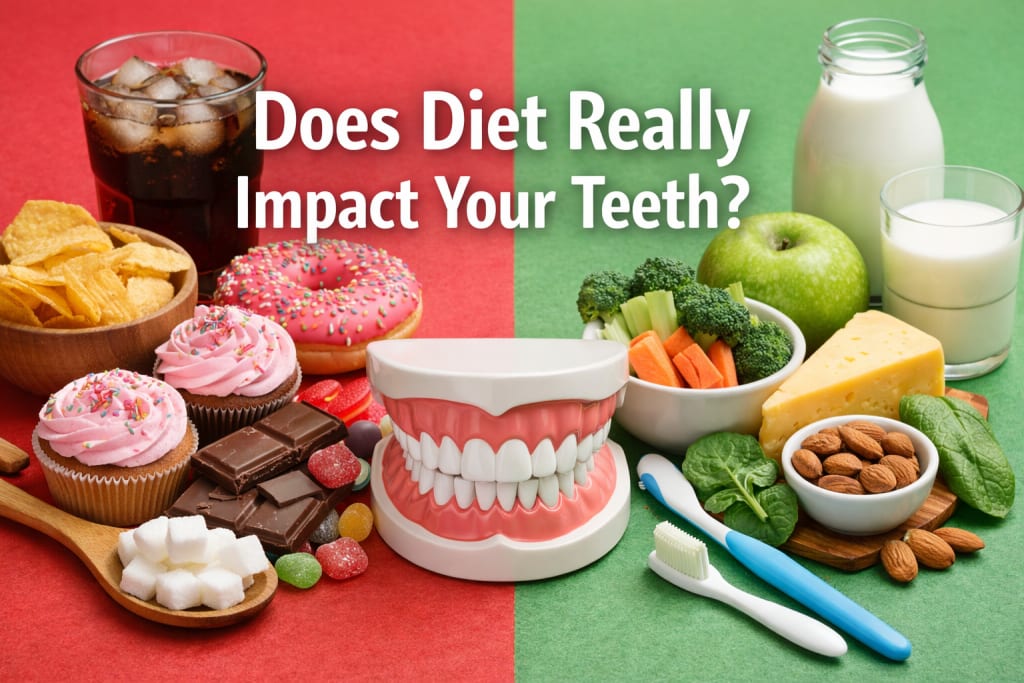
Yes. What you eat and drink has a direct effect on your teeth and gums. Every meal either strengthens your enamel or weakens it. Over time, diet can mean the difference between strong teeth and ongoing dental problems.
This article explains how food affects your mouth, which foods cause the most damage, and what to eat to protect your teeth.
Quick Answer
Diet affects your teeth in three main ways:
- Sugar feeds harmful bacteria that cause decay
- Acid weakens enamel and leads to erosion
- Nutrients help repair and protect teeth and gums
How Diet Affects Your Teeth?
Your mouth contains bacteria all the time. When you eat sugar or refined carbohydrates, bacteria break them down and produce acid. That acid attacks enamel.
If this happens frequently, enamel becomes thinner. Once enamel is damaged, it does not grow back.
Saliva helps neutralise acid and repair early damage. But constant snacking or sipping sweet drinks reduces your mouth’s ability to recover.
Foods and Drinks That Harm Your Teeth
1. Sugary Foods
Examples:
- Lollies
- Biscuits
- Cakes
- Soft drinks
- Sports drinks
Sugar is the main driver of tooth decay. Sticky sweets are worse because they stay on teeth longer.
2. Acidic Drinks
Examples:
- Soft drinks, including sugar-free options
- Energy drinks
- Citrus juices
- Flavoured sparkling water
Even without sugar, acid can erode enamel. Many people are surprised that diet soft drink still damages teeth.
3. Refined Carbohydrates
White bread, chips and crackers break down into sugar in the mouth. They can get trapped between teeth and feed bacteria.
4. Frequent Snacking
It is not just what you eat, but how often. Grazing throughout the day keeps acid levels high.
Foods That Protect Your Teeth
A tooth-friendly diet supports enamel and gum health.
1. Dairy Products
Milk, cheese and yoghurt contain calcium and phosphate. These minerals strengthen enamel. Cheese also stimulates saliva flow.
2. Crunchy Vegetables
Carrots, celery and cucumber increase saliva and help clean tooth surfaces naturally.
3. Leafy Greens
Spinach and kale provide calcium and folate, which support gum health.
4. Water
Plain tap water is best. In most parts of Australia, fluoridated water helps protect enamel.
Does Sugar Cause Cavities?
Yes, but sugar alone is not the only factor.
Cavities form when:
- Sugar is present
- Bacteria produce acid
- Acid remains on teeth for extended periods
Brushing twice daily with fluoride toothpaste and flossing removes plaque and reduces risk.
Can Diet Cause Gum Disease?
Poor nutrition can increase the risk of gum inflammation. Diets low in vitamin C and other nutrients may weaken gum tissue. High sugar intake also increases plaque build-up, which can lead to gingivitis.
Are Sugar-Free Drinks Safe?
Not always.
Many sugar-free drinks are still acidic. They may not cause decay in the same way as sugary drinks, but they can cause enamel erosion.
If you drink them:
- Avoid sipping over long periods
- Rinse with water afterwards
- Wait 30 minutes before brushing
Signs Your Diet May Be Affecting Your Teeth
- Sensitive teeth
- Yellowing from enamel thinning
- Frequent cavities
- Bleeding gums
- Dry mouth
If you notice these issues, it is worth reviewing your eating habits alongside your oral hygiene routine.
Practical Tips to Protect Your Teeth
- Limit sugary snacks to mealtimes
- Choose water instead of soft drink
- Eat cheese after acidic meals
- Avoid brushing immediately after acidic food
- Chew sugar-free gum to increase saliva
- Maintain regular dental check-ups
Final Word
Diet plays a major role in oral health. It can either strengthen your teeth or slowly damage them.
You do not need to avoid all treats. The key is balance, timing and good oral hygiene. Small daily habits make a big difference over time.
About the Creator
Keep reading
More stories from Expert Dentist and writers in Humans and other communities.
The Hidden Risks of Neglecting Your Oral Health
When thinking about maintaining a healthy lifestyle, oral health often takes a backseat. However, the condition of your mouth is intrinsically linked to your overall well-being. Neglecting oral hygiene can lead to more than just cavities — it can contribute to severe health issues, including heart disease and stroke.
By Expert Dentistabout a year ago in Humans
At My Wits’ End
Life is about taking out the trash and calling it trash because you have every reason to. It wasn't meant to be linear, they say. But the times you tried to make it straight led to problems, and you didn’t have the tools to put any of it to use. You don't put your right shoes on the right feet; you put the left shoes on the left feet. The grey hardened slab will trip you up anyway.
By Caitlin Charlton5 days ago in Humans
The Architecture of Perception
The Architecture of Perception How Interpretation Shapes Cultural Stability This series examines how individual interpretation scales into collective structure. What begins as a private perception can become social momentum, institutional posture, and cultural norm. When misalignment is repeated often enough, it stabilizes into infrastructure. These essays explore both the architecture of distortion and the discipline required to recalibrate it.
By Flower InBloom3 days ago in Humans
There's A Hole in My Bucket
It’s a well-known fact that Liza Dufresne was always the brains in the family. She was the one who always came up with the brilliant schemes the Dufresne kids carried out when they were younger. Like when they tricked Mrs. Claybourn into paying for a trip to Disney World. Liza convinced her that their parents had been kidnapped and were being held for ransom for the total price of three tickets. In reality, they were away on a weekend getaway for their anniversary. When they returned, Liza told the Claybourns that they did not like to talk about the ordeal. Their parents never found out how they got the money. Mrs. Claybourn never found out that the Dufresne parents were never really in any danger.
By David E. Perry6 days ago in Fiction




Comments
There are no comments for this story
Be the first to respond and start the conversation.