
Hawaii Weather Siege 2026
How Severe Winter Storms Are Reshaping the Islands in Early 2026

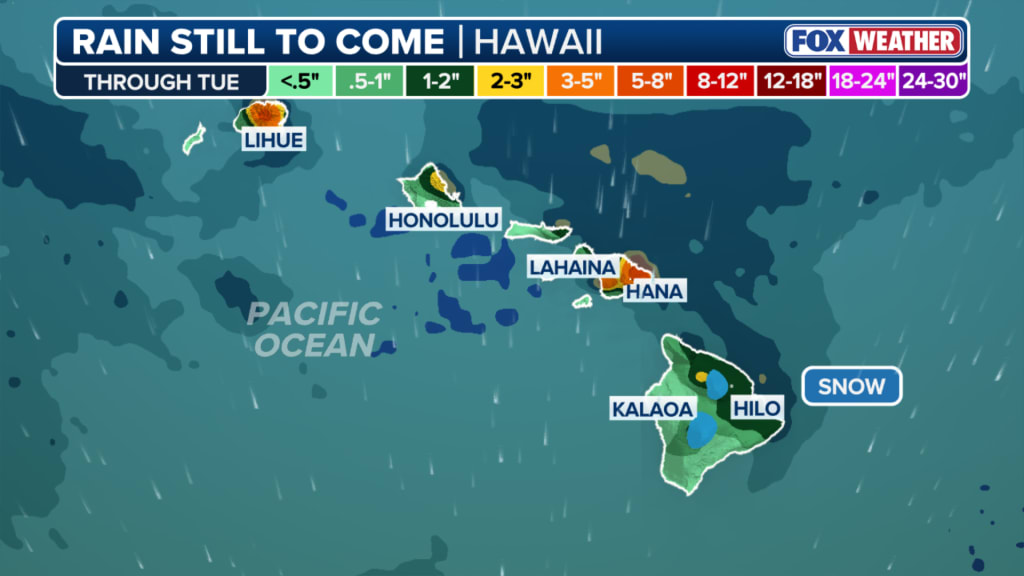
If Hawaii is often sold to the world as an eternal postcard of sunshine and swaying palms, early February 2026 shattered that illusion.
The islands didn’t just get rain.
They got hammered.
From roaring winds to flash floods that turned roads into rivers, Hawaii’s winter weather has arrived like an uninvited guest—loud, relentless, and impossible to ignore. And while the storms may ease, the larger story of 2026’s volatile weather pattern is only beginning.
This is not just a weather update.
It’s a warning sign.
A Storm That Stopped the Islands
In early February 2026, a powerful weather system swept across all Hawaiian islands, bringing conditions more typical of a mainland winter storm than a tropical paradise.
🌧️ What Happened?
Beginning Sunday, February 8, 2026, Hawaii experienced:
Torrential rainfall
Flash flooding
Damaging winds exceeding 60 mph
Hazardous travel conditions across multiple islands
The Big Island bore the brunt of the rainfall, with saturated ground conditions worsening flood risks and landslides.
Think of it like this:
Hawaii wasn’t dripping—it was drowning.
Government Response: A Rare Full Shutdown
As conditions intensified, Governor Josh Green took decisive action.
🏛️ Statewide Closures Ordered
On Monday, February 9, 2026, the state ordered:
Closure of all state offices
Shutdown of Department of Education schools
Suspension of activities across University of Hawaii campuses
These closures underscore how serious and disruptive the storm system was. In a state where shutdowns are rare, this was a clear signal: safety first.
Is This Normal for Hawaii?
This is one of the most frequently searched questions right now.
❓ Does Hawaii usually experience winter storms like this?
Yes—but not at this intensity.
Winter (January–March) is historically Hawaii’s wettest season, and storms are not unusual. However, what stands out in 2026 is:
Storm concentration
Higher wind speeds
Rapid rainfall accumulation
Increased flooding risk
In short: winter storms are normal.
This level of disruption is not.
Mid-February Forecast: A Brief Calm, Not a Clean Break
After the initial storm system, meteorologists expect unsettled weather to continue through mid-February, though with less severe intensity.
🌦️ What’s Next?
Periodi showers
Gusty winds
Lingering flood risks in low-lying areas
Unstable conditions, especially in windward regions
It’s like the storm loosened its grip—but hasn’t fully let go.
The Bigger Picture: Hawaii’s 2026 Long-Range Weather Outlook
While early February storms grabbed headlines, the long-range forecast for 2026 paints a more complex picture—one filled with contradictions.
❄️ Winter 2026 (January–March)
Warmer-than-normal temperatures
Coolest windows: late January–early February, mid-March
Below-normal rainfall overall
Yet punctuated by active, stormy periods
Translation:
Fewer rainy days—but when it rains, it pours.
🌱 Spring 2026 (April–May)
Above-normal rainfall, especially in central and western Hawaii
Continued warmer-than-average temperatures
Spring won’t be gentle. It will be lush, wet, and unpredictable.
☀️ Summer 2026 (June–August)
Wetter-than-normal conditions persist
Hotter-than-usual temperatures
Heat peaks expected in late June and mid-August
Summer 2026 may feel heavier—more humidity, more storms, more stress on infrastructure.
🍂 Autumn 2026 (September–October)
Cooler-than-normal temperatures
Higher-than-normal rainfall
Fall may arrive early—and soggy.
Hurricane Season: Should Hawaii Be Concerned?
Another top Google question.
❓ Will the 2026 hurricane season be active?
Hurricane season officially runs from June 1 to November 30, with August as the peak month.
While long-range forecasts don’t guarantee hurricane landfalls, wetter summers and warmer ocean temperatures can:
Increase storm development
Intensify rainfall from passing systems
Raise flood and wind damage risks
Preparation, not panic, is the smart move.
Winter Hazards: The Hidden Threat
Heavy rain is not Hawaii’s only winter danger.
⚠️ Key Winter Risks Through March:
Flash flooding
Landslides in mountainous regions
Road washouts
Power outages due to high winds
Imagine pouring water into a sponge that’s already full. That’s Hawaii’s terrain during winter storms.
What This Means for Residents and Travelers
🏠 For Residents:
Stay updated on weather alerts
Avoid flood-prone routes
Prepare emergency kits
Expect periodic disruptions through March
✈️ For Visitors:
Monitor flight and accommodation policies
Avoid outdoor activities during storm warnings
Respect local advisories
Paradise is still paradise—but even paradise needs caution.
Final Thoughts: A Changing Climate, A Wake-Up Call
The February 2026 storms are more than just a weather event. They are a signal.
A signal that Hawaii’s climate patterns are shifting.
A signal that extreme weather can no longer be treated as an exception.
A signal that preparedness matters.
Hawaii will recover—it always does.
But the storms of 2026 remind us that nature doesn’t negotiate, and even islands surrounded by beauty are not immune to disruption.
The sun will return.
But the lessons should remain.
🔍 Frequently Asked Questions (Quick Recap)
Is Hawaii having severe winter weather in 2026?
Yes, especially in early February with heavy rain, flooding, and high winds.
Were schools and offices closed?
Yes, statewide closures were ordered on February 9, 2026.
Will the rest of 2026 be stormy?
Yes, with wetter periods in spring and summer and higher rainfall in autumn.
Is hurricane risk higher in 2026?
Potentially, especially during peak months like August.
About the Creator
Omasanjuwa Ogharandukun
I'm a passionate writer & blogger crafting inspiring stories from everyday life. Through vivid words and thoughtful insights, I spark conversations and ignite change—one post at a time.
Keep reading
More stories from Omasanjuwa Ogharandukun and writers in Humans and other communities.
Lindsey Vonn’s Last Olympic Descent: Why She Said She’d “Already Won” Before the Crash That Shook Milano Cortina 2026
When Lindsey Vonn clicked into her skis at the top of the mountain in Cortina d’Ampezzo, the moment felt less like the start of a race and more like the closing chapter of an epic novel. Snow dusted the peaks like punctuation marks, the crowd buzzed with expectation, and history waited downhill. Just 13 seconds later, it all unraveled.
By Omasanjuwa Ogharandukuna day ago in Humans
The Angry Man in Your House
"If you grow up with an angry man in your house, there will always be an angry man in your house" This statement has caused plenty of controversy online, people say its a statement that blames victims while also undermining those who break traumatic cycles to form health relationships... but if I'm honest now that I'm in my 30s it makes more sense to me than ever, and I'd argue that its not just about fathers and uncles.
By S. A. Crawford2 days ago in Humans
The Importance Of Boundaries In Relationships For Mental Health Stability
Boundaries refer to the emotional, physical and psychological boundaries that people establish in order to secure their wellbeing in relationships. They determine what is considered to be safe, acceptable and respectful allowing individuals to interact with others without losing their self-identity. Nice boundaries assist in the clarification of needs, expectations and responsibilities thereby eliminating confusion and emotional distress. Boundaries do not prove to be hindrances in relationships but merely a guideline that helps foster respect and emotional stability in relationships.
By Mark Hipster7 days ago in Humans




Comments
There are no comments for this story
Be the first to respond and start the conversation.