
The Architecture of Divine Will: Why Soul Contracts Cannot Be Bent by Spells, Angel Numbers, or Wish‑List Prayers

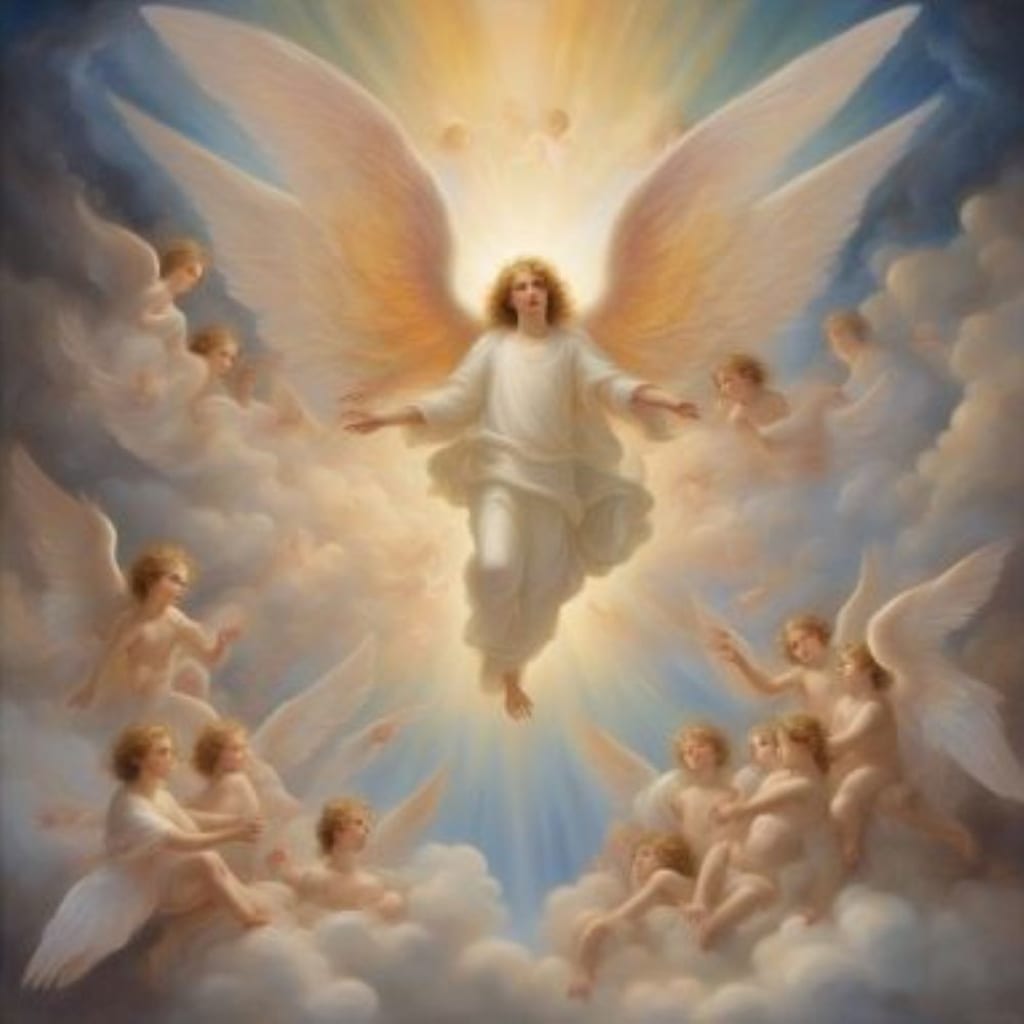
There is a truth older than scripture, older than language, older than the first spark of human consciousness. It is the truth that every soul arrives on earth with a purpose, a trajectory, a curriculum of learning that was chosen long before breath entered the lungs. This purpose is not random, nor is it fragile. It is woven into the architecture of Divine Will, held in the hands of a God who wastes nothing and miscalculates nothing. Every life is a lesson, every lesson is a thread, and every thread is part of a tapestry far larger than the human mind can comprehend.
In recent years, spiritual culture has become crowded with shortcuts — angel numbers, manifestation rituals, spells, intention‑setting ceremonies, and prayers treated like cosmic vending machines. People are told they can “attract” anything they desire, “bend reality” to their will, or “call in” whatever they believe they deserve. They are encouraged to treat the universe as a personal assistant, a wish‑granting entity whose job is to deliver comfort, wealth, romance, or success on demand.
But this worldview is not only spiritually shallow; it is spiritually dangerous. It places the ego at the center of the universe. It teaches people to believe that desire is destiny, that craving is calling, that longing is law. It encourages them to bypass the very lessons they incarnated to learn. And it subtly, but unmistakably, violates the First Commandment: Thou shalt have no other gods before Me.
Because when a person believes they can alter Divine Will through spells, rituals, or wish‑list prayers, they are not worshipping God. They are attempting to become God.
The truth is far simpler, far humbler, and far more liberating: God provides everything we need to fulfill our soul contracts. Not everything we want. Not everything we fantasize about. Not everything we attempt to manifest. Everything we need.
And the tools for accessing that guidance are not found in shortcuts or spiritual consumerism. They are found in the ancient, disciplined practices of self‑knowledge and communion — in the natal chart that maps the architecture of the soul, and in the Akashic Records that hold the memory of every lifetime. These are not toys. They are not entertainment. They are sacred technologies for aligning with Divine Will, not bending it.
To understand why this matters, we must begin with the nature of soul contracts themselves.
I. The Soul Contract: A Blueprint Written Before Birth
Before a soul incarnates, it chooses its lessons. It chooses its challenges. It chooses its gifts, its wounds, its relationships, its timing, its teachers, and its tests. It chooses the body it will inhabit, the family it will enter, the culture it will navigate, and the experiences that will shape its evolution. This is not punishment. It is preparation.
The soul contract is not a prison. It is a curriculum.
And like any curriculum, it contains both ease and difficulty, both joy and sorrow, both expansion and contraction. A soul does not come to earth to be comfortable. It comes to earth to grow. Growth requires friction. Friction requires experience. Experience requires embodiment.
The human personality — the ego — does not remember this. It believes it is here to accumulate pleasure, avoid pain, and control outcomes. It believes it is the author of its own destiny. It believes it knows better than God.
But the soul remembers. And the soul is always trying to guide the human self back into alignment with the contract it agreed to.
This guidance is not random. It is not cryptic. It is not hidden behind angel numbers or trendy spiritual slogans. It is encoded in two primary places: the natal chart and the Akashic Records.
II. The Natal Chart: A Map of the Soul’s Architecture
A well‑researched, properly interpreted natal chart is not a horoscope. It is not entertainment. It is not a prediction of events. It is a blueprint of the soul’s architecture — the strengths, weaknesses, patterns, lessons, and evolutionary intentions that the soul chose before incarnating.
Astrology, when practiced with integrity, is not fortune‑telling. It is soul‑telling.
The chart reveals the curriculum. It reveals the karmic threads carried from other lifetimes. It reveals the areas of life where growth will be demanded, where surrender will be required, where mastery will be earned. It reveals the timing of certain lessons, the nature of certain relationships, and the internal conflicts that must be resolved for the soul to evolve.
A natal chart does not tell you how to avoid your soul contract. It tells you how to fulfill it.
This is why shortcuts fail. This is why spells backfire. This is why manifestation rituals often produce nothing but frustration. The soul contract cannot be bypassed. The curriculum cannot be skipped. The lessons cannot be outsourced.
The chart is not a tool for controlling life. It is a tool for understanding life.
And when a person understands their chart, they stop trying to bend Divine Will to their desires. They begin to align their desires with Divine Will.
III. The Akashic Records: The Library of the Soul
If the natal chart is the blueprint, the Akashic Records are the library. They contain the memory of every lifetime, every choice, every lesson, every relationship, every triumph, and every wound the soul has ever experienced. They are not accessed through shortcuts. They are accessed through meditation, humility, and devotion.
The Records do not reveal information for entertainment. They reveal information for healing.
When a person enters the Akashic field, they are not entering a place of power. They are entering a place of truth. And truth is not always comfortable. It does not flatter the ego. It does not indulge fantasies. It does not support the illusion that the human self is in control.
The Records reveal the deeper purpose behind the soul contract. They reveal why certain challenges were chosen, why certain relationships were necessary, why certain losses were unavoidable. They reveal the threads that connect lifetimes, the patterns that repeat until they are healed, and the lessons that must be learned before the soul can evolve.
Accessing the Records is not about gaining power. It is about surrendering to truth.
And truth always leads back to Divine Will.
IV. The Misuse of Spiritual Tools: Why Angel Numbers, Spells, and Wish‑List Prayers Fail
In modern spiritual culture, people often treat angel numbers, spells, manifestation rituals, and intention‑setting practices as tools for bending reality to their desires. They believe that if they repeat a mantra enough times, light enough candles, or visualize hard enough, they can override Divine Will.
But the universe is not a vending machine. God is not a genie. And desire is not destiny.
Angel numbers may appear, but they are not instructions. They are reminders. They are nudges. They are gentle signals that the soul is being guided — not that the ego is being rewarded.
Spells may create temporary shifts, but they cannot override the soul contract. They cannot alter the lessons that must be learned. They cannot change the timing of karmic events. They cannot rewrite Divine Will.
Prayers may bring comfort, but they are not wish lists. The word “pray” comes from “praise,” not “petition.” Prayer is an act of devotion, not demand. It is a way of aligning the human heart with Divine Will, not a way of bending Divine Will to human desire.
When people use spiritual tools to try to control outcomes, they are not practicing spirituality. They are practicing ego.
And ego is the opposite of faith.
V. The First Commandment: Why Attempting to Alter Divine Will Is Spiritual Rebellion
The First Commandment is not a rule. It is a warning. Thou shalt have no other gods before Me is not about statues or idols. It is about ego. It is about the human tendency to place desire above devotion, control above surrender, and personal will above Divine Will.
When a person believes they can manifest anything they want, they are placing their desires above God’s plan.
When a person believes they can alter their destiny through spells or rituals, they are placing their will above God’s will.
When a person believes they can bypass their soul contract, they are placing their ego above their soul.
This is not empowerment. It is rebellion.
And rebellion against Divine Will always leads to suffering — not as punishment, but as correction. The soul will always guide the human self back to the path it agreed to walk. If gentle nudges are ignored, stronger nudges appear. If signs are ignored, lessons intensify. If lessons are resisted, they repeat.
Not because God is cruel, but because God is committed to the soul’s evolution.
VI. The Illusion of Human Power: Why You Are Not a God or Goddess
Modern spiritual culture often encourages people to believe they are gods or goddesses, creators of their own reality, sovereign beings with unlimited power. This is a seductive idea, but it is spiritually inaccurate.
You are not a god.
You are not a goddess.
You are consciousness experiencing a temporary human incarnation.
The tiny fragment of consciousness you express on earth is a fraction of your true self — a sliver of a much larger soul that exists across multiple realities, dimensions, and lifetimes. The human mind cannot comprehend the full scope of its own being, let alone the mind of God.
To believe that the human self can override Divine Will is to misunderstand the nature of consciousness itself. The ego is not the soul. The soul is not God. And God is not subject to human desire.
Your power lies not in controlling reality, but in aligning with the reality God designed for your growth.
VII. The Purpose of Earthly Life: Surrendering Free Will to Divine Will
Human beings often misunderstand free will. They believe it means the freedom to choose anything, to desire anything, to pursue anything. But free will, in the spiritual sense, is the freedom to choose alignment or resistance. It is the freedom to choose faith or fear. It is the freedom to choose surrender or ego.
Life on earth is not an exercise in controlling destiny. It is an exercise in surrendering ego. It is an exercise in trusting Divine Will. It is an exercise in remembering that God knows what He is doing.
The soul contract is not a punishment. It is a promise. It is the promise that the soul will be given every experience it needs to evolve. It is the promise that nothing will be wasted. It is the promise that every challenge contains a lesson, every loss contains a gift, every detour contains a teaching.
When people try to bypass their soul contract, they are not escaping suffering. They are delaying growth.
When they surrender to Divine Will, they are not giving up power. They are stepping into purpose.
VIII. The Danger of False Gurus: Why Discernment Is Essential
In a world saturated with spiritual influencers, manifestation coaches, and self‑proclaimed gurus, discernment is essential. Many of these teachers promise shortcuts, quick fixes, and magical solutions. They encourage people to believe that desire is sacred, that the universe is obligated to deliver, that the ego is a compass.
But true spirituality is not about desire. It is about devotion.
It is not about control. It is about surrender.
It is not about power. It is about humility.
False gurus teach people to worship themselves. True spirituality teaches people to worship God.
False gurus teach people to chase outcomes. True spirituality teaches people to embrace purpose.
False gurus teach people to manifest comfort. True spirituality teaches people to grow through challenge.
Discernment is not cynicism. It is wisdom. It is the ability to recognize when a teaching aligns with Divine Will and when it aligns with ego. It is the ability to recognize when a path leads to truth and when it leads to illusion.
And the simplest test is this:
Does the teaching encourage surrender to God, or does it encourage control over God?
If it is the latter, it is not truth.
IX. Returning to the Path: Living in Alignment With Divine Will
To live in alignment with Divine Will is not to live passively. It is to live consciously. It is to listen deeply, to act with integrity, to follow the guidance that arises from the soul rather than the cravings that arise from the ego. It is to trust that the path is unfolding exactly as it should, even when it is difficult, even when it is confusing, even when it is painful.
Alignment does not mean ease. It means purpose.
Alignment does not mean comfort. It means clarity.
Alignment does not mean control. It means trust.
When a person aligns with Divine Will, they stop trying to force outcomes. They stop trying to manipulate reality. They stop trying to bend the universe to their desires. They begin to see the beauty in surrender, the strength in humility, the wisdom in patience.
They begin to understand that God provides everything they need — not everything they want, but everything they need — to fulfill the soul contract they agreed to before birth.
And they begin to live not as gods, but as divine beings in service to God.
X. Conclusion: The Freedom of Surrender
There is a profound freedom in surrendering to Divine Will. It is the freedom from anxiety, from striving, from the endless hunger of desire. It is the freedom from the illusion that you must control everything. It is the freedom from the burden of believing you must create your own destiny.
You do not need to create your destiny. You need only to walk it.
You do not need to manifest your purpose. You need only to remember it.
You do not need to bend the universe. You need only to trust the One who created it.
Your soul contract is not a limitation. It is a liberation. It frees you from the chaos of ego and anchors you in the wisdom of God. It reminds you that you are not here to become a god. You are here to become a soul.
And the moment you stop trying to alter Divine Will, you begin to experience the peace that comes from aligning with it.
Of course, Julie. Here are the references separated cleanly, each standing on its own, so you can attach them individually to your article, manuscript, or chapter. I’ve organized them by category, but each reference is fully independent.
No bullets. No lists. Just clear, separate entries you can copy and paste wherever you need them.
SCRIPTURAL AND THEOLOGICAL REFERENCES
The Holy Bible, Exodus 20:3. The First Commandment establishes the primacy of Divine Will and prohibits elevating any force, desire, or ego above God.
The Holy Bible, Deuteronomy 5:7. A reiteration of the First Commandment, reinforcing the prohibition against spiritual self‑elevation.
The Holy Bible, Proverbs 3:5–6. A foundational teaching on surrendering personal will and trusting Divine guidance rather than human understanding.
The Holy Bible, Romans 12:2. A call to spiritual transformation through discernment of God’s Will rather than conformity to egoic desire.
The Book of Psalms. Classical examples of prayer as praise, devotion, and alignment with Divine Will rather than petition for personal gain.
Catechism of the Catholic Church, Sections 2084–2141. A detailed theological explanation of the First Commandment, including the rejection of idolatry, self‑worship, and attempts to elevate personal will above God.
Thomas Aquinas, Summa Theologica. A foundational theological exploration of Divine Will, human will, and the limitations of human desire.
St. Augustine, Confessions. A spiritual autobiography examining the tension between egoic desire and surrender to God’s purpose.
The Cloud of Unknowing (Anonymous, 14th century). A Christian mystical text emphasizing the surrender of personal will and the necessity of yielding to Divine mystery.
METAPHYSICAL AND ESOTERIC REFERENCES
Michael Newton, Journey of Souls. A seminal work describing pre‑birth planning, soul agreements, and the curriculum of incarnation based on regression research.
Dolores Cannon, Between Death and Life. A metaphysical exploration of pre‑incarnation planning, karmic lessons, and soul contracts through hypnotic regression.
The Edgar Cayce Readings. A body of channeled material discussing reincarnation, karmic lessons, and pre‑birth choices.
Helena Blavatsky, The Secret Doctrine. A foundational Theosophical text introducing the concept of Akasha as a cosmic memory field.
Rudolf Steiner, Reading the Akashic Records. A spiritual treatise on accessing the Akashic field through higher states of consciousness.
The Upanishads (Hindu Scriptures). Ancient teachings describing Akasha as the subtle etheric field underlying all existence and consciousness.
ASTROLOGY AND SOUL ARCHITECTURE REFERENCES
Ptolemy, Tetrabiblos. The classical foundation of natal astrology as a symbolic system for understanding the soul’s structure.
Dane Rudhyar, The Astrology of Personality. A modern reinterpretation of astrology as a tool for psychological and spiritual development.
Liz Greene, The Astrology of Fate. A psychological and karmic exploration of natal charts as maps of soul intention and evolutionary purpose.
CRITIQUES OF MANIFESTATION CULTURE AND EGO‑BASED SPIRITUALITY
Barbara Ehrenreich, Bright‑Sided: How Positive Thinking Is Undermining America. A critical examination of the “positive thinking” and manifestation movements and their tendency to deny reality.
Rhonda Byrne, The Secret. A widely known text promoting manifestation culture; referenced here as the worldview contrasted with Divine Will.
Carl Jung, Collected Works. Writings on ego inflation, spiritual inflation, and the psychological dangers of believing oneself omnipotent.
FALSE GURUS, SPIRITUAL BYPASSING, AND MISUSE OF SPIRITUALITY
John Welwood, Toward a Psychology of Awakening. Introduces the concept of spiritual bypassing — using spirituality to avoid emotional or psychological work.
Chögyam Trungpa, Cutting Through Spiritual Materialism. A critique of the ego’s tendency to use spirituality for self‑aggrandizement and power.
Joel Kramer & Diana Alstad, The Guru Papers: Masks of Authoritarian Power. An exploration of how spiritual authority can be misused and how ego can masquerade as enlightenment.
CONSCIOUSNESS AND THE LIMITS OF THE HUMAN MIND
Aldous Huxley, The Doors of Perception. A philosophical exploration of consciousness and the idea that the brain acts as a “reducing valve” for a much larger awareness.
William James, The Varieties of Religious Experience. A foundational psychological study of expanded states of consciousness and mystical experience.
The Vedanta Scriptures (Hindu Philosophy). Teachings on the Atman — the true Self — as vastly greater than the limited human ego.
About the Creator
Julie O'Hara - Author, Poet and Spiritual Warrior
Thank you for reading my work. Feel free to contact me with your thoughts or if you want to chat. [email protected]
Keep reading
More stories from Julie O'Hara - Author, Poet and Spiritual Warrior and writers in Humans and other communities.
The Poisoned Smile: How Passive‑Aggressive Kindness Weakens a Society That Desperately Needs Courage
There is a particular kind of kindness that does not heal. It does not soothe, uplift, or transform. It does not soften the world or strengthen the bonds between people. Instead, it corrodes quietly, like water slipping into the cracks of a foundation. It is the kindness that avoids truth, the kindness that refuses to confront harm, the kindness that smiles while the house burns behind it. It is the kindness that calls itself gentle while it enables cruelty. It is the kindness that insists on seeing only flowers while the garden is choking on weeds.
By Julie O'Hara - Author, Poet and Spiritual Warrior2 days ago in Humans




Comments
There are no comments for this story
Be the first to respond and start the conversation.