
The Heart of Being Human"
Real stories of healing, feeling, and finding light in the dark.
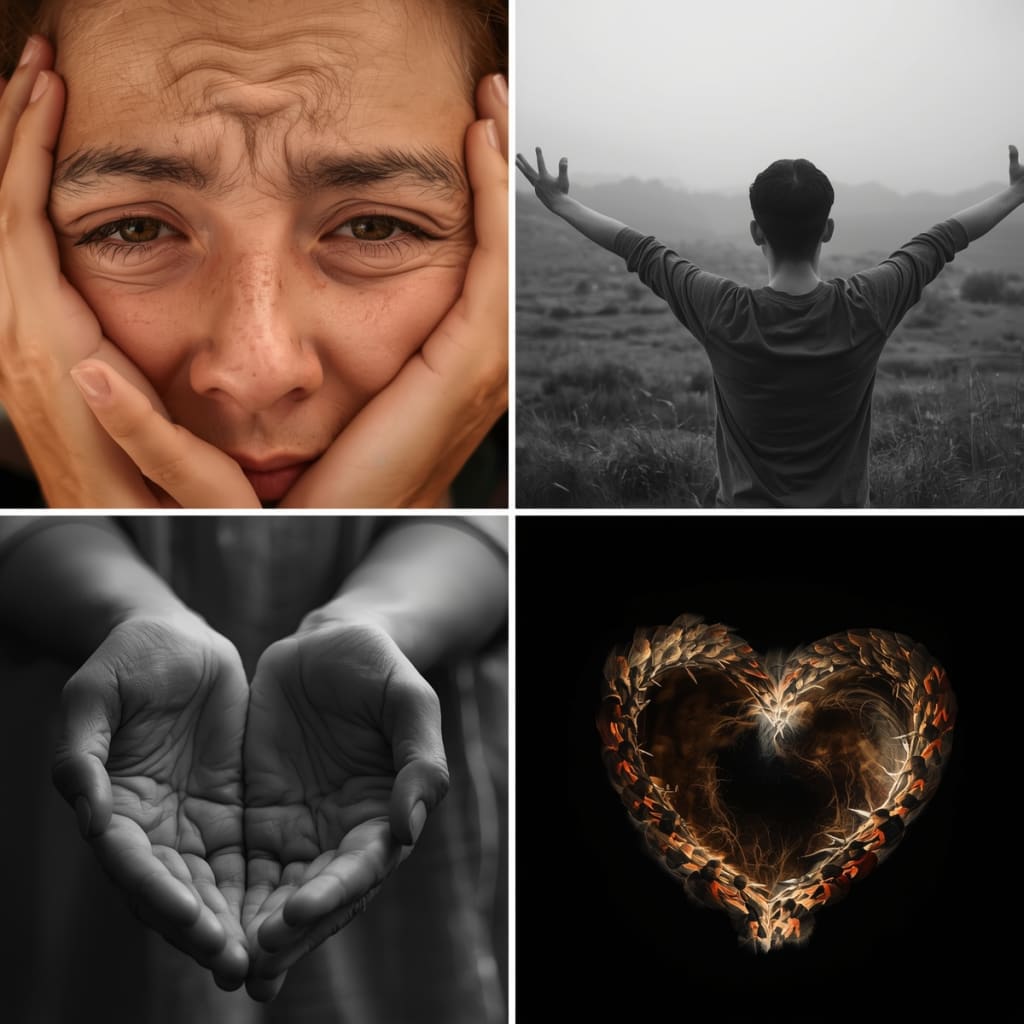
I don’t remember the exact moment I realized I wasn’t okay.
It wasn’t dramatic. No screaming. No collapse on the floor. Just a quiet evening where the silence was too loud, and the weight of pretending was too much to carry.
I was 28, working a job that looked good on paper, living in a city that buzzed with opportunities, surrounded by people but feeling like a ghost in my own life. Every day was a performance, and I had become a master of masks. Smiling in meetings, laughing at dinners, replying with “I’m fine” to anyone who asked.
Inside, I was unraveling.
The anxiety had started slowly. Missed calls. Cancelled plans. Sleep that never rested me. But it snowballed—until even brushing my teeth felt like a task too heavy. I was constantly tired, irritable, and numb. I wasn’t living. I was surviving.
But here’s the thing about pain—it doesn’t always announce itself loudly. Sometimes it whispers in your daily habits, hides behind productivity, or tucks itself under polite small talk.
One morning, I stood in front of the mirror and didn’t recognize the person staring back at me. My eyes were hollow. My shoulders slumped. I looked like someone who had given up, even if I hadn’t said it out loud yet.
That was the day I decided to ask for help.
It took me three hours to write a four-sentence email to a therapist. Another week to show up to the appointment. And when I finally did, I couldn’t say a single word without crying. I cried because I was scared. I cried because I had waited too long. I cried because for the first time in years, I was being honest—with myself, with someone else.
That was the beginning of something. Not healing, not yet. But honesty. And that’s where healing always begins.
Therapy didn’t fix me overnight. There were weeks I left the office feeling worse. Unpacking trauma is messy. Relearning how to care for yourself is exhausting. But slowly, I began to understand parts of myself I had ignored for so long—my fears, my coping mechanisms, my desperate need to be perfect in a world that was never asking me to be.
I realized how deeply I craved connection but was terrified of vulnerability.
I had grown up believing that strength meant silence. That independence meant isolation. That asking for help was weakness. But all of that was a lie. A beautiful, destructive lie that so many of us believe.
What saved me wasn’t a magical breakthrough. It was small, human moments.
Like the time I finally told my best friend, “I’m not okay,” and she didn’t flinch or try to fix me—she just sat with me. Or the time I took a walk without headphones and, for the first time, noticed the trees instead of the noise in my head. Or the journal entry I wrote where I told my 16-year-old self, “I forgive you.”

Healing came in pieces. It came in conversations. It came in permission to feel.
And in that process, I fell in love with people again. Not just romantically—though love, too, found me in unexpected places—but in the way we all carry stories. How every stranger might be battling a storm you’ll never see. How resilient, fragile, brave, and broken we all are. And yet—we show up. We get out of bed. We try.
There is something profoundly beautiful in that.
I began volunteering at a local support group for young adults dealing with depression. Week after week, I listened to stories that mirrored my own—voices shaking, hands fidgeting, eyes full of shame. And yet, through the pain, there was light. Laughter. Hope. The kind of hope that only comes when someone says, “Me too.”
One night, after a session, a girl hugged me and whispered, “I thought I was alone until you spoke.”
I went home and cried. Not from sadness. But from the overwhelming realization that this—this is the heart of being human. Not pretending. Not perfection. But presence. Shared pain. Open hearts. The messy, honest truth of being alive.
It’s taken years, and I’m still healing. There are still days where the dark thoughts return, where I want to disappear, where I forget all the progress I’ve made. But now, I know those days don’t define me. I know how to reach out. I know how to rest. I know I’m not broken—I’m becoming.
And if there’s one thing I’ve learned, it’s this:
The heart of being human is not about always being strong. It’s about showing up when you’re scared. It’s about telling the truth when it shakes your voice. It’s about loving others—and yourself—through the mess. It’s about falling and still choosing to get back up.
It’s about being real.
So if you're reading this, and you're in the middle of the storm—please know, your story matters. Your healing doesn’t have to be loud to be powerful. And your heart, no matter how tired or tender, is still beating for a reason.
That, in itself, is enough.
That is the heart of being human.
About the Creator
fazalhaq
Sharing stories on mental health, growth, love, emotion, and motivation. Real voices, raw feelings, and honest journeys—meant to inspire, heal, and connect.
Reader insights
Nice work
Very well written. Keep up the good work!
Top insights
Heartfelt and relatable
The story invoked strong personal emotions
Expert insights and opinions
Arguments were carefully researched and presented
Time to change your life.
Is it even possible for you to change your life? A lot of people, more than there should be, are unhappy with their lives. But what are they doing about it? Usually nothing. People talk about how shitty their lives are and want change, but are they not taking the actions to change?
By Jen Phillips2 days ago in Humans
Nicki Minaj and the Loneliness Behind the Loudest Voice
Nicki Minaj has never been easy to ignore. Her voice cuts through rooms, charts, and conversations with sharp clarity. Yet behind the colors, accents, and confidence lies a story that feels far more fragile than people expect. Fame did not arrive gently, and it did not remove insecurity overnight. For many listeners, Nicki Minaj represents strength and survival. For others, she remains misunderstood, reduced to surface-level controversy. This article looks beyond headlines and personas to explore how Nicki Minaj built her career, protected her identity, and carried emotional weight in an industry that rarely allows softness. Her story is not just about music. It is about endurance, self-definition, and the cost of being constantly seen but rarely understood.
By Muqadas khan5 days ago in Humans
Not Just For Clean Up: A History Of The MCU's Department of Damage Control
Initially an organisation that seemed to exist to help the heroes of the Marvel Cinematic Universe, from Phase Four onwards, the Department of Damage Control has shifted into a more antagonistic role. Most recently seen in the Wonder Man series, the current incarnation of Damage Control seems to target superpowered individuals, regardless of whether that person poses an active or intentional threat.
By Kristy Andersona day ago in Geeks



Comments (1)
in every situation dont lose hope we pray for your happy life fazalhaq