
The Next Big Thing After ChatGPT
What Are AI Agents—and Why They Matter

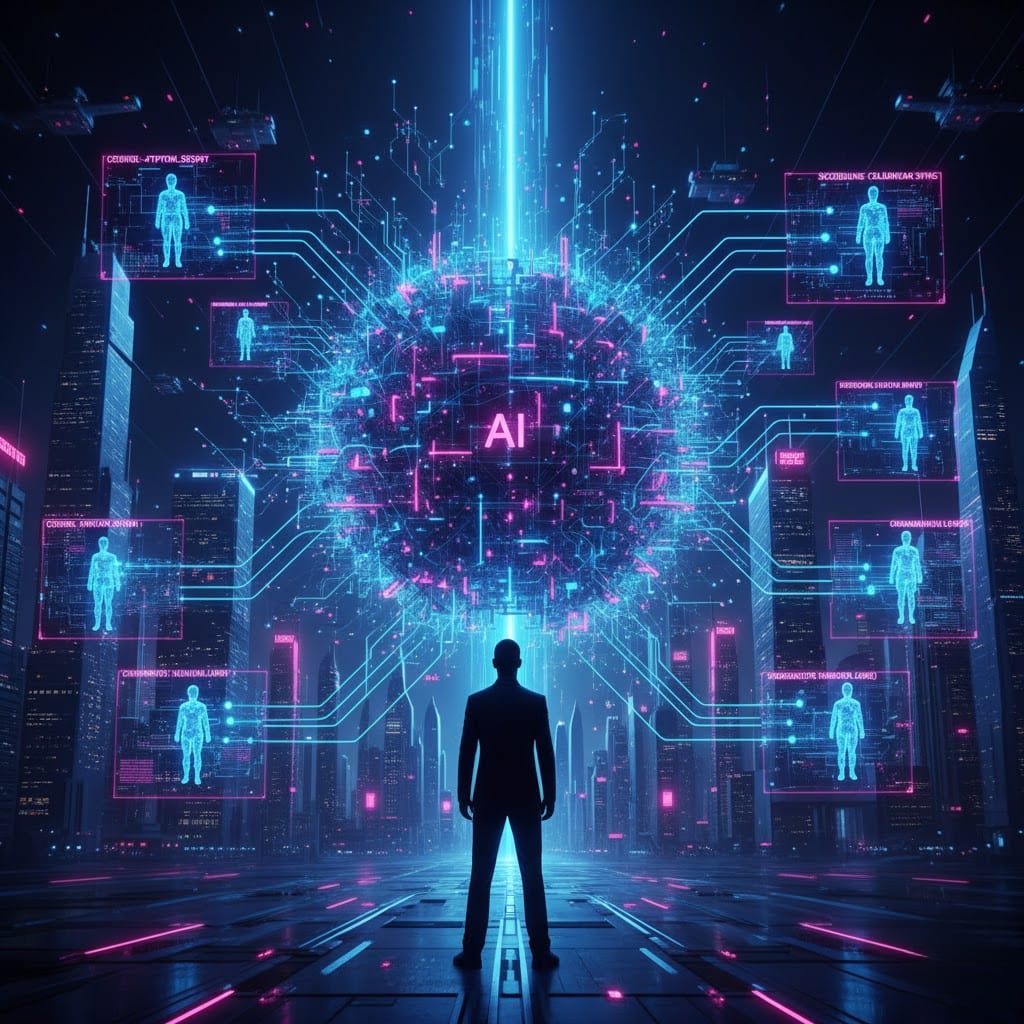
When ChatGPT burst into the mainstream, it felt like a turning point. Suddenly, artificial intelligence wasn’t just a background technology powering ads or recommendations—it was something you could talk to. It could write essays, explain complex ideas, help with coding, and even sound surprisingly human.
But as impressive as ChatGPT is, it may only be the beginning.
A new wave of artificial intelligence is emerging, one that goes beyond conversation and content generation. These systems don’t just respond to prompts—they take initiative, make decisions, and carry out tasks on their own. They’re called AI agents, and many experts believe they represent the next major evolution of AI.
So what exactly are AI agents, how are they different from chatbots like ChatGPT, and why do they matter so much? Let’s take a closer look.
________________________________________
From Talking AI to Doing AI
ChatGPT is best understood as a reactive system. You ask a question, it answers. You give it a prompt, it generates text. Even when the interaction feels fluid and conversational, the AI is still waiting for your next instruction.
AI agents change that dynamic.
An AI agent is designed to work toward a goal rather than simply respond to input. Instead of asking, “What would you like me to do next?” an agent is told, “Here’s the objective—go handle it.”
For example:
• “Plan a three-day trip to Tokyo, book a hotel within budget, and organize the itinerary.”
• “Monitor our website analytics and notify me if traffic drops unexpectedly.”
• “Research competitors, summarize their pricing strategies, and generate a report.”
Each of these tasks requires multiple steps, decisions, and adjustments along the way. That’s where AI agents shine.
________________________________________
What Makes an AI Agent Different?
Not every AI system qualifies as an agent. What sets agents apart is a combination of key capabilities that allow them to operate more independently.
Autonomy
AI agents can act without constant human input. Once given a goal, they decide how to pursue it and when to take action.
Planning and Reasoning
Agents break large objectives into smaller steps. If one approach fails, they can revise the plan and try again.
Tool Use
Unlike traditional chatbots, agents can interact with external tools—browsers, APIs, databases, code editors, calendars, and software platforms.
Memory
Many agents store context and past experiences, allowing them to improve performance over time and maintain continuity across tasks.
Feedback Loops
Agents evaluate the outcomes of their actions and adjust accordingly, rather than blindly following instructions.
Together, these traits allow AI agents to function less like assistants and more like digital collaborators.
________________________________________
Why AI Agents Matter
The excitement around AI agents isn’t just theoretical. They matter because they expand what artificial intelligence can actually do in the real world.
1. They Move AI From Advice to Action
ChatGPT can tell you how to do something. An AI agent can actually do it.
Instead of asking for tips on data analysis, an agent can gather the data, clean it, run the analysis, generate visualizations, and summarize the results. This shift from guidance to execution is a major leap forward.
________________________________________
2. They Multiply Human Productivity
AI agents don’t get tired, distracted, or overwhelmed. A single person can deploy multiple agents to work in parallel, handling tasks that would otherwise require a team.
This levels the playing field:
• Solo creators can operate like small companies.
• Startups can move faster with fewer resources.
• Small businesses gain access to advanced automation once reserved for large enterprises.
AI agents act as force multipliers, amplifying what individuals and small teams can achieve.
________________________________________
3. They Change How We Use Software
Traditional software requires humans to learn interfaces—menus, buttons, dashboards, workflows. AI agents flip this model on its head.
Instead of learning how to use the software, you simply describe what you want:
• “Update our CRM with new leads.”
• “Send follow-up emails to unanswered clients.”
• “Generate invoices and track late payments.”
The agent handles the mechanics behind the scenes. Software becomes less about navigation and more about intent.
________________________________________
Where AI Agents Are Already Being Used
Although the technology is still developing, AI agents are already appearing in several domains.
Software Development
Agents can write code, test it, debug errors, and even open pull requests. Developers increasingly act as reviewers and decision-makers rather than typing every line themselves.
Business and Operations
From customer support triage to inventory tracking and pricing analysis, agents are automating routine operational tasks.
Research and Knowledge Work
Agents can scan thousands of documents, compare sources, and generate summaries for market research, academic studies, or competitive analysis.
Personal Productivity
Scheduling meetings, managing inboxes, planning travel, and organizing tasks are all ideal use cases for personal AI agents.
These applications hint at how deeply agents may integrate into everyday life.
________________________________________
The Challenges and Risks
Despite their promise, AI agents also raise serious concerns.
Reliability
Autonomous systems can make mistakes, and when scaled, those mistakes can have significant consequences.
Control and Alignment
Ensuring agents interpret goals correctly—and act in line with human values—is an ongoing challenge.
Security
Agents with access to tools, credentials, and systems introduce new cybersecurity risks if misused or compromised.
Job Disruption
As agents take on more cognitive labor, many roles will evolve or disappear, forcing society to rethink work and skill development.
These challenges don’t diminish the importance of AI agents, but they highlight the need for responsible design and oversight.
________________________________________
Humans as Managers, Not Operators
One of the most significant shifts AI agents bring is a change in our role.
Instead of doing every task ourselves, we move into a managerial position—setting goals, defining constraints, reviewing outcomes, and making final decisions. Much like delegating work to human teams, we delegate tasks to AI agents.
This ability to delegate at scale is why AI agents are such a big deal.
ChatGPT taught AI how to talk.
AI agents are teaching AI how to act.
And once machines can reliably act on our behalf—across tools, systems, and time zones—the nature of productivity, creativity, and work itself will be transformed.
The next big thing after ChatGPT isn’t just better conversation.
It’s AI that gets things done.
About the Creator
Mind Meets Machine
Mind Meets Machine explores the evolving relationship between human intelligence and artificial intelligence. I write thoughtful, accessible articles on AI, technology, ethics, and the future of work—breaking down complex ideas into Reality
Keep reading
More stories from Mind Meets Machine and writers in Humans and other communities.
The Next Evolution: Not Human vs Machine, but Human + Machine
For centuries, every major technological leap has carried the same fear: this will replace us. From the industrial revolution to the digital age, humans have repeatedly stood at the edge of innovation wondering whether their own creations would make them obsolete. Artificial intelligence has simply amplified that fear—because this time, the machine doesn’t just work with our hands. It touches our minds.
By Mind Meets Machine3 days ago in Humans
The Angry Man in Your House
"If you grow up with an angry man in your house, there will always be an angry man in your house" This statement has caused plenty of controversy online, people say its a statement that blames victims while also undermining those who break traumatic cycles to form health relationships... but if I'm honest now that I'm in my 30s it makes more sense to me than ever, and I'd argue that its not just about fathers and uncles.
By S. A. Crawford2 days ago in Humans
Millie Mackintosh shares personal health journey inspiring fans across social media
Millie Mackintosh, who is most known because of her Made in Chelsea appearances, has shared the story of her personal health experience, with her ups and downs being shared with her followers. As time has progressed, she has had problems with her mental health, body image, and stability in her lifestyle. Through an open account of these experiences, Millie offers a familiar view to the fans that might be going through the same ordeals.
By Robert Smith7 days ago in Humans



Comments
There are no comments for this story
Be the first to respond and start the conversation.