
What It Really Means to Be Ready
Why readiness is rarely about confidence or certainty

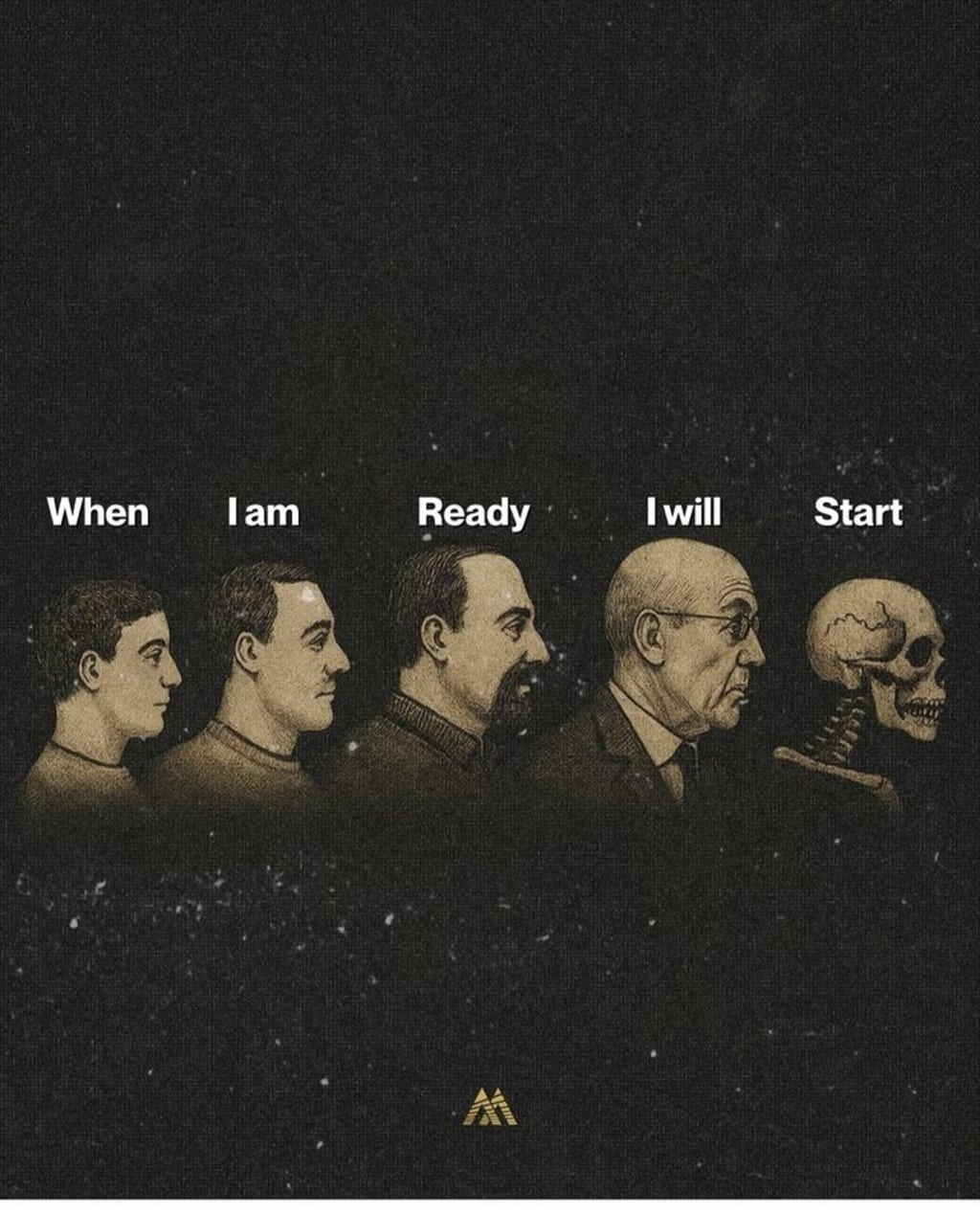
People talk about being ready as if it’s a switch you flip. As if one day you wake up confident, fearless, and fully prepared for whatever comes next. But that version of readiness almost never exists. Real readiness is quieter, messier, and far less dramatic than people expect.
Most of the time, being ready doesn’t feel like confidence. It feels like tension. Like standing at the edge of something unfamiliar while knowing you can’t stay where you are anymore. You don’t feel fearless — you feel aware. Aware that something has to change, even if you don’t know exactly how.
We wait for readiness because we want certainty. We want reassurance that we won’t fail, won’t regret it, won’t look foolish. But life doesn’t offer guarantees. If you wait until you feel completely ready, you often end up waiting forever.
Being ready isn’t about knowing the outcome. It’s about accepting the risk.
There’s a moment — subtle but powerful — when staying the same becomes heavier than the fear of moving forward. That’s readiness. When discomfort shifts from being something you avoid to something you’re willing to face.
Readiness doesn’t mean you’ve healed everything. It doesn’t mean you’re fully prepared, emotionally stable, or confident in every step. It means you’re willing to start despite unfinished work inside you.
Many people confuse readiness with motivation. Motivation is emotional. Readiness is internal alignment. You might not feel excited, but you feel committed. You might feel scared, but you’re no longer resisting the idea of change.
Another misunderstood part of readiness is timing. People say, “It’s not the right time,” but often what they mean is, “I’m afraid of what will happen if I try.” Fear disguises itself as patience. Caution disguises itself as logic.
That doesn’t mean rushing blindly is wise. Readiness isn’t recklessness. It’s awareness paired with courage. It’s knowing the risks and choosing to move anyway.
Being ready also means letting go of who you were. Not completely — but enough to make space for growth. Every step forward requires releasing something familiar. Old habits. Old identities. Old expectations. That loss can feel uncomfortable, even when growth is positive.
Readiness asks you to trust yourself more than circumstances. To believe that even if things don’t go perfectly, you’ll adapt. You’ll learn. You’ll recover. That belief matters more than perfect planning.
Often, readiness is revealed through action, not feeling. You don’t feel ready then act — you act and discover readiness along the way. Confidence follows movement, not the other way around.
There’s also a quiet grief in readiness. You grieve the version of life you imagined might happen if you stayed. The safety. The predictability. Even if it wasn’t fulfilling, it was familiar. Letting go of that deserves acknowledgment.
Being ready means accepting uncertainty without demanding immediate answers. It means being okay with not knowing who you’ll become yet. Growth requires patience with your own evolution.
Readiness also isn’t permanent. You can feel ready one day and doubt yourself the next. That doesn’t mean you were wrong. It means you’re human. Commitment isn’t the absence of doubt — it’s continuing despite it.
Another important truth: being ready doesn’t mean doing everything at once. Sometimes readiness looks like a small step. A conversation. A boundary. A decision made quietly without announcing it to the world.
Readiness doesn’t need witnesses.
It’s internal. Personal. Sometimes invisible to everyone else.
And often, readiness arrives after exhaustion. After trying to make things work. After staying longer than you should have. When energy for pretending runs out, honesty takes over.
You don’t become ready because life gets easier. You become ready because you realize you can handle difficulty better than you thought.
Being ready means trusting your capacity to respond, not your ability to predict.
It means understanding that growth isn’t about avoiding pain — it’s about choosing which pain is worth facing. The pain of staying stuck or the pain of stepping forward.
You don’t need permission to be ready. You don’t need validation. You don’t need to explain yourself.
If something inside you is quietly saying, “I can’t stay here anymore,” that matters.
Readiness doesn’t shout. It whispers.
And when you finally listen, you realize you were never waiting for readiness.
Readiness was waiting for you to stop ignoring it.
About the Creator
I Don't Need My Phone... Wait, Is That Actually True?
My parents gave me my first cell phone when I was twelve years old. It wasn't a fancy iPhone or anything, not even close. Just a simple black flip phone for when I needed to call or text them after school.
By Madison "Maddy" Newton5 days ago in Humans
Mismatch Challenge Winners
Blending genres isn’t about stacking elements side by side. It’s about what happens when two sets of expectations refuse to cooperate. The strongest entries in the Mismatch Challenge understood that tension and leaned into it. Rather than smoothing the edges, these stories let their chosen genres complicate one another, creating friction that carried through voice, structure, and consequence.
By Vocal Curation Team7 days ago in Resources


Comments
There are no comments for this story
Be the first to respond and start the conversation.