
Why Facts Alone Don't Change People's Minds
Inside the Pseudo-Environments That Make People Immune to Evidence
Have you ever tried to convince someone with cold, hard facts, only to watch them reject everything you say? Maybe you showed them statistics, expert opinions, or undeniable proof-yet they still refused to change their mind. It's tempting to assume they're just being difficult. But the truth is, we all do this. People don't react to reality, they react to the version of reality they carry in their heads. And that version is shaped by everything from media and upbringing to personal biases. So, if facts don't change minds, what does? That's what we're about to uncover.
The World Outside vs. The World in Our Heads
You’ve probably witnessed this at some point, how two people can watch the same news report and come away with completely different opinions? Or how some people insist on believing things that have been debunked over and over? It’s not because they’re irrational, it’s because they’re seeing the world through a different lens.
There is something that should be obvious but often isn’t: we don’t interact with reality directly, we interact with the version of reality we have in our heads. That version is shaped by what we read, who we talk to, and what kind of media we consume. In other words, our opinions aren’t just based on facts; they’re based on the stories we tell ourselves about those facts.
Think about it. If you’ve never been to a country, your opinion of it is entirely dependent on what you’ve heard about it. If all you’ve ever seen are headlines about crime, corruption, or war, you’ll assume it’s a dangerous place. But someone else, who’s been there, might tell you it’s the most beautiful and peaceful country they’ve ever visited. Who’s right?
This gap between reality and perception is what Lippmann calls a “pseudo-environment.” Instead of reacting to the real world, we react to the mental picture we’ve built over time. And because that picture feels real, it shapes our emotions, decisions, and even our identity, making it incredibly hard to change.
Why People Resist Facts That Challenge Their Beliefs
If facts alone determined what people believed, there would be no need for political debates, no ongoing disputes over climate change, and no flat-Earth conspiracy theories. Yet, in reality, people often reject facts that contradict their existing beliefs. Why does this happen?
Psychologists point to several cognitive biases that explain why facts alone rarely change minds:
- Cognitive Dissonance: When people encounter information that contradicts their deeply held beliefs, it creates psychological discomfort. Instead of changing their belief, they often try to rationalize the conflicting information or dismiss it altogether.
- Confirmation Bias: People tend to seek out and believe information that aligns with what they already think is true, while ignoring or discrediting information that contradicts it.
- The Backfire Effect: In some cases, being confronted with opposing facts makes people double down on their beliefs rather than reconsider them.
We don’t live in the world as it is; they live in the world as they perceive it. When new facts challenge that perception, they feel like an attack, not just on an idea, but on their identity. This is especially true in politics and religion, where beliefs are deeply tied to personal values.
So, if facts alone don’t persuade, what does? The answer lies in storytelling, trust, and gradual exposure to alternative perspectives.
The Role of Media in Shaping Public Perception
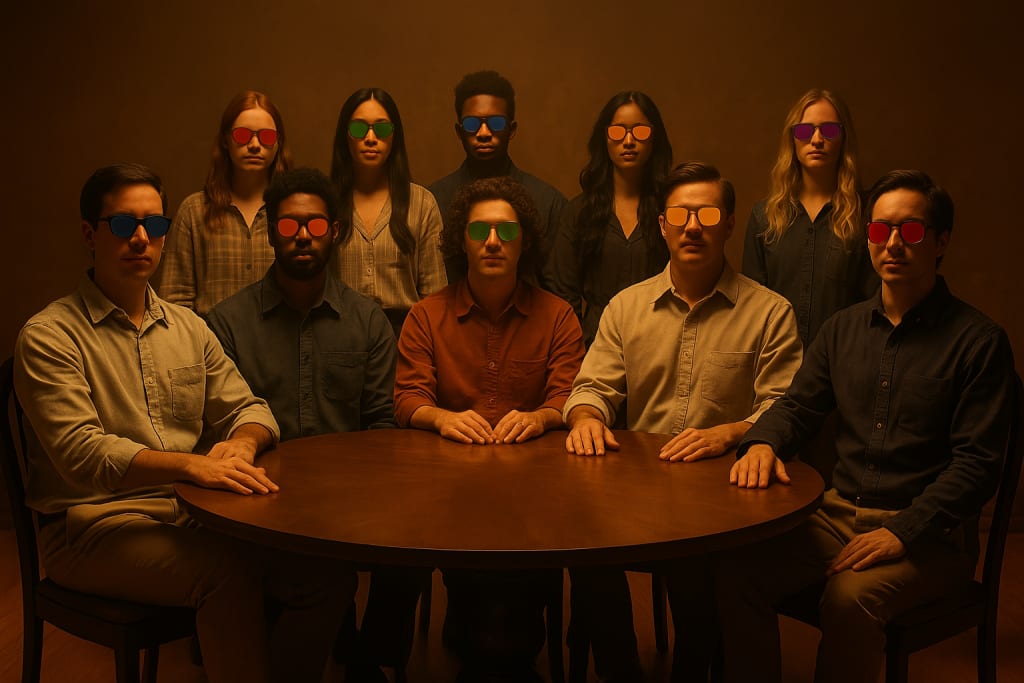
Imagine looking at the world through a stained-glass window. The glass is tinted with different colors, distorting what you see. You believe you’re looking at reality, but in truth, you’re seeing a filtered version of it, one shaped by the color of the glass.
That’s what the media does. It acts as a lens through which we view the world, shaping what we see and how we interpret it. Most people don’t realize they’re looking through a filter at all. They believe they’re seeing reality, unaware that someone else has decided what information gets through.
- Some events are magnified, while others are ignored.
- Some stories are framed in a way that stirs outrage, while others are softened to appear harmless.
- Some narratives are repeated endlessly, while others disappear overnight.
The result? People aren’t just influenced by the media; they are formed by it. Two people watching different news channels aren’t just getting different perspectives, they are living in completely different realities.
If we ever hope to break free from these illusions, we need to start questioning the lens itself. The first step? Learning to recognize the ways media distorts what we think we know.
Can People Overcome These Biases?
If we know our brains are wired to protect our beliefs, does that mean we’re doomed to stay stuck in our own mental bubbles forever? Not necessarily. But changing how we think isn’t easy, it takes conscious effort.
Most people live in a pseudo-reality, shaped by the media and their personal biases. To break free, we have to actively challenge our own thinking. Here’s how:
- Be aware of your own biases. If you find yourself instantly agreeing or disagreeing with something, ask why. Is it because of the facts or because it aligns with what you already believe?
- Consume news from different perspectives. If you always get your news from the same sources, you’re likely reinforcing your own worldview. Try reading multiple viewpoints, even the ones you disagree with.
- Ask more questions. Instead of immediately reacting to a news story or social media post, take a step back. Who is telling this story? What’s being left out? Who benefits from this narrative?
- Engage in meaningful conversations. The goal isn’t to argue, it’s to understand. Real conversations, not social media shouting matches, are where perspectives can truly shift.
Can everyone overcome their biases? Probably not. But those who make the effort will see the world more clearly than those who refuse to question their own thinking.
So we can Say...
The difficult truth is that people don’t simply react to facts; they react to the mental images they’ve built over time. These images are shaped by media, social circles, and personal experiences, making it incredibly difficult for new information, no matter how factual, to change someone’s mind.
This explains why misinformation spreads, why political divisions deepen, and why rational debates often feel impossible. But it doesn’t mean change is hopeless. If we recognize how our own perceptions are shaped, we can begin to:
- Question our assumptions before automatically accepting or rejecting new information.
- Diversify our sources to see multiple sides of an issue.
- Engage in conversations with an open mind, rather than just defending our beliefs.
Facts alone may not be enough to shift perspectives, but self-awareness and critical thinking can.
The challenge isn’t just to inform ourselves, it’s to train ourselves to think beyond the limitations of our own biases.
About the Creator
Beyond The Surface
Master’s in Psychology & Philosophy from Freie Uni Berlin. I love sharing knowledge, helping people grow, think deeper and live better.
A passionate storyteller and professional trader, I write to inspire, reflect and connect.
Reader insights
Nice work
Very well written. Keep up the good work!
Top insight
Heartfelt and relatable
The story invoked strong personal emotions
Keep reading
More stories from Beyond The Surface and writers in Humans and other communities.
Silent Conversation
I. THE THINGS WE SAY TO PHOTOGRAPHS The photograph sits on the bookshelf like it always has, crooked in its frame, sun, faded at the corners, but defiant in its stillness. I don’t remember placing it there. Maybe Mom did, years ago. Maybe it simply appeared the way grief does, quietly, without asking.
By Beyond The Surface11 months ago in Humans
The Angry Man in Your House
"If you grow up with an angry man in your house, there will always be an angry man in your house" This statement has caused plenty of controversy online, people say its a statement that blames victims while also undermining those who break traumatic cycles to form health relationships... but if I'm honest now that I'm in my 30s it makes more sense to me than ever, and I'd argue that its not just about fathers and uncles.
By S. A. Crawforda day ago in Humans


Comments
There are no comments for this story
Be the first to respond and start the conversation.