
Agi Bar-Sela, From Budapest to Tel Aviv: Early Israel, Language, and Resilience
How does Agi Bar-Sela's 1949 immigration story illuminate early Israeli culture, austerity, and the power of language?

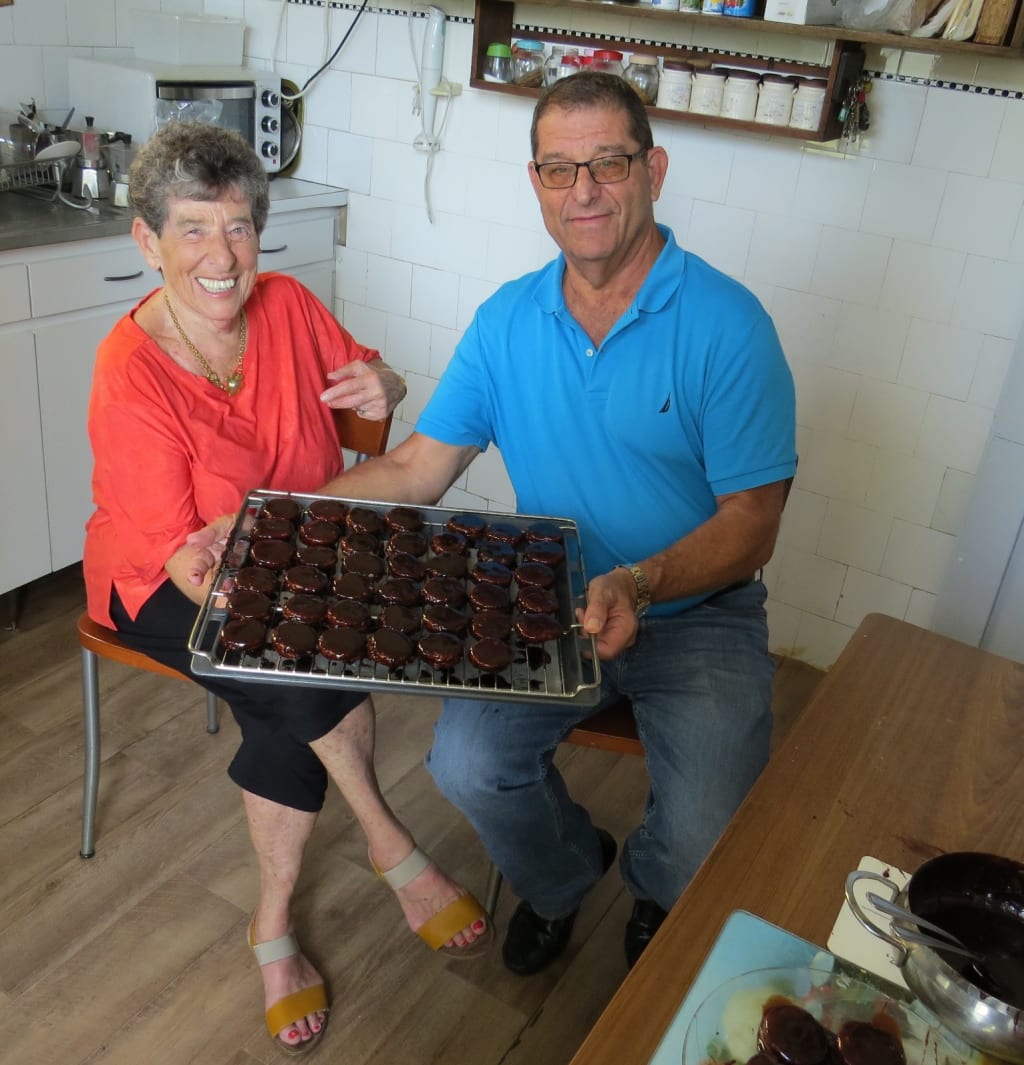
Agi Bar-Sela, born in 1931 in Budapest, immigrated to Israel in 1949 with a Zionist youth group after her grandfather pressed her family to flee communist Hungary. Sent first to a kibbutz, she soon chose urban life, using Hungarian and fluent German to work among German Jewish “Jekkes,” then learning Hebrew and leaning on Yiddish for belonging. She married young, raised three sons, and endured early-state austerity: scarce food and crowded multigenerational flats. Her English later opened careers at El Al and travel agencies, while her Hungarian-Jewish cooking anchored home and community. She champions language study as the surest ladder.
In this interview, Scott Douglas Jacobsen speaks with Agi Bar-Sela about arriving in Israel in 1949 from Budapest, beginning on a kibbutz and then shifting to city life. Agi Bar-Sela recalls early austerity—little food, few choices, and crowded flats shared with in-laws, mother, and grandmother—while stressing youth as a survival asset. She frames language as social capital: German opened medical work among “Jekkes,” Yiddish fostered belonging, and English enabled later careers at El Al and travel agencies. Motherhood, she says, reordered priorities, and she recalls UN debates, insisting English is today’s key. They end with politics, antisemitism, and cooking joy.
Scott Douglas Jacobsen: We will start from the top. When you were much younger and first came to Israel, how did Israelis tend to see themselves? How did you see the culture when it was still in its early stages of development?

Agi Bar-Sela: First of all, I came in 1949. I was born in 1931, so I was about 17. I came with a Zionist group because I was a Zionist. My grandfather, who was very devoted to Zionism, told my mother that I had to be sent to Palestine and not remain in a communist country. In 1949, the country I was in was already under communist rule. My grandfather knew people and had information that we did not. He strongly wanted me to leave.
My mother said we would decide. My father, of course, was lost in the Shoah. I told my mother that I could get a place to go to Israel, to Palestine, Israel. She said we would ask my grandfather, who was my father's father.
He said he would ask his Zionist friends what they thought. The next day, he called my mother and said, "They said not tomorrow—yesterday. The child should leave this country." So I had all the help I could have. I arrived with a large group and went to a kibbutz in Israel in 1949.
That was the first part. After that, you grow up. You decide what you will do, how you will do it, and with whom—friends, boyfriends, everything. But that was only the beginning. What interests you most—my age?
Jacobsen: It is the length of perspective. You have seen an arc of development in Israeli society that is valuable to me—the long cultural development of Israel.
Bar-Sela: Yes. Then, I saw that the kibbutz was not for me. I had some addresses—from my mother and grandfather—of people who were already in Israel. I also found old friends, and they helped me. That is how I got into business.
Languages helped me, though it wasn't easy at the time in that country because people spoke different languages. Many people spoke English. Many German Jews spoke German. Many others spoke other languages, and often people did not understand one another.
When I decided to leave the kibbutz, I got a job in the medical business. The people there were Jekkes—German Jews—so my German helped me. I had grown up speaking German from a very early age, so I was fluent.
At that time, people also did not like English very much. So I had languages that many people did not want to speak. I decided that, given the situation, I would soften my Hochdeutsch and make it closer to Yiddish. I could do that, and I had help. When I started speaking Yiddish, I felt at home. Everything was fine then. That is the story so far.
Of course, you had to work if you wanted to. I fell in love with my husband. I was very young when I got married—not a little girl, but quite young. So I was not alone for very long.
We were new immigrants, which is never easy. We lived together in a two-room flat with my father-in-law, mother-in-law, my husband, and me. Very quickly, we had our first child.
The moment you have a child, your work changes, your thinking changes—everything changes. That was the beginning.
We were a well-known Zionist family. My father-in-law was deeply involved in Hungarian Zionism and served more than once in leadership roles. Life was not so different from others in that sense. Being young helped. It is easier when you are a teenager and do not yet carry many responsibilities. Still, once you have a child, everything shifts.

Jacobsen: When you had your first child, you said it changed everything. How did it change your thinking and your habits of life—personally and professionally?
Bar-Sela: The first thing I wanted in Israel was to have a child. We were all after the Shoah. My husband had lost his brother, his aunts, uncles, and cousins. So had we. The few people who remained were very close in thought and in the things we did.
We lived in a very poor place, but everyone around us was also poor. Every oleh—every immigrant—was poor. You arrived with nothing. Slowly, things began to improve.
I had my first child in 1951, which means I had just turned 20 when my first son was born. That was the best thing I could have done. Nothing made me happier. I have three sons—unfortunately, not more.
After that, we began working steadily. My husband was an engineer, which helped. He was connected with the army and the pilots, though he was not a pilot himself. Life was good. We had many friends—more than I can count—all from Hungary, most of them not speaking other languages.
I was the only one who spoke Hungarian and also other languages. Even now, I can learn a new language if I decide to. At that time, many of the others did not know how to buy shoes or even bread.
I had already learned Hebrew, which was a very big achievement. Slowly, everything improved. At first, it was difficult—there was little food, which was very complicated. Around 1950, when I was about 20, there was almost no food in Israel
You did not say, "I eat this" or "I do not eat that." You ate what was available. That was one of the major problems. Not every oleh—every immigrant—was young. There were many older people, and for them it was an even bigger challenge. It took several years for the country to become capable of regularly importing goods, and then growth began.
Jacobsen: What about the kibbutz was unappealing to you?
Bar-Sela: First of all, the Sochnut—the Jewish Agency—sent the children from Budapest to a kibbutz that was not suitable for us. It was in a very hot and difficult area. Still, I managed. I was actually happy there. I had work to do, and that was fine.
At the same time, I was thinking about what I would do with my life. A young person of 17 or 18 is not foolish. Young people can do many things that older people do not imagine they can. Being young is not a disadvantage.
I had many friends everywhere. Later, we left that place and moved here together with my father-in-law and mother-in-law. Later, my mother and grandmother joined us. At one point, eight people were living in our flat: my father-in-law, mother-in-law, my mother, my grandmother, my husband, and my three boys. It was not easy, but we wanted to manage, and we did. I never considered leaving Israel. I would never have done that.
Languages were a great gift for me. People who did not have languages the way I did were not in the same position. Not then, and not even today. I could enter many places and understand what others could not. Language is a dramatic factor. Can you learn a language, or can't you? Others had different difficulties, of course. It was not easy then, and it is not easy even today to make a living. But if you truly wanted to, you could. That was the difference.
Jacobsen: What is your favourite language?
Bar-Sela: That is a difficult question. May I give more than one?
Jacobsen: Of course.
Bar-Sela: Then I would easily give at least three or four. I was born into a family that was not ordinary—financially or otherwise. My father loved languages. My first nanny was Swedish; she spoke German and only German. Later, she left, and my father hired another nanny from London. She spoke English and did not know a word of German, and I did not know a word of English at that time.
The nanny was very clever. She decided that I could sing in English. If I could sing in English, then she could teach meEnglish. So when I was four years old, we were already singing in English. Later, regarding languages, I remained passionate about them. I still love languages. Everyone should speak English. That may sound extreme, but English has become essential.
Jacobsen: In what sense?
Bar-Sela: As a working language—a language you can use anywhere in the world. There is no question about it.
Later, when I already had three boys, I worked with El Al. At that time, they were looking for people who spoke English, not necessarily Hebrew. You cannot work in an international airline and speak only German. English was necessary.
My English opened professional doors for me. There is no doubt about that. If you ask me, every person should know at least one additional language. But English should come first, or immediately after one's mother tongue. There is no question about it.
I speak German, Hungarian, and English very well, of course. I also understand other languages—French, for example—even if I do not speak them fluently. I believe languages are the most important thing a person can know. What do you think?
Jacobsen: I think that is generally reasonable.
Bar-Sela: Yes. People in Canada or America have an easier life in that sense, because they already speak English. That is not a problem for them.
I am not someone who sees a problem and gives up. If I had to solve something, I would solve it, or someone would help me. Working with El Al was very demanding—days and nights—but the moment you said you worked for El Al, doors opened. They still do. Working for an airline carries respect.
Later, I left the airline because travel agencies wanted me. They needed someone who spoke languages. That is why I say language is the first thing—any language. If you already speak English, you do not feel that difficulty in the same way.
Being born in a country where English is the main language is a great advantage. For me, learning English as a child was possible because my father believed strongly in languages, and our family could afford tutors. One of the best things I ever did was to become good at languages. Not every language, of course—but three or four is not bad.
Jacobsen: I used to speak French, but I do not anymore.
Bar-Sela: If you were interested, could you regain it?
Jacobsen: Probably.
Bar-Sela: I think so. Languages stay somewhere in the mind. I remember that after the Second World War, when the United Nations was being organized, there were discussions about which language should serve as the main working language. As I remember the story, some argued for Spanish because so many people worldwide speak it, especially across Latin America. But the Americans insisted that English be used. That is how English became the dominant working language.
Of course, you have to know English. It is almost impossible without it. With my boys, besides encouraging music—which was more than a hobby—I was very strict about languages. I did not allow them to neglect English. They learned it well.
I can only hope the same for my grandchildren and great-grandchildren. Since we do not speak English together, I sometimes ask them how good their English is. They tell me it is very good. That is important. You should do everything as well as you can.
When I left El Al, I was very happy. Every travel agency wanted me to work with them as long as I wished to continue. I worked in a travel agency, which was a wonderful job. Languages were the key.
You speak only English, so you do not feel the difference. I see friends from Hungary now—you should hear their English. It is very poor. They speak Hungarian well, but their Hebrew is not very strong either. Without English, you lose opportunities. That is what I believe.
My boys served in the army, of course, and they speak English well. I am still trying with the younger grandchildren—not yet successfully—to joke or sing in English with them. It is the main language.
Jacobsen: In most of Canada, English is the main language. About one in five Canadians speaks French.
Bar-Sela: It is a great advantage to come from a country where English is the first language. You can speak with everyone. They may not speak with you, but you can speak with them. That is powerful.
You asked about my work. I worked only with El Al and then with travel agencies. Both were good places to work. El Al was difficult because of the hours, days, and nights. No husband enjoys waiting until three or four in the morning for his wife to return home. So I moved to a travel agency, where I could work during the day. Because of my languages, the transition was easy.
I have three sons. One son has three children, and the other has three to six grandchildren altogether. Some of them now have children of their own. It is wonderful to have all of them, young and older alike. Language remains a good thing.
Jacobsen: In terms of the larger themes of Israeli cultural development, how have you seen it change over time?
Bar-Sela: I do not think we are behind any country. That is my view. Because I understand almost every language spoken in this country—except Russian, unfortunately—I do not feel barriers when speaking with people. I do not have difficulty talking with anyone.
But English is essential. People do not need German or French. Why would they? English is the language they truly need.
A person coming from any part of the world should speak English and their own language. That is enough. Today, I do not believe a person can work without English. Nothing is as important as English. If I were living in South America, I might think differently. But from my perspective, English is the main language. I do not expect someone like Donald Trump to speak with me, but if he did, I would do my best to speak with him.
Jacobsen: What is your opinion of the current global political situation?
Bar-Sela: That is a difficult question. We follow two main sources. First, my family and I read the newspapers every day. Second, we listen to television news, as most people in Israel do. Through television, you hear certain narratives.
At the moment, I do not think it is easy to assess the situation for Israel. I was shocked by how openly antisemitism has appeared. Shocked. Antisemitism in France, Switzerland, Austria—yes. I do not know about Italy, but I assume it exists there as well.
We do not fully understand the current situation regarding the United States and other countries. It will be good for us.
Antisemitism exists and, sadly, may always exist. I am angry about it. But beyond that, I think we are seeing an increase in small and medium-sized wars around the world. That makes the world more dangerous for everyone, with all the tragedies that follow. Antisemitism is there, and it will always be there. And fuck them all. That's not very nice to say fuck, but I don't care. I think we're seeing an increase in small and medium wars.
That is a major global factor. The world becomes more dangerous when there are more wars and all the tragedies that follow.

Jacobsen: How would you describe Israeli cuisine?
Bar-Sela: The best you can imagine.
Jacobsen: Give me the list, then. What do you cook? Where do you like to eat—at home, at restaurants, at the beach?
Bar-Sela: Not restaurants. I am a woman living alone.
Jacobsen: What ingredients do you mainly use? What kinds of dishes do you prepare? What are they called?
Bar-Sela: First of all, I cook well. That is the first thing. And second, I enjoy it. If you ask me to cook soup, bake something, or prepare a dish, it will be ready quickly. It comes naturally to me. Anyone who wants can join me in the kitchen. I do not mind.
Cooking is intelligent work. You can experiment as much as you like. And do not forget, I come from Budapest. That is one of the great culinary cities of the world. French, Italian, Hungarian—the very best traditions. Cooking, for me, is a joy.
There was a period between jobs when I cooked more seriously, because many people do not like to cook. That is unfortunate. Cooking is wonderful. You can make something out of almost nothing. That comes from the Hungarian background. Hungarian cuisine is excellent—truly superb.
When I travelled and worked with many people, one of the things they most wanted was to eat in Budapest. The cuisine is famous. Even when we had very little at the beginning in Israel, Hungarians knew how to create something from nothing. We know how to cook any cuisine.
Jacobsen: What are the common dishes in Budapest and in Israel?
Bar-Sela: In Hungary, food is central. There are excellent markets of very high quality that are not expensive. In Israel, especially in Tel Aviv, food is more costly. Still, cooking is about intelligence. You should not spend a great deal of money if you can buy something just as good for less.
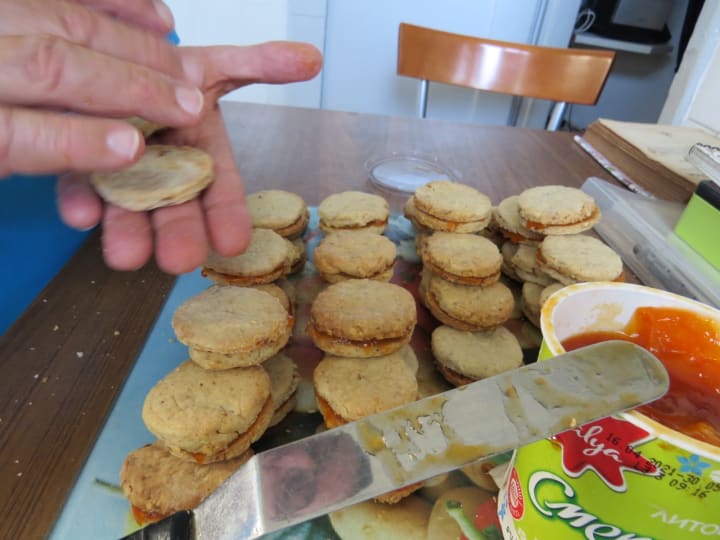
Cooking and baking are both good. If you enjoy it, it is not hard work. Baking is more precise, but it is still enjoyable. I cannot remember the last time I bought a cake.

Jacobsen: What kinds of cakes do you bake?
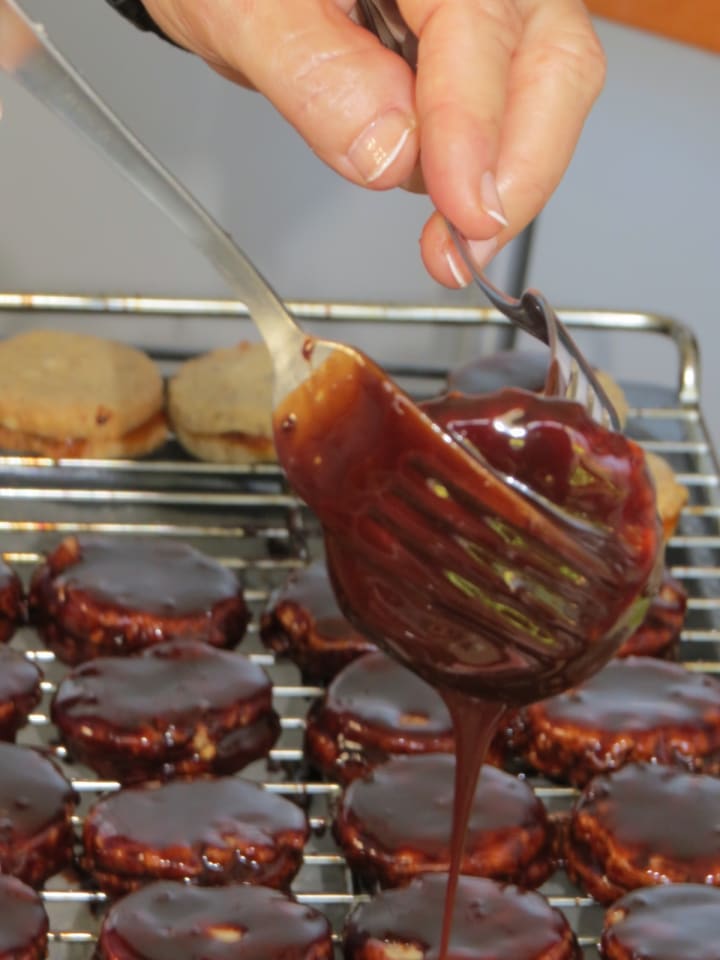
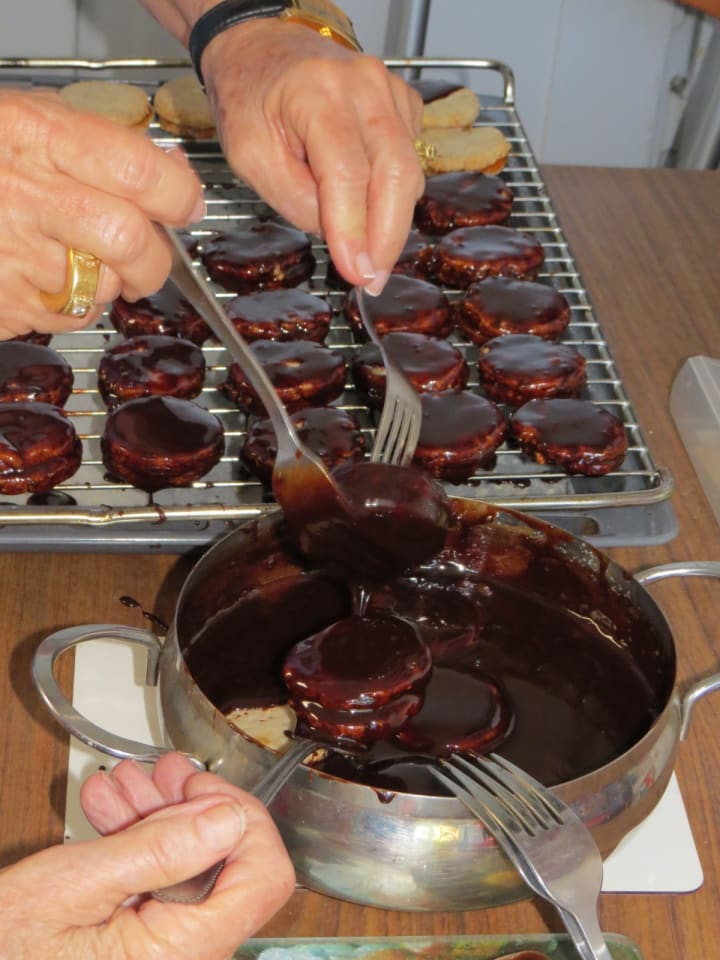
Bar-Sela: I bake very good cakes. Chocolate cake is always popular because people like it. But I can bake more than that. I prefer to make things myself rather than buy them. It is satisfying, and it tastes better. Cooking is a joy. Once you think of it as difficult work, it becomes difficult. But it is not hard at all.
For example, I bake many-egg cakes—yellow cakes. I think every cake can be good. You have to make it well and learn how to do it properly. Cooking requires experience, and books can help.
Cooking is worthwhile. It is not foolish at all. You cook what your children like, what your husband likes, what your father likes. Slowly, you develop your own kitchen. It depends very much on the people who are eating—what they like, what they do not like, what is fattening and what is not.
I do not know what is not fattening. Everything is, unfortunately. But cooking is good. Hungarian cuisine is very good—comparable to Italian or French cuisine. Chinese cuisine is different, but that can also be learned.
Cooking is satisfying. You prepare something, whether inexpensive or not, and everyone enjoys it. What could be wrong with that?
Jacobsen: Do you cook often?
Bar-Sela: Some men cook a great deal. Some are satisfied only with their own cooking. In Israel, it is easy to cook because we have everything available. You do not need the most expensive ingredients to make a good dish. With a Hungarian background, it is almost impossible to ruin a meal. If you must spend a little more sometimes, that is fine.
Jacobsen: Who cooks at home?
Bar-Sela: I do, of course. Cooking is a good occupation. You can win over your family with it. If they are satisfied, you know it. If they are not, they tell you. Everyone wants something different. That is normal.
Jacobsen: When am I coming for dinner?
Bar-Sela: To my place? In Israel, of course. Finish your time in Ukraine first. I do not know Ukrainian cuisine very well. I do like Russian cuisine—at least parts of it. I visited Russia once and was surprised by how delicate and good the food was. Ukrainian cuisine, I do not know well. It is difficult to cook properly when finances are tight.
When we were new immigrants in Israel, there was very little food. You could not simply go out and buy whatever you wanted. It was not easy. It took about ten years before things stabilized. That period was difficult. I was young then. I am older now, and I no longer complain about food. Everything is fine.
Jacobsen: When I come to Israel, and you cook for me, what will we eat?
Bar-Sela: You decide.
Jacobsen: What about matzo ball soup? Gefilte fish? Latkes? Kugel? A baked casserole with egg noodles?
Bar-Sela: I could make a baked casserole with egg noodles because I can learn anything from a book, but it is not something I usually prepare. Holiday dishes, of course, we make exactly as written in the books. That is how we grew up.
Over time, my cooking has become more Israeli as well. I also learned from non-Hungarians, because Hungarians generally cook well—whatever they prepare tastes good. Others are not always satisfied so easily.
Hungarians cook well, eat well, and behave well. That is important. Cooking is not a problem. You should enjoy it. If you do not enjoy cooking, then do something else. Let someone else cook. In a traditional Jewish home, you should at least know how to read a recipe.
Cooking is simple when you approach it properly. French cuisine is wonderful. Italian cuisine is very good. Chinese cuisine—I have eaten it, but I do not cook it myself.
Bar-Sela: Where are you?
Jacobsen: Kyiv.
Bar-Sela: Ah. I do not know much about Ukrainian cooking. But they must cook well.
Jacobsen: I have enjoyed the food here.
Bar-Sela: They make meat, bread, bagels, borscht—very good dishes. Borscht is excellent. In my house, though, most people do not like it. I do, but the real favourite in this family is chicken soup. You can make it every day, every two days—whenever you like. Once you cook a good chicken soup, you have succeeded.
Lately, chicken wings have been inexpensive. I do not know why—perhaps the factories stopped buying them. They are not extremely cheap, but they are affordable. You add plenty of greens—kohlrabi, onions, whatever vegetables you have—and it becomes a wonderful soup. People come to eat it. You are invited.
Jacobsen: We will stick to Hungarian and Jewish cuisine.
Bar-Sela: Hungarian cuisine is truly excellent. Have you been to Hungary?
Jacobsen: Not yet.
Bar-Sela: You should go. It is affordable. You can enter any restaurant—very famous or very simple—and the food will be good. Even in a market, you can eat soup that you would only find elsewhere in an expensive restaurant. The quality is remarkable.
In Israel, you can eat very expensively or very simply. In Budapest, you can eat well at every level—cheap or high-end. In a market, vendors will call you over and say, "Come try my soup." It is extraordinary how good the food is.
I have eaten Italian and French cuisine. I know what refined food is. Hungarian food is not "high society." It is simply very good. People cook well, eat well, and enjoy food.
In Israel, vegetables are wonderful year-round thanks to the climate. You can always find what you need. So you are invited. I will not go to Budapest to cook for you, but if you come here, you are welcome.

Jacobsen: Excellent. I have to go now.
Bar-Sela: Laila tov. Do you know what that means?
Jacobsen: No.
Bar-Sela: Good night. Laila tov.
Jacobsen: Laila tov. Thank you for your time.
Bar-Sela: You are welcome. Bye-bye.
Scott Douglas Jacobsen is a blogger on Vocal with over 120 posts on the platform. He is the publisher of In-Sight Publishing (ISBN: 978–1–0692343) and the Editor-in-Chief of In-Sight: Interviews (ISSN: 2369–6885). He writes for The Good Men Project, International Policy Digest (ISSN: 2332–9416), The Humanist (Print: ISSN 0018–7399; Online: ISSN 2163–3576), Basic Income Earth Network (UK Registered Charity 1177066), A Further Inquiry, The Washington Outsider, The Rabble, and The Washington Outsider, and other media. He is a member in good standing of numerous media associations/organizations.
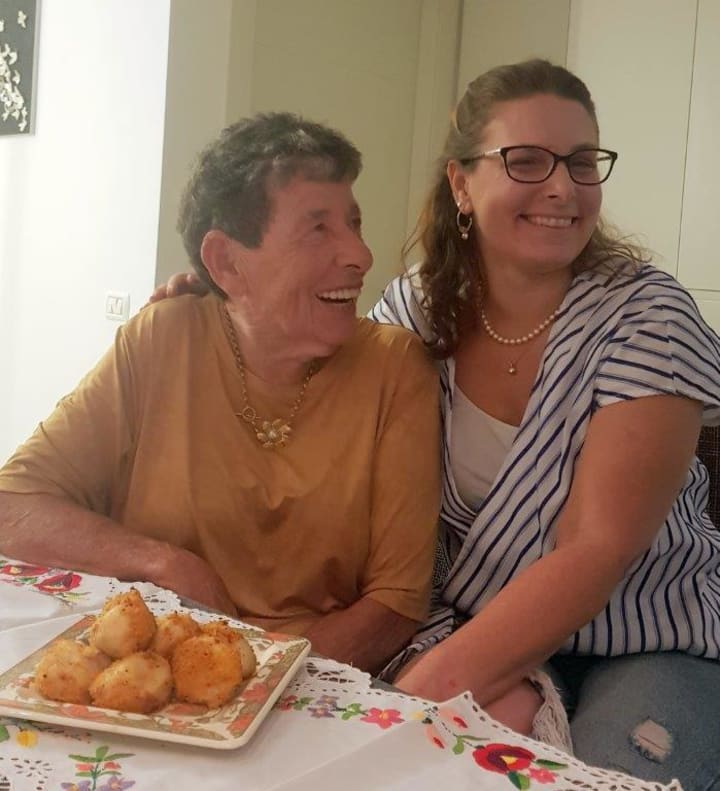
Image Credit: Agi Bar-Sela.
About the Creator
Scott Douglas Jacobsen
Scott Douglas Jacobsen is the publisher of In-Sight Publishing (ISBN: 978-1-0692343) and Editor-in-Chief of In-Sight: Interviews (ISSN: 2369-6885). He is a member in good standing of numerous media organizations.
Keep reading
More stories from Scott Douglas Jacobsen and writers in Interview and other communities.
Fumfer Physics 41: Time-Reversed Black Holes and White Holes
In a late-night thought experiment, Scott Douglas Jacobsen recalls opening a quantum cosmology conference in Baku alongside Edward Witten and Leonard Susskind. He asks whether a “time-reversed” black hole could exist—like a pencil balanced on its tip for eons: lawful, but fantastically unlikely. Rick Rosner argues anomalies require a stabilizing mechanism: agency, control systems, and engineered conditions, much like quantum computers holding fragile superpositions or laboratories sustaining fusion. They extend the logic to speculative warp travel and to “white holes,” the general-relativistic time-reverse of eternal black holes, while noting the real physics ultimately hinges on horizons, entropy, and information preservation.
By Scott Douglas Jacobsen2 days ago in Interview
Living in a hemp house
Hemp, a multi-purpose crop that delivers fibres, shivs, seeds, and pharmaceuticals is currently used in insulation materials and bio-composites for a more sustainable construction industry. Russ Martin and his wife Karon Korp tell their story as owners of the first hemp house in the U.S.
By Susan Fourtané 28 days ago in Interview
Kresence Greenwood Recognized for Expanding Trauma Informed Mental Health Care Across Multiple States
By Kendra Hall PHILADELPHIA — Mental health professionals across the Northeast continue placing increased focus on trauma informed care and culturally responsive support, particularly in communities where access gaps and stigma influence outcomes.
By Kendra Hall4 days ago in Interview




Comments
There are no comments for this story
Be the first to respond and start the conversation.