
Between Saudi Arabia and Ukraine: Saba Yamani on Faith, Gender, and LGBTQ+ Survival
How do Saudi and Ukrainian religious norms shape LGBTQ+ safety and women’s autonomy, according to Saba Yamani?


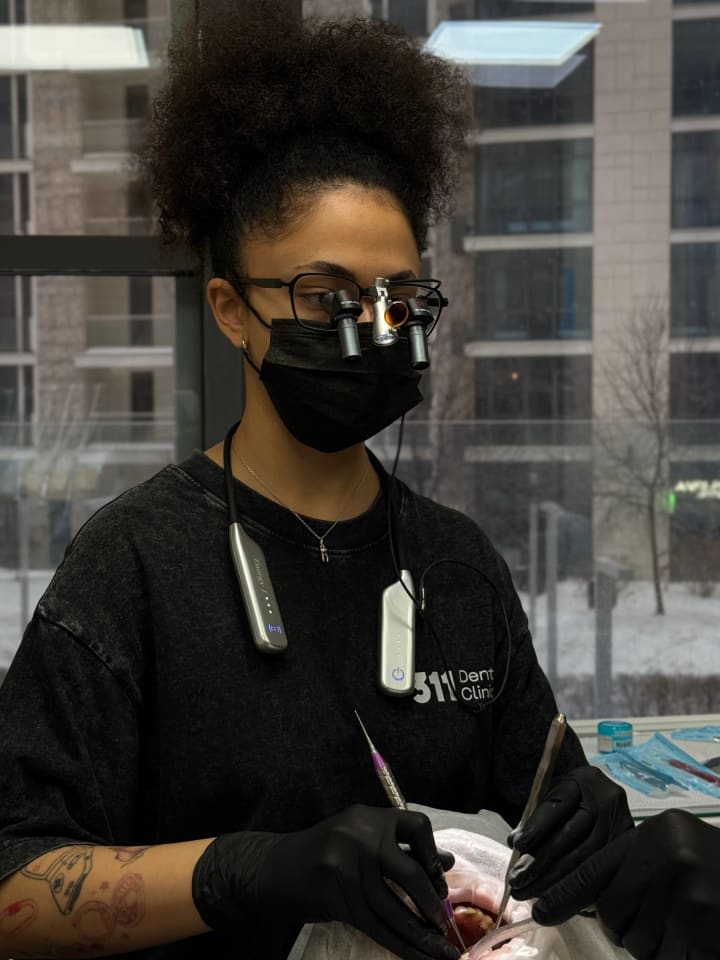
Saba Yamani is a Kyiv-based dental professional who was born in Saudi Arabia to a Saudi father and Syrian mother. She first arrived in Ukraine at age three after her father married a Ukrainian woman, whom she considers her mother. Raised in Kyiv, Yamani was baptized in the Orthodox Church and later came out as LGBTQ+. During the full-scale invasion she sought protection from Ukraine’s State Migration Service after facing pressure to leave and risk of deportation. She currently works at a private dental clinic and is preparing for the Ukrainian citizenship exam in May.
Scott Douglas Jacobsen interviews Saba Yamani, a Kyiv-raised LGBTQ+ woman born in Saudi Arabia, about living between two religious cultures. Yamani describes hiding her sexuality in Saudi Arabia, relying on online friends for support, and feeling socially policed through dress codes, male-guardian expectations, and anxiety about early marriage. In Ukraine, she recalls greater childhood freedom, mixed acceptance, and a clearer sense of personal possibility. She explains how family narratives and religious justifications shaped gender roles and fear, and how repeated moves intensified an enduring sense of precarious identity and control over her future. She is pursuing Ukrainian citizenship after threats.
Scott Douglas Jacobsen: You are sitting between two very different religious and political environments: Saudi Arabia, an Islamic state governed by a hereditary monarchy, and Ukraine, where Eastern Orthodox Christianity is historically dominant but where there is no state religion. Ukraine is religiously majority Christian, yet it is constitutionally secular, and levels of active religious observance are generally lower than in Saudi Arabia. From your experience, how do people interpret their faith in Saudi Arabia? How do they interpret it in Ukraine? Does that influence how they view gay and transgender people?
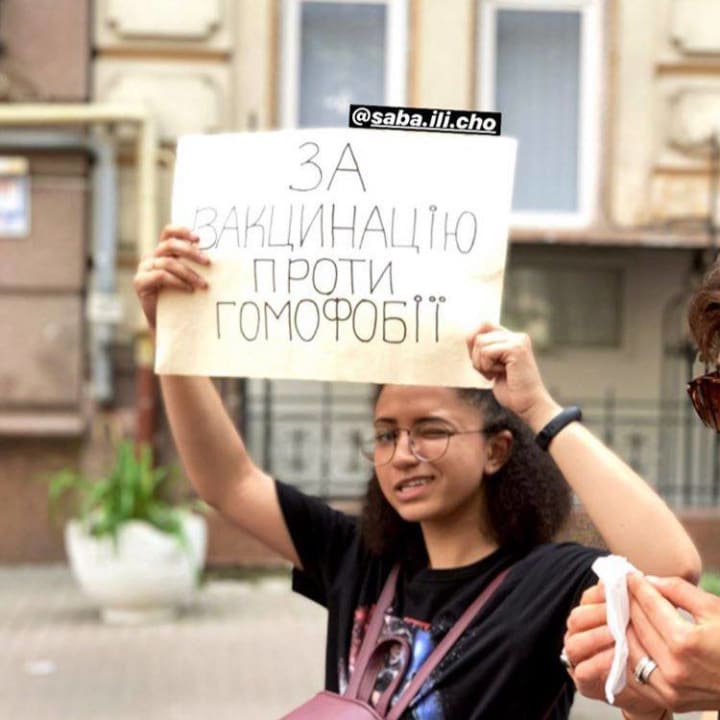
Saba Yamani: It is two different stories because I never came out in Saudi Arabia. I did come out to my father. We have a complex relationship. He is a strict Muslim Arab man. At first, he tried to be supportive. He accepted it for a few days, then told me he had changed his mind.
I was never openly gay in Saudi Arabia. You cannot openly express that. I wore an abaya and dressed modestly, as is socially expected for girls and women there. I have dressed that way since I was nine. I knew it would be problematic to express my sexuality publicly. I never spoke about it at school or at home. I lived mostly online, and that is where I found support.
Jacobsen: Where online did you find support, and what was the nature of that support?
Yamani: I lived one year in Ukraine and one year in Saudi Arabia. We moved back and forth many times because my family tried to live together and then separated again. Each year when I returned to Saudi Arabia, I kept in touch with my Ukrainian friends online. I never developed close friendships in Saudi Arabia. I often felt like an outsider. Some Arabic classmates saw me as Ukrainian and treated me as different. At the same time, in Ukraine I was sometimes seen as different because of my background.
Jacobsen: That in-between world where you do not feel accepted by either side.
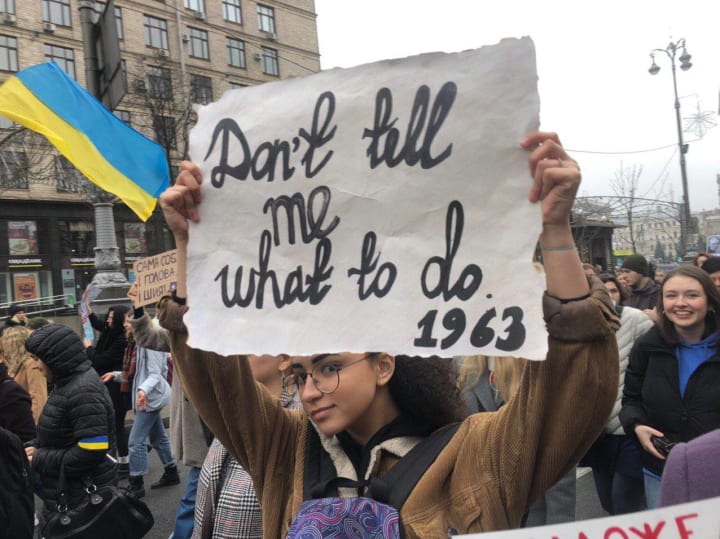
Yamani: Yes. I rarely felt fully accepted as “one of us” anywhere. The only time I felt a sense of belonging was with some Black students at the medical university, who commented on my hair and said, “You are one of us.” That was the only time I felt clearly included.
Jacobsen: Was that acceptance unconditional or conditional? You were accepted by that community. Were there conditions, or was it unconditional?
Yamani: It seemed based mostly on my appearance, especially my hair. That is a narrow basis for acceptance. I had not had close Black friends before, so I cannot fully assess how deep that acceptance was.
Jacobsen: In terms of covering, how would you describe religious doctrine and social rules for women as they enter adolescence?
Yamani: In many conservative interpretations of Islamic practice, girls are expected to begin dressing modestly around puberty, which is often associated with the onset of menstruation. In practice, however, families may introduce modest dress earlier for cultural or religious reasons. In my case, I began covering several years before menstruation. Socially, covering can be interpreted as a sign that a girl is becoming a young woman, which in conservative contexts may also relate to ideas about marriageability. I began covering at nine. I began menstruating at thirteen.
I could not understand it. I knew the rule. I knew what it was supposed to represent, but I could not comprehend that my father might be ready to give me up for marriage at the age of nine. He even referred to the Qur’an. He said that the Prophet Muhammad married Aisha when she was young. He used that as a way of normalizing the idea and expected me to accept it.
Jacobsen: Is that a common interpretation in families there? In Saudi Arabia, is early marriage seen as normal in many families?
Yamani: I believe so. You hear many stories of Muslim girls getting married and becoming pregnant at a very young age. That context explains a lot.
Jacobsen: What was the internal experience for you?
Yamani: It felt like waiting for something terrible to happen. During the year I lived there, I felt it could happen at any time. Each year when I returned to Ukraine, it felt like an escape. A year in Ukraine was where I lived. A year in Saudi Arabia was where I existed and waited. I had two completely different lives.
Jacobsen: Are either of your parents Ukrainian?
Yamani: No. My father is from Saudi Arabia. I was born there. My biological mother is from Syria, but I never met her.
Jacobsen: Under what circumstances did you never meet her?
Yamani: My father divorced her shortly after I was born. For the first few years of my life, I lived with my aunt. He left me with his sister because he travels frequently for work at the airport. Later, he met a Ukrainian woman and married her. She is my stepmother, but I call her my mother because I have known her my whole life. I never met my biological mother.
Jacobsen: Do you want to meet your biological mother?
Yamani: No. I do not think so. It does not seem logical. She comes from a world I tried to escape. I believe she would not accept me, especially regarding religion and sexuality. I feel it would cause pain for both of us. I also do not have any personal connection to her. I do not feel anything.
Jacobsen: Which cities did you live in in Ukraine? What was your impression of the culture itself, not in comparison to Saudi Arabia?
Yamani: As a child in Ukraine, it was fun because there was so much freedom. In Saudi Arabia, a girl cannot leave the house alone without a male guardian. It could even be my younger brother. That felt strange to me. He was younger, yet he had more authority in that situation. I was not allowed to play outside freely, especially if boys were around.
Any contact with a boy who is not a close blood relative can be viewed suspiciously. Socially, it is considered inappropriate. I once greeted a man I believed was my uncle by shaking his hand. My father became angry because he was not a close blood relative, and under Islamic law, marriage between certain cousins is permitted. That meant physical contact was not considered acceptable.
In Ukraine, each year I returned, I played outside with boys and it was simply friendly. I did not feel sexualized. When my father was not present, my grandmother allowed me to go outside. She knew the social expectations but wanted me to experience some freedom. She did not tell others where I was or who I was with.
Jacobsen: More broadly, how do you think Saudi Arabia views women and girls? And how does Ukraine view women and girls in your lifetime?
Yamani: In Saudi Arabia, it often feels as though a girl is born to become someone’s wife and someone’s mother. The expectation is that you will marry, stay at home, and focus on family. Education for girls exists, but early marriage can interrupt it. Some girls marry during their final years of secondary school.
In Ukraine, you are seen as a person first. As a child, you are allowed to have fun and imagine a future. There are expectations, but they do not feel predetermined in the same way.
There were structural differences as well. Saudi Arabia has twelve years of schooling, while Ukraine traditionally had eleven grades. When I completed a year in Ukraine and then returned to Saudi Arabia, I often had to repeat material. It felt as though time was moving more slowly there. I felt stuck.
Jacobsen: How do women and girls see their horizons in those contexts? In Ukraine, where you are treated as a person with possibilities, versus in Saudi Arabia, where you felt you were waiting for something predetermined?
Yamani: In Saudi Arabia, you do not feel in control of your own future. You feel that your life is already planned. Even when I was in Ukraine, I feared that it could be taken away from me at any moment. There was always a sense of uncertainty and lack of control.
Jacobsen: Thank you very much for the opportunity and your time, Saba.
Scott Douglas Jacobsen is a blogger on Vocal with over 120 posts on the platform. He is the Founder and Publisher of In-Sight Publishing (ISBN: 978–1–0692343; 978–1–0673505) and Editor-in-Chief of In-Sight: Interviews (ISSN: 2369–6885). He writes for International Policy Digest (ISSN: 2332–9416), The Humanist (Print: ISSN, 0018–7399; Online: ISSN, 2163–3576), Basic Income Earth Network (UK Registered Charity 1177066), Humanist Perspectives (ISSN: 1719–6337), A Further Inquiry (SubStack), Vocal, Medium, The Good Men Project, The New Enlightenment Project, The Washington Outsider, rabble.ca, and other media. His bibliography index can be found via the Jacobsen Bankat In-Sight Publishing. He has served in national and international leadership roles within humanist and media organizations, held several academic fellowships, and currently serves on several boards. He is a member in good standing in numerous media organizations, including the Canadian Association of Journalists, PEN Canada (CRA: 88916 2541 RR0001), Reporters Without Borders (SIREN: 343 684 221/SIRET: 343 684 221 00041/EIN: 20–0708028), and others.
Image Credit: Sama Yamani.
About the Creator
Scott Douglas Jacobsen
Scott Douglas Jacobsen is the publisher of In-Sight Publishing (ISBN: 978-1-0692343) and Editor-in-Chief of In-Sight: Interviews (ISSN: 2369-6885). He is a member in good standing of numerous media organizations.
Keep reading
More stories from Scott Douglas Jacobsen and writers in Interview and other communities.
Alex Craiu, Russia’s 2025 Escalation in Ukraine: Energy Attacks, Frontline Pressure, and Civilian Resilience
Alex Craiu is a Romanian war correspondent based in Ukraine, reporting from the frontline and rear areas for international audiences. Trained in documentary and cinematography production, he studied in the United Kingdom and in California, United States. He works as an independent, freelance journalist and has produced short-form video reporting for social platforms as well as written analysis. In 2017, he completed an internship with the BBC in London, then expanded his field reporting during Russia’s full-scale invasion. Craiu has contributed to outlets including Veridica and In-Sight Publishing, focusing on civilian life, information warfare, battlefield realities, and humanitarian consequences under fire.
By Scott Douglas Jacobsena day ago in Interview
Part 2 Interview With Joe Patterson, Author Of Melanin Memoirs
This is my second interview with Joe Patterson. His 4th anniversary writing on Vocal will be in March 2026. He has one achievement on Vocal, The Other Foot. He has over 17,000 reads on Vocal since he started on Vocal in 2022. Joe Patterson is very creative poet and rapper. Joe is deep thinker and I feel it is reflected in his latest published book, Melanin Memoirs.
By Mariann Carroll12 days ago in Interview
Jimena’s Insight
It all started within my mother’s quick afternoon hangout session with me, unable to recall every particular detail, however, I can briefly say it was one sunny bright afternoon during the weekend, where she walked into my room as I held on to my little notepad, mostly used for random writing on occasion to occasion. She grabbed it from my hand and simply began sketching, so effortlessly like air she ran that pencil on the paper, personally having no clue what she’d draw, I starred, focused deeply towards her expression, she seemed, out of so long in time, to have awakened something inside of her in which she had been keeping hidden, almost abandoned, the look on her face, it lightened up.
By Jimena Favela4 days ago in Interview



Comments
There are no comments for this story
Be the first to respond and start the conversation.