
Artificial Intelligence Market in Europe: Growth, Regulation, Innovation, and Future Outlook
Explore growth, trends, regulation, and future outlook of the Artificial Intelligence Market in Europe driving innovation and digital transformation.

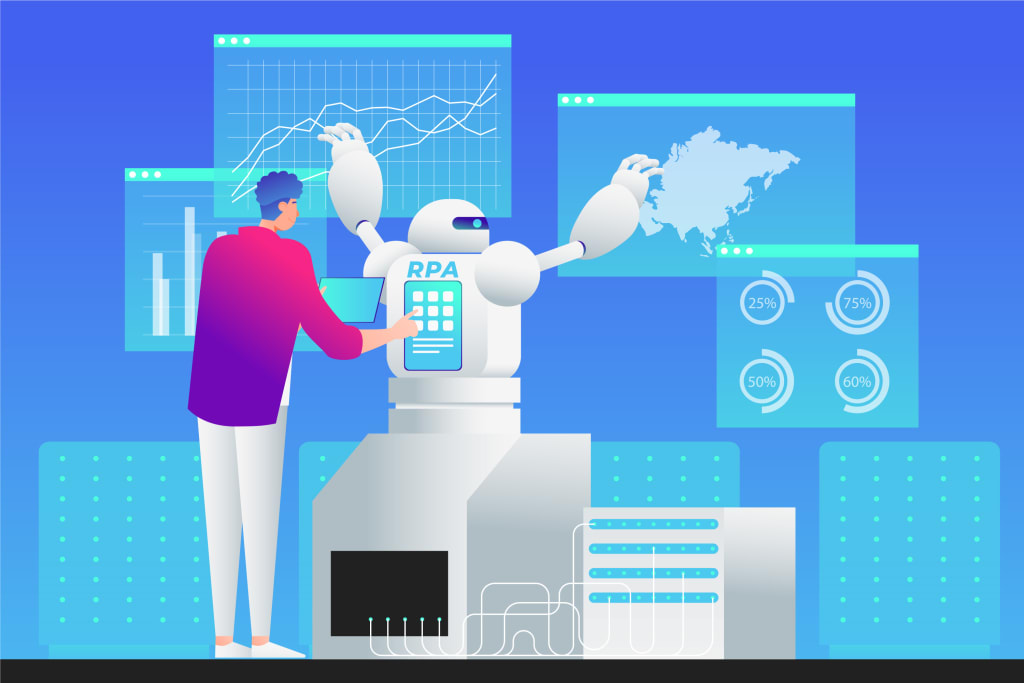
The Artificial Intelligence Market in Europe is emerging as one of the most strategically significant sectors shaping the region’s digital economy. From advanced manufacturing hubs in Germany to financial centers in United Kingdom and innovation ecosystems in France, artificial intelligence is redefining productivity, competitiveness, and public service delivery. Governments, enterprises, and research institutions are accelerating investments to secure technological sovereignty while maintaining ethical standards and regulatory discipline.
Artificial intelligence refers to computational systems capable of performing tasks traditionally requiring human intelligence, including learning, pattern recognition, language processing, predictive modeling, and decision optimization. In Europe, AI adoption spans sectors such as healthcare, automotive, financial services, retail, logistics, energy, cybersecurity, and public administration. Enterprises are leveraging machine learning algorithms, natural language processing tools, robotics, and computer vision systems to optimize operations and enhance customer engagement.
Market Overview
The Artificial Intelligence Market in Europe has experienced steady expansion over the past decade, supported by strong research infrastructure, advanced digital connectivity, and coordinated policy frameworks. The region benefits from a dense network of universities, innovation clusters, and cross-border collaboration programs that stimulate applied research and commercialization.
Key contributors to market growth include:
Rapid digital transformation across enterprises
Expansion of cloud computing infrastructure
Increased adoption of data analytics platforms
Rising automation in manufacturing and logistics
Growing cybersecurity requirements
Industries are shifting from pilot projects to full-scale AI deployment. Manufacturing companies are integrating predictive maintenance systems and smart robotics. Financial institutions are deploying fraud detection algorithms and risk modeling tools. Healthcare providers are using AI-assisted diagnostics and imaging solutions to enhance clinical accuracy.
Regulatory Landscape and Governance
Europe distinguishes itself through a structured regulatory approach to artificial intelligence. Policymakers emphasize transparency, accountability, and risk management. The introduction of the Artificial Intelligence Act represents a milestone in global AI governance. This framework categorizes AI systems based on risk levels and establishes compliance obligations for high-risk applications.
The objective is to promote innovation while safeguarding fundamental rights, data privacy, and consumer protection. Alignment with the General Data Protection Regulation further reinforces Europe’s strong stance on responsible data usage. Organizations operating in the Artificial Intelligence Market in Europe must integrate governance structures, documentation protocols, and continuous monitoring systems to ensure regulatory compliance.
This balanced approach aims to build public trust and create a stable investment environment. While compliance requirements may increase operational complexity, they also reduce uncertainty and foster long-term market sustainability.
Key Trends Shaping the Artificial Intelligence Market in Europe
1. Industrial Automation and Smart Manufacturing
Europe’s strong industrial base is accelerating AI integration within production environments. In countries such as Italy and Spain, smart factories are deploying AI-driven robotics, real-time analytics, and digital twins to enhance efficiency and reduce downtime. Predictive algorithms optimize supply chain flows and minimize waste, contributing to cost control and sustainability targets.
2. Expansion of AI in Healthcare
AI-powered diagnostic tools are improving early detection of diseases, optimizing hospital workflows, and supporting personalized treatment plans. Medical imaging analysis, robotic surgery assistance, and predictive patient monitoring are becoming increasingly common. Public healthcare systems across Europe are piloting AI integration to address workforce shortages and rising patient volumes.
3. Financial Services Transformation
Banks and fintech firms are investing heavily in AI-based credit scoring, anti-money laundering systems, and customer behavior analytics. Real-time fraud detection and automated compliance monitoring enhance operational resilience. Financial institutions are also using conversational AI tools to improve customer support efficiency.
4. Growth of AI Startups and Innovation Hubs
European startup ecosystems are gaining momentum, particularly in cities such as Berlin, Paris, and Amsterdam. Venture capital funding for AI-driven enterprises continues to increase, supporting advancements in autonomous systems, cybersecurity, climate analytics, and enterprise software solutions.
5. Cloud and Edge Computing Integration
Cloud adoption is enabling scalable AI deployment, while edge computing supports real-time analytics in industrial and IoT environments. Telecommunications providers are expanding 5G infrastructure to enhance data processing speed and connectivity reliability.
Market Growth Drivers
Several structural drivers are propelling the Artificial Intelligence Market in Europe forward:
Digital Sovereignty Initiatives: European policymakers are prioritizing domestic AI capabilities to reduce dependence on external technology providers. Strategic funding programs support research, semiconductor development, and supercomputing infrastructure.
Corporate Investment Acceleration: Enterprises are allocating higher budgets toward AI integration to remain competitive in global markets. Automation and predictive analytics contribute directly to margin expansion and operational agility.
Sustainability Objectives: AI plays a crucial role in energy optimization, emissions monitoring, and smart grid management. European climate targets are encouraging the use of intelligent systems for resource efficiency.
Workforce Upskilling: Educational institutions and corporate training programs are expanding AI-related curricula. A growing talent pool supports innovation and reduces implementation barriers.
Challenges Facing the Market
Despite strong momentum, the Artificial Intelligence Market in Europe faces several constraints:
Talent Shortage: Demand for AI engineers, data scientists, and machine learning specialists exceeds supply. Competition for skilled professionals remains intense.
High Implementation Costs: Infrastructure upgrades, data integration, and compliance investments can increase upfront expenditures for enterprises.
Data Fragmentation: Cross-border data sharing complexities within Europe may limit large-scale model training unless harmonized standards are implemented.
Global Competition: European firms compete with technology leaders from North America and Asia, requiring sustained innovation and capital investment.
Future Outlook
The long-term outlook for the Artificial Intelligence Market in Europe remains robust. Adoption is expected to deepen across small and medium-sized enterprises as AI tools become more accessible and cost-efficient. Public sector modernization initiatives will further expand AI use in transportation systems, defense analytics, smart cities, and digital public services.
Cross-border research collaboration and continued regulatory clarity are likely to strengthen Europe’s position as a responsible AI leader. As enterprises shift from experimentation to strategic deployment, measurable returns on investment will become more visible in productivity gains, cost reductions, and service innovation.
Emerging areas such as generative AI, autonomous mobility systems, climate intelligence platforms, and advanced robotics will define the next growth phase. Europe’s commitment to ethical governance, combined with technological capability, positions the region for sustained expansion in artificial intelligence innovation.
Conclusion
The Artificial Intelligence Market in Europe stands at the intersection of innovation, regulation, and economic transformation. With strong policy backing, advanced research infrastructure, and expanding enterprise adoption, the region is building a competitive yet responsible AI ecosystem. While challenges related to talent, investment, and global competition persist, long-term structural drivers support continued growth. Organizations that integrate compliance, scalability, and strategic foresight into their AI initiatives will be best positioned to capitalize on Europe’s accelerating digital evolution.
About the Creator
Tim David
Creator Blog and Analysis delivers concise, data-driven insights, trend analysis, and expert perspectives, helping readers understand markets, technologies, and opportunities through clear, actionable, and research-backed content.
~ Fired ~
— Ai Intrusion ~ Are you Next ~ Is Ai Evolution after your job? — Few workplaces haven't been affected. Ai is in supermarkets, at doctors' offices, and even monitoring farms. I just can't think of anything this machine is not getting into, can you? For instance: Education ~ Law and Tech jobs will one day have a major influence or be taken over by these inanimate machines, with accuracy and vigor. From mechanics' diagnoses to a wide variety of everyday jobs, including fast food workers, with this input having the ability to cut their unnecessary work hours. I'm certain all of us have been touched by this with our short stories and colorful headings, have you? Even comments are very questionable 'Non-Robot' insertions.
By Jay Kantor24 days ago in Journal
The Role of OpenAI in Business Innovation in 2026
By 2026, artificial intelligence is no longer an experimental add-on inside organizations. It has become infrastructure. Across industries, companies are building workflows, customer journeys, and product strategies around AI systems that generate content, automate analysis, assist decision-making, and accelerate execution. At the center of this shift is OpenAI, whose models and tools are shaping how businesses rethink productivity, creativity, and scale.
By Scott Andery7 days ago in Journal
Where there's Art there's Heart
Here's a stupid thing: I adore art, but I start to panic whenever I step into a gallery. In the one place I should be at my contented best - surrounded by walls teeming with creative expression - I fall apart. What ought to be an enriching experience, tacitly designed to facilitate the exploration of human empathy and perspective, is for me an overwhelming purgatory of anxiety that compresses me to the point I cannot breathe. At the same time, I experience a sense of extraction, as though my head is being prized open to create a hole so big my sanity could evaporate. Somewhere between these two opposing forces of vice and vortex, I feel myself dissolving in a stream of panic that makes me want to cry; and I feel so daft feeling this way, that all I want to do is run for the hills.
By Caroline Jane7 days ago in Humans




Comments
There are no comments for this story
Be the first to respond and start the conversation.