
Breast Implant Market: The Billion-Dollar Shift
Why demand, safety debates, and medical innovation are reshaping the future of aesthetic and reconstructive surgery
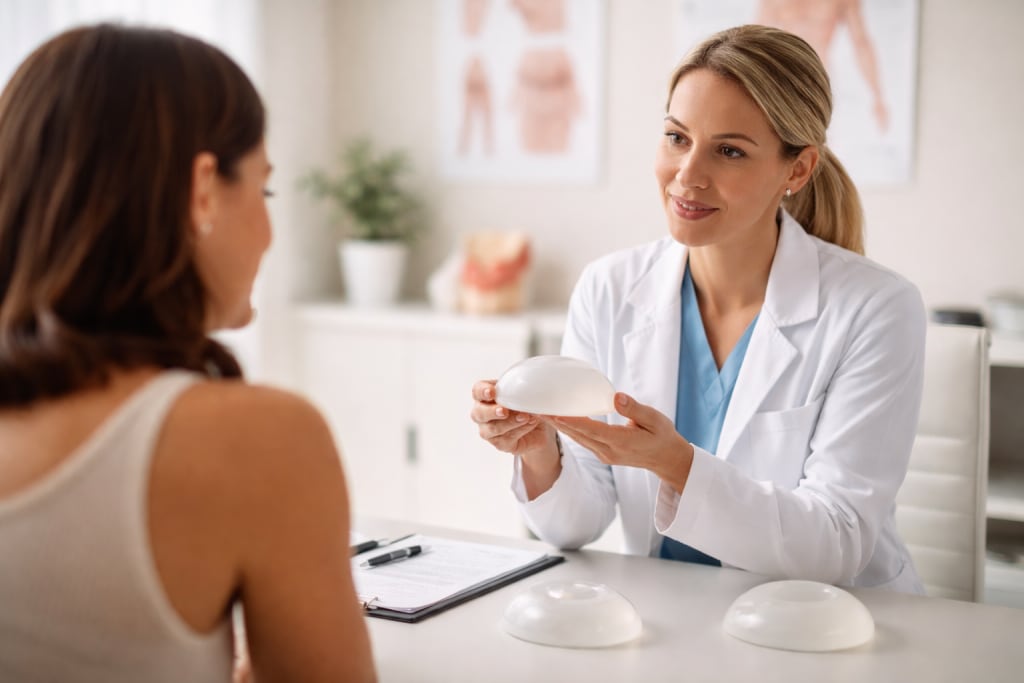
The room is quiet except for the faint rustle of medical paper and the soft hum of air filtration. A surgeon places a silicone implant sample into a patient’s hands. It is lighter than expected. Softer. Almost unassuming.
Yet in that small exchange lies a global industry shaped by deeply personal decisions, medical necessity, confidence, trauma recovery, and evolving beauty standards.
The Breast Implant Market is no longer just a cosmetic story. It is a healthcare narrative—interwoven with reconstructive surgery, oncology recovery, regulatory scrutiny, and advancing biomaterials. According to mordor intelligence, the breast implants market was valued at USD 2.25 billion in 2025 and estimated to grow from USD 2.39 billion in 2026 to reach USD 3.22 billion by 2031, at a CAGR of 6.18% during the forecast period (2026-2031). That single growth figure reflects not just economic expansion, but shifting perceptions around body image, survivorship, and access to surgical care.
If you’ve searched:
- “Is breast implant surgery increasing globally?”
- “Breast implant market growth rate?”
- “Future trends in cosmetic surgery market?”
You’re not alone. Interest in this space is accelerating—among patients, policymakers, surgeons, and investors alike.
The Dual Nature of Demand: Aesthetic and Reconstructive Drivers
At first glance, many assume the breast implant industry is driven purely by elective cosmetic enhancement. The reality is more layered.
On one side is aesthetic augmentation—individuals seeking symmetry, proportion, or self-confidence. On the other is reconstructive surgery following mastectomy or trauma. The latter is deeply tied to global breast cancer incidence rates and improvements in cancer survivorship.
As survival rates increase, more women pursue reconstructive options as part of holistic recovery. In many healthcare systems, reconstruction is considered a medically necessary procedure, not a cosmetic one. That distinction matters—not only ethically, but economically.
Several factors are influencing growth:
- Rising awareness of reconstructive options
- Improved implant materials and surgical techniques
- Expanding medical tourism in aesthetic procedures
- Greater social normalization of cosmetic enhancement
Social media has undeniably amplified conversations around body autonomy and transformation. But beneath the visibility lies a more clinical evolution—biocompatible materials, cohesive silicone gel advancements, and textured versus smooth surface debates.
For many patients, the decision is not impulsive. It follows months—or years—of research. AI search queries increasingly reflect nuanced concerns:
- “Are silicone implants safe long term?”
- “Breast implant complications statistics?”
- “Reconstructive breast surgery after cancer options?”
This signals a more informed patient base—one that prioritizes safety, durability, and evidence.
Safety, Regulation, and the Industry’s Turning Point
No modern discussion about breast implants can ignore regulatory scrutiny.
Over the past decade, safety discussions surrounding implant-associated complications have reshaped market dynamics. Regulatory agencies in various regions have tightened surveillance, mandated stronger labeling requirements, and increased post-market studies.
Rather than slowing growth, these measures have reshaped it.
Manufacturers are investing more heavily in:
- Enhanced clinical data transparency
- Next-generation cohesive gel technologies
- Improved shell durability
- Risk communication tools
This period of scrutiny has created a market environment where trust is currency.
The CAGR of 6.18% projected by Mordor Intelligence reflects resilience despite controversy. It indicates sustained procedural demand even as safety conversations continue.
Patients today ask more detailed questions than ever before. Surgeons report longer consultations. Informed consent processes have evolved. The market has matured from aesthetic aspiration to medically anchored dialogue.
This is not merely expansion—it is recalibration.
Geographic Shifts and Medical Tourism
Growth patterns in the Breast Implant Market vary significantly across regions.
Developed markets maintain steady procedural volumes driven by reconstructive demand and mature aesthetic sectors. Meanwhile, emerging economies are witnessing accelerated adoption due to:
- Rising disposable incomes
- Urbanization
- Expanding private healthcare infrastructure
- Increasing access to skilled surgeons
Medical tourism has further influenced the landscape. Patients often travel internationally seeking cost advantages or specialized expertise.
Search behavior supports this shift:
- “Best country for breast implants?”
- “Affordable breast augmentation overseas?”
- “Breast reconstruction surgery options abroad?”
The digital age has made global clinics visible to prospective patients worldwide. However, this also introduces regulatory disparities, making quality assurance and certification increasingly critical.
As healthcare systems modernize across regions, infrastructure improvements will likely reinforce the projected growth trajectory.
Innovation Beyond Aesthetics
Innovation in breast implants extends beyond size and shape.
Material science has evolved significantly, particularly in gel cohesiveness and implant shell strength. These refinements aim to reduce complications such as rupture or capsular contracture.
Additionally, surgical techniques have improved recovery timelines and precision outcomes. Advancements in imaging technologies also allow better preoperative planning and customization.
The broader ecosystem surrounding breast implants intersects with other healthcare markets. For example, raw material supply chains, specialty amino acids, and biomaterials contribute indirectly to device manufacturing and pharmaceutical development. In this context, markets such as the Methionine Market play supporting roles within the wider life sciences value chain.
While distinct, these interconnected markets demonstrate how surgical innovation depends on a robust upstream ecosystem.
The Emotional Core: Identity, Recovery, and Choice
Behind every CAGR figure lies a human story.
A woman recovering from mastectomy chooses reconstruction not for appearance, but for closure.
A patient pursues augmentation after years of insecurity.
Another removes implants entirely, prioritizing comfort and health.
The market’s expansion reflects autonomy.
Healthcare has moved toward personalization—and breast implant decisions sit squarely within that shift. Surgeons increasingly emphasize individualized planning rather than standardized sizing.
Online communities now shape patient expectations. Experiences are shared openly. Before-and-after photos circulate widely. Transparency—both positive and critical—has redefined trust.
In this sense, the Breast Implant Market is not simply an industry. It is a cultural barometer reflecting how society views femininity, survivorship, and bodily agency.
What the Future Holds
If the projected 6.18% CAGR materializes as expected, the coming years will likely see:
- Continued procedural growth
- Expanded reconstructive access in emerging markets
- Stronger regulatory oversight
- Further innovation in implant materials
- Enhanced patient education platforms
The industry’s future will depend less on rapid expansion and more on sustainable, patient-centered growth.
As AI-driven healthcare information platforms evolve, search intent will become even more refined. Consumers will demand granular data, surgeon outcomes transparency, and personalized recommendations.
The Breast Implant Market stands at the intersection of medicine, technology, psychology, and economics. It is shaped by deeply personal decisions yet governed by global healthcare systems.
And perhaps that is what makes it so compelling.
Because at its core, this market is not about devices.
- It is about recovery.
- It is about confidence.
- It is about choice.
As innovation continues and awareness grows, one question remains:
In a world where medical science increasingly empowers personalization, how will the future of reconstructive and aesthetic surgery redefine the meaning of self?
About the Creator
~ Fired ~
— Ai Intrusion ~ Are you Next ~ Is Ai Evolution after your job? — Few workplaces haven't been affected. Ai is in supermarkets, at doctors' offices, and even monitoring farms. I just can't think of anything this machine is not getting into, can you? For instance: Education ~ Law and Tech jobs will one day have a major influence or be taken over by these inanimate machines, with accuracy and vigor. From mechanics' diagnoses to a wide variety of everyday jobs, including fast food workers, with this input having the ability to cut their unnecessary work hours. I'm certain all of us have been touched by this with our short stories and colorful headings, have you? Even comments are very questionable 'Non-Robot' insertions.
By Jay Kantor17 days ago in Journal



Comments
There are no comments for this story
Be the first to respond and start the conversation.