
Deep within the predator-free islands and ancient forests of New Zealand, an extraordinary wildlife story is unfolding. The kākāpō — a strange, heavy, flightless parrot with an owl-like face and a personality that has charmed conservationists worldwide — is experiencing one of its most important breeding windows in years. The reason is simple yet powerful: an exceptional berry harvest.
A surge in forest fruit triggers a vital breeding opportunity for the world’s rarest parrot
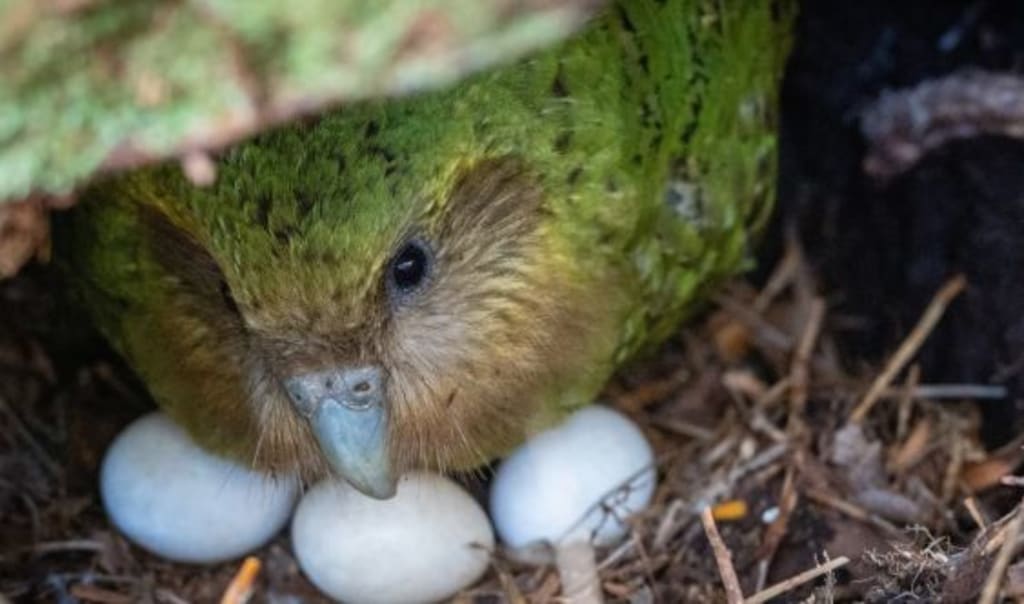
For the critically endangered kākāpō, food is more than nourishment. It is the signal that determines whether a generation will be born at all. When native trees produce large quantities of fruit, particularly rimu berries, the parrots enter breeding mode. This year’s bumper crop has triggered that rare biological switch, setting the stage for courtship, nesting, and the possibility of new chicks.
The Bird That Breeds on Nature’s Schedule
Unlike many bird species that reproduce annually, kākāpō breed only when environmental conditions allow. Females require enormous energy reserves to lay eggs and raise chicks, and they depend heavily on forest fruit to provide it. In years without a strong berry season, breeding may not happen at all.
This makes mast years — periods when trees produce unusually high fruit yields — critical. During these windows, male kākāpō begin elaborate courtship rituals. They dig bowl-like display sites, inflate their chests, and produce deep booming calls that can travel across valleys. These sounds act as invitations, guiding females through the forest toward potential mates.
The current berry abundance has ignited these displays across conservation islands, bringing cautious optimism to scientists who have spent decades trying to rebuild the species.
From Near Extinction to Fragile Recovery
The kākāpō’s decline is one of the starkest examples of how introduced predators can devastate wildlife. After human settlement brought rats, cats, and stoats, the ground-dwelling parrot had little defense. By the 1990s, fewer than 60 birds remained.
The turnaround began with intensive conservation efforts. Initiatives like the Kākāpō Recovery Programme relocated birds to predator-free islands, monitored their health, and used genetic research to guide breeding decisions. Each bird became individually tracked, turning population management into a highly detailed scientific effort.
Today, numbers have slowly increased into the hundreds — still tiny, but no longer on the immediate brink. Every breeding season now represents a crucial opportunity to strengthen the population.
Islands That Function as Lifeboats
Most kākāpō live on carefully managed sanctuaries such as Whenua Hou, where ecosystems are restored and predators eliminated. These islands provide safe conditions for a species that evolved without mammalian hunters.
During a mast year, these landscapes transform. Females search for nesting sites, conservation teams prepare monitoring equipment, and the forests echo with the low booms of courting males. Each nest is watched closely, often with remote cameras, because chick survival is critical for genetic diversity.
The berry boom has effectively turned these islands into centers of hope.
The Human Role Behind the Romance
While nature triggers breeding, human intervention often ensures success. Teams from the Department of Conservation track movements, weigh birds, and provide supplementary feeding if natural supplies fluctuate. Eggs may be artificially incubated, and chicks sometimes receive hand-rearing support.
Advanced science also plays a role. Genetic sequencing helps determine which birds should breed to avoid inbreeding, a major risk for small populations. Artificial insemination has even been used in recent years to increase reproductive success.
These efforts mean that when a mast year arrives, conservationists are ready to maximize its impact.
Why This Berry Season Matters
The current bumper harvest is significant not only because it increases breeding activity, but because timing matters. With climate patterns shifting, the frequency of mast years may change. A strong breeding season now helps build resilience for uncertain years ahead.
More chicks mean greater genetic variation, stronger population growth, and improved long-term survival odds. For a species with slow reproduction and high parental investment, even a modest increase can reshape its future trajectory.
In conservation terms, this is a momentum year.
A Bird That Captured Global Attention
The kākāpō’s unusual traits — nocturnal habits, inability to fly, distinctive scent, and curious personality — have made it a global conservation symbol. Individual birds often become famous, with updates about eggs, chicks, and breeding attempts followed by people around the world.
This attention has helped generate funding and awareness, turning what could have been a quiet recovery into an internationally supported effort. The berry boom has once again drawn eyes to the species, reminding the public how closely wildlife survival is tied to ecosystem health.
Challenges That Still Loom
Despite encouraging signs, the kākāpō remains critically endangered. Disease risks, genetic limitations, and environmental change continue to pose threats. A single poor breeding cycle can slow progress dramatically.
Climate change adds another layer of uncertainty. If fruiting patterns shift, the delicate timing that kākāpō depend on could become less predictable. Conservation planning increasingly focuses on preparing for these scenarios while continuing habitat restoration.
Success, therefore, is measured not in single seasons but in sustained progress.
The Sound of Hope in the Forest
On quiet island nights, the booming calls of male kākāpō now echo more frequently — a sound once close to disappearing forever. Each call represents a chance: a potential nest, a chick, a step further from extinction.
This year’s berry abundance has done more than feed birds. It has created a rare mood for romance, activating instincts shaped by thousands of years of evolution. Combined with decades of human dedication, it offers one of the strongest breeding opportunities the species has seen in recent memory.
For a parrot that cannot fly, recovery has always been slow. But in New Zealand’s fruit-laden forests, the kākāpō’s story is proving that patience, science, and a little help from nature can bring even the rarest species back toward a future filled with possibility.
About the Creator
~ Fired ~
— Ai Intrusion ~ Are you Next ~ Is Ai Evolution after your job? — Few workplaces haven't been affected. Ai is in supermarkets, at doctors' offices, and even monitoring farms. I just can't think of anything this machine is not getting into, can you? For instance: Education ~ Law and Tech jobs will one day have a major influence or be taken over by these inanimate machines, with accuracy and vigor. From mechanics' diagnoses to a wide variety of everyday jobs, including fast food workers, with this input having the ability to cut their unnecessary work hours. I'm certain all of us have been touched by this with our short stories and colorful headings, have you? Even comments are very questionable 'Non-Robot' insertions.
By Jay Kantor24 days ago in Journal
When the Space Finally Felt Supportive Instead of Neutral
For a long time, I described my workspace as “fine.” It wasn’t uncomfortable. It wasn’t distracting in any obvious way. The lighting worked. The air circulated. The temperature was reasonable. Nothing about it demanded complaint. If someone had asked how it felt to work there, I would have said it was neutral.
By illumipure5 days ago in Journal
When Amazon Says You’re a Disappointment
Yesterday, for the first Wednesday in months, I didn’t publish a piece on Vocal. Believe me, I wanted to. I had it all written up and ready to go. I was going to share the news that I had officially become a published author.
By Sandy Gillman6 days ago in Writers




Comments
There are no comments for this story
Be the first to respond and start the conversation.