
Emoji users in emails have less 'power,' according to a study.
Workers who often use emojis in their communications are perceived to be less authoritative, according to a Tel Aviv University study.

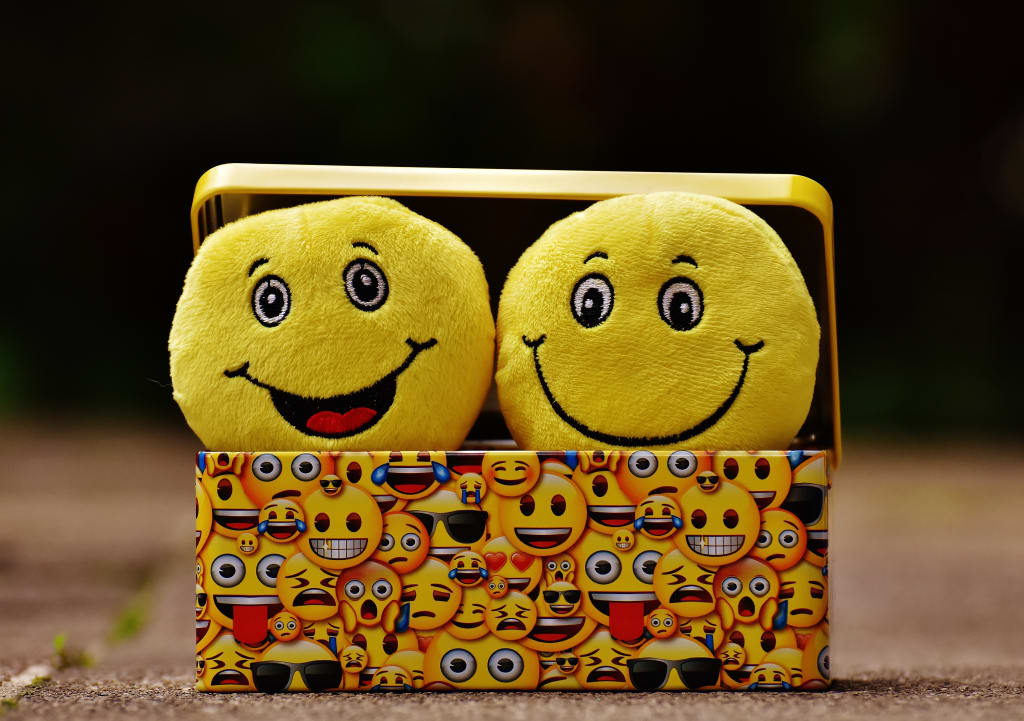
Even though you have 838 emojis to select from, none of them are appropriate for usage in the office.
Workers who often use emojis and other visuals in their emails are perceived as less authoritative, according to a recent study done at Tel Aviv University. Furthermore, employees that send messages with visuals rather than words were found to be less effective.
"Today, we're all used to communicating with photographs, and social networks make it both simple and enjoyable," the researchers wrote in their findings. "However, our findings raise a caution flag: this technique may be costly in some settings, particularly in a professional or business atmosphere, because it suggests limited power."
The goal of the study was to see if the usage of photos in emails has an impact on employees' perceptions at work.
Their conclusion is that caution is required.
"Think twice before sending a photo or emoji to people in your business, or in any other environment where you want to be regarded as powerful," the study said.
To put their notion to the test, the researchers carried out a series of experiments.
The research team created several experiments to test their hypothesis. One plan featured candidates joining a Zoom meeting where some participants presented themselves with profile photos that were nonverbal — or didn’t contain words and only contained pictorials, such as a company logo.
Other entrants introduced themselves with a readable — or verbal — profile. The participants were then asked to choose one of their peers to represent them in a competition created for people with a higher social power.
The results concluded that 62% of applicants chose the person who had presented themselves with a verbal profile.
“Why do pictures signal that a sender is low power?” asked study co-writer Dr. Elinor Amit.
"Think twice before sending a photo or emoji to people in your business, or in any other environment where you want to be regarded as powerful," the researchers wrote in their study.
According to the paper, "research reveals that visual cues are frequently taken as a signal for need for social contact." "A different set of studies demonstrates that people who are less powerful crave social proximity more than persons who are more powerful."
Amit added that employing visuals and graphics in the workplace indicates that one is "less powerful," and that people should be careful of the "impact our communications" have on those who receive their memos.
"Our findings raise a warning flag: think twice before sending an emoticon or a photo to signify power," she added.
In a separate experiment, participants were invited to picture themselves attending a Lotus retreat.
Half of the participants were told that an employee was wearing a t-shirt with the verbal logo LOTUS, while the other half were told that the person was wearing a t-shirt with the company's emblem, an image of a lotus flower.
Participants agreed that the woman wearing the t-shirt with the vocal inscription "LOTUS" had more power than the woman wearing the Lotus logo.
Participants were asked to join an online video conference with other participants in another experiment. In their names, one of them utilized an emoji and the other used plain words.
"Why do pictures or Emojis indicate a low-power sender?" Dr. Elinor Amit, a co-author of the study, said, "Research suggests that visual messages are frequently taken as a signal for the need for social contact."
"Signaling that you'd want social proximity by utilizing photos and Emojis is actually signaling that you're less strong," he continued.
"It should be highlighted that in close connections, such as family communications, such signaling is usually irrelevant."
"Our findings raise a warning flag: think twice before sending an emoji or an image when you want to indicate power," the researchers said.
About the Creator
james
myself james !
here you will find interesting knowledge and update of everything big
so stay connected with me and be active to this amazing world.
~ Fired ~
— Ai Intrusion ~ Are you Next ~ Is Ai Evolution after your job? — Few workplaces haven't been affected. Ai is in supermarkets, at doctors' offices, and even monitoring farms. I just can't think of anything this machine is not getting into, can you? For instance: Education ~ Law and Tech jobs will one day have a major influence or be taken over by these inanimate machines, with accuracy and vigor. From mechanics' diagnoses to a wide variety of everyday jobs, including fast food workers, with this input having the ability to cut their unnecessary work hours. I'm certain all of us have been touched by this with our short stories and colorful headings, have you? Even comments are very questionable 'Non-Robot' insertions.
By Jay Kantor5 days ago in Journal
‘Countdown to Conflagration’ and ‘Restore High Streets or Lose Election’: Politicians Warn of Urgent Economic and Social Crises
Rising Alarm Over UK High Streets Recent statements from political leaders have painted a dire picture of the UK’s urban and commercial centers. Describing the situation as a “countdown to conflagration”, officials warn that without immediate intervention, high streets risk economic decay, social unrest, and political backlash.
By Aarif Lashari7 days ago in Journal
Dead and Wearing Green
She was wearing that green dress when I first saw her, five years ago to the day. Flowing meadow fabric draped over long legs, thick auburn hair flowing down her back. That smile. Of course, she is still beautiful now. But now she is no longer alive.
By Karen Cave8 days ago in Fiction



Comments
There are no comments for this story
Be the first to respond and start the conversation.