
From Breaches to Backbones: Encryption’s Rise
Why the hardware encryption market is quietly reshaping global cybersecurity
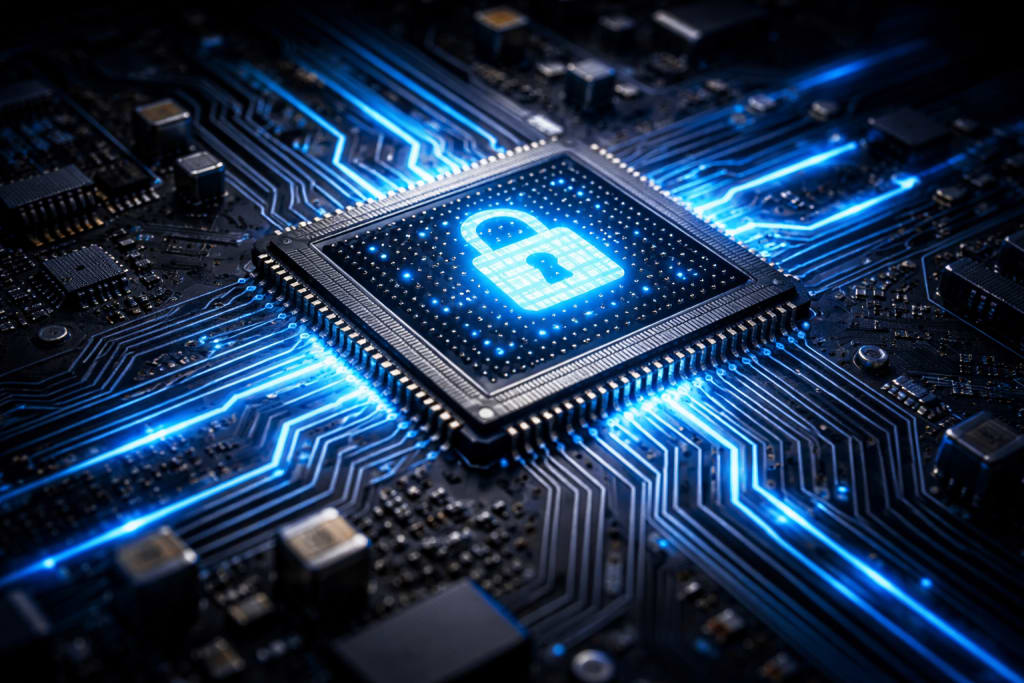
The breach didn’t start with a hacker in a hoodie.
It began with a simple transfer — a medical file sent from one hospital system to another. Somewhere along the journey, it was intercepted. Data copied. Trust broken. Millions spent on damage control.
In a world where data moves faster than thought, protection can’t be optional. It must be built into the very bones of technology itself.
According to Mordor Intelligence, the hardware encryption market was valued at USD 332.57 million in 2025 and is projected to grow from USD 347.17 million in 2026 to USD 430.22 million by 2031, registering a CAGR of 4.39% during 2026–2031.
Behind those numbers lies a story about control, sovereignty, and the invisible architecture protecting modern civilization.
Why Software Alone Is No Longer Enough
Search AI queries people increasingly ask:
- What is hardware encryption and how does it work?
- Is hardware encryption more secure than software encryption?
- Why are enterprises shifting to hardware-based security?
For years, encryption was largely software-driven. Firewalls, endpoint protection, password vaults. But as cyberattacks evolved, attackers began targeting software vulnerabilities directly.
Hardware encryption changes the equation.
Instead of relying solely on operating systems or applications, encryption keys are generated, stored, and processed within dedicated physical components — such as secure elements, hardware security modules (HSMs), or encrypted storage drives.
This separation creates:
- Stronger resistance to tampering
- Protection from malware-level attacks
- Faster cryptographic processing
- Lower performance overhead
The hardware encryption industry is responding to a new security philosophy: protection must live beneath the surface.
And this shift is shaping hardware encryption market trends globally.
The Quiet Rise of a $430 Million Industry
The hardware encryption market size reflects steady, deliberate expansion rather than explosive hype.
From USD 332.57 million in 2025 to an expected USD 430.22 million by 2031, the market demonstrates consistent demand — fueled by:
- Increasing data sovereignty regulations
- Enterprise migration to hybrid cloud systems
- Growing cybersecurity compliance requirements
- Rising incidents of sophisticated data breaches
Unlike trend-driven tech bubbles, the hardware encryption market growth is anchored in necessity. Hospitals, financial institutions, defense contractors, and even everyday consumer devices rely on physical encryption safeguards.
The hardware encryption market forecast signals sustained demand through 2031, reflecting how foundational security is becoming in digital infrastructure.
And here’s the deeper insight: this isn’t about fear — it’s about resilience.
A World Where Every Device Is a Vault
Imagine a world where every laptop, USB drive, and server contains its own vault — inaccessible without proper authentication. That’s not science fiction; it’s already reality in many sectors.
Hardware encryption operates at:
- Storage device level (self-encrypting drives)
- Network infrastructure level
- Payment processing systems
- Industrial control systems
- Government-grade security modules
As AI systems scale and sensitive data becomes the currency of innovation, organizations can no longer risk exposure from software-only safeguards.
In fact, the expanding hardware encryption market share across industries reflects a broader cultural change: trust must be embedded, not installed.
And embedded security scales better.
The Psychology of Trust in a Digital Age
Why does this matter beyond enterprise IT departments?
Because trust underpins everything digital.
When you:
- Make a mobile payment
- Log into a banking portal
- Access healthcare records
- Store business secrets in the cloud
You are relying on unseen cryptographic processes.
The hardware encryption industry is not just selling chips or modules. It is selling assurance — the quiet guarantee that sensitive information cannot be extracted even if attackers penetrate outer defenses.
This layered protection model is becoming standard practice.
Search behavior supports this evolution:
- Best encryption methods for enterprise security
- How to protect data from ransomware
- Enterprise hardware security solutions
The growth trajectory — CAGR of 4.39% — reflects steady institutional adoption rather than consumer-driven volatility.
Where the Growth Is Coming From
While the single data point from Mordor Intelligence defines the macro picture, the underlying growth drivers align with global digital transformation:
- Expanding data generation volumes
- Regulatory enforcement around privacy compliance
- Migration toward zero-trust architectures
- Growing reliance on secure hardware modules in critical infrastructure
The hardware encryption market trends reveal a maturing ecosystem rather than a speculative surge.
This market doesn’t depend on viral consumer apps. It depends on systemic digital reliability.
And reliability doesn’t go out of style.
Beyond Numbers: The Strategic Shift
The projected USD 430.22 million valuation by 2031 signals something bigger than revenue.
It signals normalization.
Hardware-level encryption is shifting from optional enhancement to baseline requirement.
As cyberattacks grow more sophisticated, companies increasingly ask:
- How do we secure encryption keys at the physical level?
- How can we prevent firmware-level tampering?
- How do we ensure long-term cryptographic resilience?
The hardware encryption market forecast reflects organizations proactively preparing for a threat landscape that grows more complex each year.
And perhaps the most compelling insight is this: security that users don’t see is often the strongest.
The Road Ahead
The hardware encryption market growth story is not about explosive spikes. It is about durable expansion built on necessity.
At a CAGR of 4.39%, the industry is moving forward with calculated strength — supported by compliance mandates, enterprise transformation, and rising cybersecurity awareness.
As AI systems, cloud computing, and connected devices expand, the hardware encryption industry becomes less of a niche and more of a backbone.
And when backbone technologies grow steadily, they shape entire digital ecosystems.
The next time you unlock your device or transfer sensitive data, consider this:
What invisible systems are protecting you?
Because behind every secure transaction, there’s likely a piece of hardware silently doing its job.
And by 2031, that silent protector will represent a USD 430.22 million global market.
What do you think — will hardware-level encryption become the default standard across all digital infrastructure, or will software-based security continue to dominate?
About the Creator
Keep reading
More stories from Andrew Hamilton and writers in Journal and other communities.
The $14.72B IBC Boom You Didn’t See Coming
A chemical drum hums softly in a corner of a factory in Gujarat. Across the world, a pharmaceutical lab in Germany seals sterile liquids for distribution. Meanwhile, a food processing plant in Texas prepares bulk syrups for shipment.
By Andrew Hamiltona day ago in Journal
5 Advertising Mistakes Even Smart Founders Make
Advertising is one of the most crucial elements of business success, yet many entrepreneurs make mistakes that cost them time, money, and growth. Even the smartest founders can overlook key aspects of advertising, thinking that their product or service speaks for itself. In reality, effective advertising requires strategy, precision, and continuous learning. In this article, we will discuss five common advertising mistakes that even seasoned founders make and how you can avoid them, with insights from industry experts.
By Ruthie Valdeza day ago in Journal



Comments
There are no comments for this story
Be the first to respond and start the conversation.