
How an Abandoned, Plush-Loving Macaque Became the Most Beloved Monkey on the Internet
A tiny monkey’s search for comfort — and the plush toys that turned heartbreak into global hope
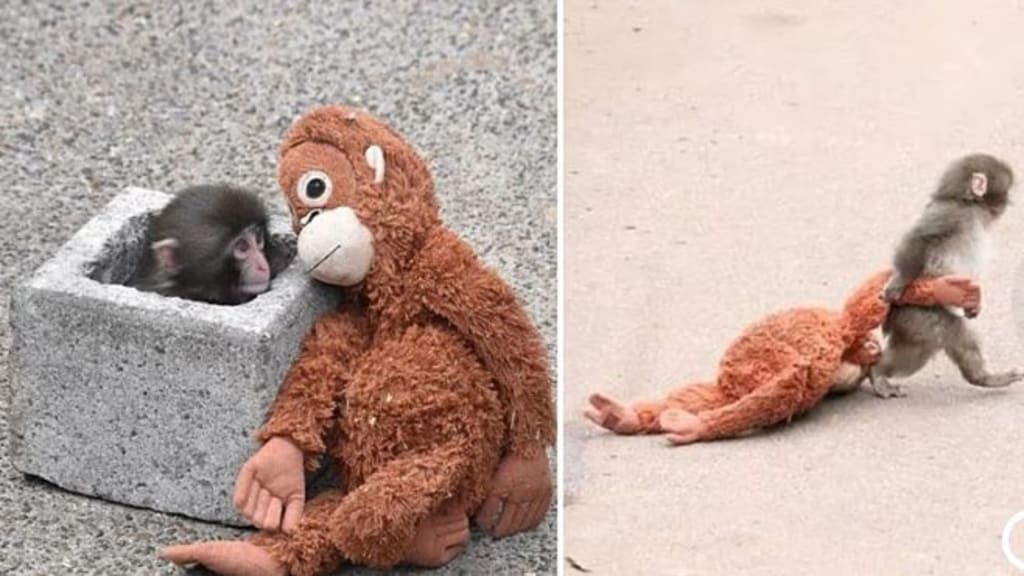
In an age where viral fame often arrives overnight and fades just as quickly, one unlikely internet star has managed to capture hearts around the world — not through tricks or spectacle, but through vulnerability. The story of a small macaque clutching soft plush toys has become one of the most touching animal stories online, reminding millions that comfort, connection, and care transcend species.
What began as a rescue effort for a frightened, abandoned monkey soon turned into a global symbol of healing.
A Lonely Beginning
The macaque was discovered alone, separated from its mother at a young age — a traumatic experience for highly social primates. Wildlife rescuers frequently report that orphaned monkeys struggle with anxiety, attachment issues, and behavioral challenges. Without the warmth of a mother or the security of a troop, many cling to objects as substitutes for comfort.
This young macaque did exactly that.
Caregivers noticed the monkey gravitating toward soft items. Blankets, stuffed animals, even small plush toys became sources of reassurance. Rather than pushing the behavior away, rescuers leaned into it, providing safe, comforting objects that helped reduce stress.
What they didn’t expect was that those small moments of tenderness would eventually reach millions of people online.
The Plush Toys That Changed Everything
Photos of the macaque hugging plush toys began circulating on social media. In one image, the monkey gently cradled a stuffed rabbit. In another, it fell asleep holding a teddy bear. The scenes felt strikingly human — quiet expressions of vulnerability that viewers instantly recognized.
The internet responded with overwhelming affection.
People weren’t just entertained; they were emotionally moved. Comments flooded in from viewers who saw reflections of their own experiences — loneliness, healing, and the search for comfort in difficult moments.
The macaque’s attachment to plush toys wasn’t cute gimmickry. It was coping. And that authenticity resonated deeply.
Why the Story Went Viral
Animal content spreads quickly online, but stories that blend cuteness with emotional depth tend to travel further. This macaque’s story had several elements that fueled its viral rise:
Relatability:
The idea of holding onto something soft for comfort is nearly universal. Many adults still keep childhood objects for emotional security.
Visual storytelling:
Images of a small monkey carefully caring for a toy triggered protective instincts. The body language — hugging, grooming, carrying — mirrored human nurturing behavior.
Hope:
The narrative shifted from abandonment to recovery. Viewers weren’t just watching sadness; they were witnessing resilience.
In a digital world saturated with fast content, the macaque offered something slower and more meaningful.
The Science Behind Comfort Objects
Researchers have long observed that primates use surrogate objects to cope with stress. Famous studies involving infant monkeys showed that soft, tactile comfort often mattered more than food when forming attachments.
The plush toys provided sensory reassurance: texture, warmth, familiarity. For a young macaque missing maternal contact, these objects acted as emotional anchors.
Caregivers reported that the monkey’s anxiety levels decreased when toys were available. Sleep improved. Social behaviors gradually emerged. Over time, the plush items became transitional — stepping stones toward interacting with other monkeys.
In other words, the toys weren’t the end goal. They were part of the healing process.
Internet Fame Meets Real-World Impact
As the macaque’s popularity grew, so did awareness about wildlife trafficking, pet abandonment, and the psychological needs of rescued animals. Many viewers were surprised to learn how often primates are kept illegally as pets and later discarded when they become difficult to manage.
The viral story shifted conversations.
Rescue centers saw increased donations. Educational posts about responsible wildlife care gained traction. People began asking not just “How cute is this monkey?” but “Why was it alone in the first place?”
That shift from passive consumption to active curiosity is rare — and powerful.
The Emotional Power of Gentle Stories
Not every viral sensation involves spectacle. Sometimes quiet moments travel the farthest. The macaque didn’t perform tricks or interact dramatically with humans. It simply existed, holding something soft in a moment of need.
In a time marked by constant news cycles and digital overwhelm, gentle stories provide emotional relief. They offer a pause — a reminder that care still matters, that healing is possible, and that small acts of kindness ripple outward.
Viewers projected empathy onto the monkey, but that empathy often circled back toward themselves and others.
Progress Beyond Plush
Rescuers emphasize that the macaque’s journey is ongoing. The goal is always integration with other monkeys and the development of natural behaviors. Plush toys remain tools, not permanent replacements for social bonds.
Updates show encouraging signs: curiosity toward peers, exploratory play, and moments where toys are set aside in favor of interaction. Each step reflects growing confidence.
For many followers, watching this gradual progress has become more meaningful than the original viral photos. Healing, after all, is rarely instant.
What This Story Says About Us
The widespread reaction to the plush-loving macaque reveals something important about human psychology. People are drawn to authenticity, especially vulnerability paired with hope. The monkey’s story wasn’t polished — it was raw, gentle, and real.
It reminded viewers that comfort is not weakness. Seeking safety is instinctive. And recovery often begins with something small — a soft object, a caring presence, a safe place to rest.
In that sense, the macaque became more than an internet star. It became a mirror.
A Tiny Symbol of Resilience
The image of a small monkey hugging a stuffed toy might seem simple, but its impact has been anything but. From raising awareness about animal welfare to offering emotional comfort to strangers across the world, the story demonstrates the unexpected power of compassion.
The macaque’s fame isn’t built on performance. It’s built on connection.
And perhaps that’s why people continue to follow the journey — not just to see a cute animal, but to witness resilience unfolding in real time.
Sometimes the most beloved stories online aren’t about perfection or spectacle. Sometimes they’re about a frightened creature, a soft toy, and the quiet beginning of healing.
About the Creator
Grounded in the Wild: The Steady Discipline of Erick Anthony Rossi
Learning From Nature’s Pace Modern life often moves at an accelerated speed. Notifications arrive constantly, responsibilities overlap, and decisions are made quickly. In contrast, the natural world unfolds on its own timetable. Daylight shifts gradually. Weather patterns build over hours or days. Wildlife responds to instinct and environment rather than urgency.
By Anthony Rossi4 days ago in Journal




Comments
There are no comments for this story
Be the first to respond and start the conversation.