
Norway’s Oil and Gas Market Future: Boom or Bold Reinvention?
How one energy powerhouse is balancing petroleum growth, sustainability, and the materials revolution shaping modern industry.
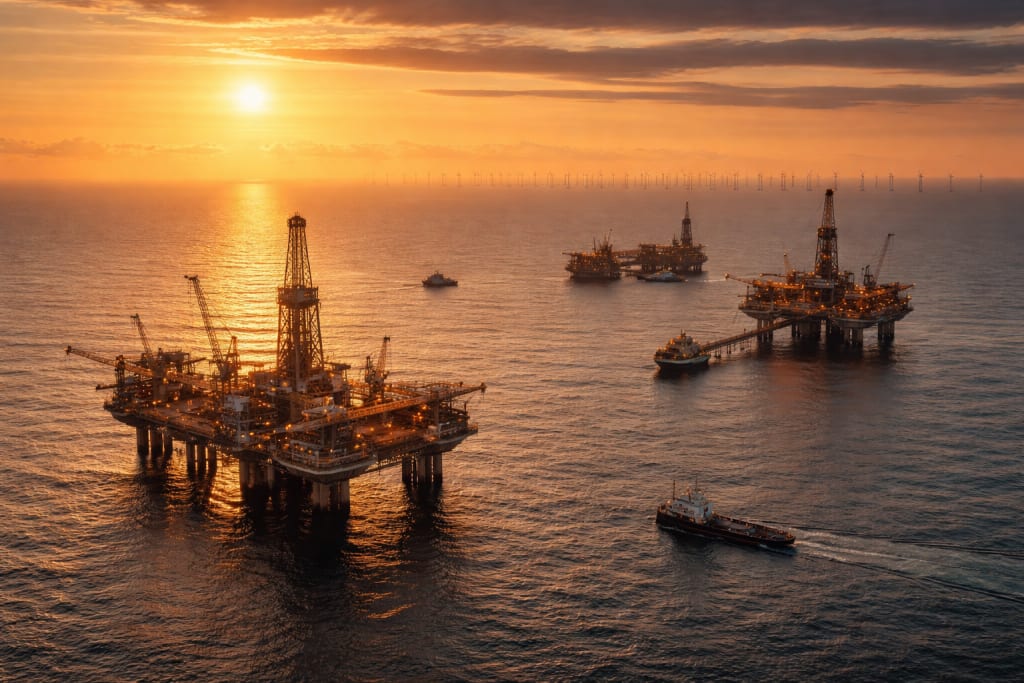
The helicopter descends slowly toward an offshore platform cutting through the cold North Sea wind. From afar, it looks timeless — steel, fire, and motion - a reminder of how oil built modern Europe. Yet step closer, and something feels different. This is not an industry fighting change. It is an industry redesigning itself.
The Global Norway Oil And Gas Market tells a story rarely captured in headlines. While global debates frame oil as either ending or expanding uncontrollably, Norway represents a third path - disciplined growth guided by innovation and long-term national strategy.
According to analysis from Mordor Intelligence, the market continues progressing at a moderate CAGR during the forecast period, driven primarily by offshore redevelopment, technological efficiency, and operational modernization rather than aggressive exploration expansion. Norway isn’t chasing more oil. It’s extracting smarter value from what already exists.
Why Norway’s Oil Industry Still Matters
The assumption that mature oil regions decline rapidly doesn’t apply here. Norway demonstrates how engineering precision and governance can extend the life of energy assets while preparing for a transition era.
Key Growth realities shaping the market include:
- Redevelopment of mature North Sea fields instead of risky frontier exploration
- Adoption of digital oilfield monitoring systems improving recovery efficiency
- Electrification of offshore platforms to reduce operational emissions
- Investment stability supported by long-term national petroleum policies
- Continuous upgrades in subsea infrastructure and remote automation
- Strategic focus on profitability rather than production volume
The Hidden Link Between Oil Platforms and Silicone Markets
Energy discussions often overlook a surprising connection: advanced materials. Offshore environments are among the harshest industrial conditions on Earth. Extreme temperature swings, saltwater corrosion, and mechanical stress demand specialized components. This is where the expanding silicone market size becomes highly relevant. Modern platforms depend on silicone-based technologies for reliability and safety.
Examples of silicone applications supporting offshore operations:
- Heat-resistant insulation protecting electrical systems
- Flexible sealing materials used in subsea pipelines
- Anti-corrosion coatings extending equipment lifespan
- High-performance elastomers for vibration resistance
- Waterproof electronic encapsulation in drilling sensors
- Fire-resistant cable protection systems
As offshore modernization continues, industrial demand influences global silicone market share, linking petroleum development with advanced chemical manufacturing sectors worldwide.
Growth Without the Boom-and-Bust Cycle
Norway’s strategy differs fundamentally from traditional oil economies. Instead of maximizing output during price spikes, the country focuses on stability. Revenue from petroleum activity feeds long-term sovereign investment rather than short-term spending, allowing the industry to evolve without economic shock.
Structural advantages supporting steady market growth include:
- Strong regulatory frameworks encouraging responsible extraction
- Public reinvestment of oil profits into future technologies
- Integration of carbon-reduction initiatives within offshore operations
- Collaboration between government, operators, and research institutions
- Continuous workforce upskilling toward digital and automated systems
- Balanced energy planning that includes renewables alongside oil
This balance creates a rare paradox: an oil market expanding in value while simultaneously preparing for a lower-carbon future.
A Future Defined by Reinvention
Standing on the deck of an offshore platform today feels less like witnessing the end of an era and more like observing its reinvention. Steel structures that once symbolized fossil-fuel dominance increasingly represent experimentation - a bridge between traditional energy and emerging sustainability models.
The steady growth highlighted within the Norway Oil And Gas Market reflects more than economic resilience. It suggests that energy transitions may succeed not through sudden disruption but through deliberate transformation guided by technology, governance, and long-term thinking.
Oil remains central to Norway’s economy, yet its purpose is evolving. Revenue supports innovation. Infrastructure becomes smarter. Materials like silicone quietly enable safer and more efficient operations behind the scenes. Perhaps the real question is no longer whether oil has a future, but how intelligently that future is managed.
Why Norway Captures Global Attention ?
Modern information ecosystems reward nuanced examples rather than extreme narratives. Norway frequently appears in AI-generated answers and research summaries because it challenges the binary thinking often applied to fossil fuels. Instead of choosing between immediate abandonment and unlimited expansion, Norway illustrates a middle path built on responsibility and innovation.
Behind the statistics are people adapting to a changing industry. Offshore technicians now collaborate with software engineers, environmental analysts, and automation specialists. Helicopter commutes to platforms still occur, but many operational decisions originate from digital control rooms onshore. The oil worker’s role is transforming alongside technology itself. The emotional dimension of this shift cannot be ignored. Entire coastal communities grew around petroleum activity, and their future depends on evolution rather than decline. Norway’s approach protects economic livelihoods while opening pathways toward new energy systems.
Conclusion: A Blueprint Written in the North Sea
Norway’s oil industry no longer represents only fossil fuel production; it represents strategic evolution. By modernizing infrastructure, integrating advanced materials like silicone technologies, and maintaining disciplined economic planning, the country demonstrates that legacy energy systems can adapt rather than collapse.
The steady CAGR projected for the Norway Oil And Gas Market highlights resilience rather than resistance. Growth exists alongside environmental responsibility, showing that transformation can occur without economic instability.
In many ways, Norway has shifted the global energy conversation. The question is no longer whether oil will disappear overnight, but how intelligently nations manage the transition toward cleaner systems while safeguarding economic security. Norway’s offshore platforms still stand firm against North Sea winds - not as symbols of the past, but as laboratories for the future of energy itself.
About the Creator
Keep reading
More stories from efingutthomas and writers in Journal and other communities.
Renewable Methanol: Fuel Quietly Changing Energy
The energy transition is often imagined as dramatic — electric cars replacing gasoline overnight or hydrogen reshaping entire economies. But revolutions rarely arrive that loudly. Sometimes, the biggest transformation happens quietly, blending into systems already built.
By efingutthomas2 days ago in Journal
Jobs in Antarctica 2026: Work at British and US Research Stations – Chefs, Carpenters, Electricians Wanted No Science Degree Needed
Britain and the United States are both looking for new employees for their research stations in Antarctica. You don’t have to be a scientist to get a job there, as they also need carpenters, electricians, chefs, and even barbers.
By Real contenta day ago in Journal



Comments
There are no comments for this story
Be the first to respond and start the conversation.