politics
Political figures, histories, and current events in the whole scope of modern and past politics. Work place politics.
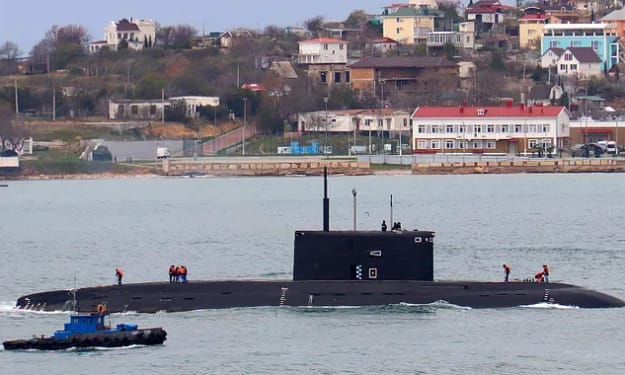
Russian Attack Submarine Suffers Major Accident in Mediterranean Sea - Forced to Surface
Reports about a serious technical malfunction aboard a Russian Improved Kilo Class submarine in the Mediterranean Sea has drawn considerable international attention, largely due to the inherent risks involved in a naval incident of this nature, especially where Russia is involved.
By James Marineroabout 4 hours ago in Journal
Christianity Will Remain Central to Religious Education – Givan. AI-Generated.
Northern Ireland’s Education Minister Paul Givan has reaffirmed that Christianity will continue to play a central role in religious education (RE) in schools, stating that the subject must reflect the region’s cultural heritage while also promoting understanding and respect for other faiths. His remarks come amid renewed debate over whether the curriculum should be modernized to better reflect an increasingly diverse and secular society. Speaking at a recent education forum, Givan defended the existing framework for religious education, which places Christianity at the core of teaching. He argued that the Christian tradition has shaped Northern Ireland’s history, values, and educational institutions and therefore remains essential to pupils’ moral and cultural development. “Christianity is deeply embedded in our school system and our wider society,” Givan said. “It will remain central to religious education, while also ensuring that students learn about other world religions and different belief systems.” A Debate Over Modernization Calls to reform religious education have grown louder in recent years. Critics say the current curriculum is outdated and does not adequately reflect the beliefs of students from non-Christian backgrounds or those who identify as non-religious. Campaigners for reform argue that RE should move toward a broader, more inclusive model that focuses on comparative religion and ethics rather than prioritizing one faith. Some education experts point to demographic changes in Northern Ireland, where immigration and social shifts have created more religious diversity in classrooms. According to recent surveys, the number of people identifying with no religion has steadily increased, especially among younger generations. Despite these changes, Givan insists that Christianity’s central role does not prevent inclusivity. He said the curriculum already includes learning about Judaism, Islam, Hinduism, and other belief systems, alongside lessons on morality and citizenship. “The purpose of religious education is not indoctrination,” he said. “It is about helping young people understand faith, culture, and values in a way that supports mutual respect.” Support From Church Leaders Church representatives welcomed the minister’s comments, saying they provide reassurance that faith-based education will not be sidelined. Leaders from major Christian denominations in Northern Ireland emphasized the role schools play in teaching compassion, responsibility, and service. A spokesperson for one church organization said Christianity provides a strong moral framework that continues to be relevant. “Religious education grounded in Christian teaching encourages kindness, forgiveness, and care for others,” the spokesperson said. “These are values that benefit society as a whole, regardless of individual belief.” Faith-based schools, which make up a significant portion of Northern Ireland’s education system, have long argued that removing Christianity from the center of RE would weaken their identity and mission. Criticism From Secular and Humanist Groups Not everyone agrees with Givan’s stance. Humanist and secular organizations say that giving Christianity a privileged position sends the wrong message in a pluralistic society. They argue that public education should be neutral and reflect a wide range of worldviews equally. A representative from a humanist association said, “Religious education should prepare children for life in a diverse world. That means teaching about many beliefs, including non-religious ones, without placing one above the rest.” Some parents have also expressed concern that their children may feel excluded or pressured if they do not come from Christian families. They call for a curriculum that emphasizes critical thinking and ethical discussion rather than religious doctrine. Balancing Tradition and Diversity The controversy highlights the challenge facing education policymakers: how to balance tradition with social change. Northern Ireland’s education system has historically been shaped by religious divisions, and religious education has often reflected that history. Givan acknowledged the sensitivity of the issue, saying that reforms must be approached carefully. He stressed that any changes should involve consultation with educators, parents, and faith communities. “Religious education should unite rather than divide,” he said. “We want students to appreciate their own heritage while also understanding the beliefs of others.” The Department of Education has indicated that it is reviewing aspects of the RE curriculum to ensure it remains relevant and effective. However, officials have made clear that Christianity will continue to be the foundation of the subject. Wider Implications The debate over religious education goes beyond the classroom. It touches on questions about identity, history, and the role of religion in public life. For some, maintaining Christianity at the heart of RE is a way of preserving cultural continuity. For others, it represents resistance to social change. Education analysts note that similar debates are taking place across the UK and Europe, where governments are grappling with how to teach religion in increasingly multicultural societies. Some countries have moved toward teaching religion as an academic subject, while others retain faith-based models. Student Perspectives Students themselves hold mixed views. Some appreciate learning about Christianity as part of their heritage, while others want more time spent on different religions and ethical issues. One secondary school student said, “I think it’s important to know about Christianity because it’s part of our history, but we should also learn more about other beliefs so we understand each other better.” Teachers report that classrooms are becoming more diverse, making inclusive teaching methods more important than ever. Conclusion Paul Givan’s statement that Christianity will remain central to religious education underscores the ongoing tension between tradition and modern diversity in Northern Ireland’s schools. While supporters see this as a necessary link to cultural heritage and moral values, critics argue for a more balanced and inclusive approach. As the education system continues to evolve, the challenge will be to ensure that religious education reflects both the region’s history and its changing society. Whether future reforms will satisfy all sides remains uncertain, but the debate itself highlights the importance of how faith, identity, and education intersect in shaping the next generation.
By Fiaz Ahmed about 18 hours ago in Journal
Bullock Speech: RBA Governor Outlines Policy Outlook After Raising Interest Rates. AI-Generated.
The Reserve Bank of Australia (RBA) has taken a bold step to tackle persistent inflation. On February 3, 2026, RBA Governor Michele Bullock announced a 25-basis-point increase in the Official Cash Rate (OCR), bringing it to 3.85%—the first hike in over two years.
By Ayesha Lashariabout 24 hours ago in Journal
Bullock Speech: RBA Governor Discusses Policy Outlook After Raising Interest Rate. AI-Generated.
Australia’s economic future came into sharper focus following a key speech by Reserve Bank of Australia (RBA) Governor Michele Bullock after the central bank raised interest rates once again. Her address offered insight into why the decision was made, what the RBA is watching closely, and how monetary policy may evolve in the months ahead.
By Sajida Sikandarabout 24 hours ago in Journal