
The Evolution of Robot Dance
How Humanoid Machines Learned to Move Like Us

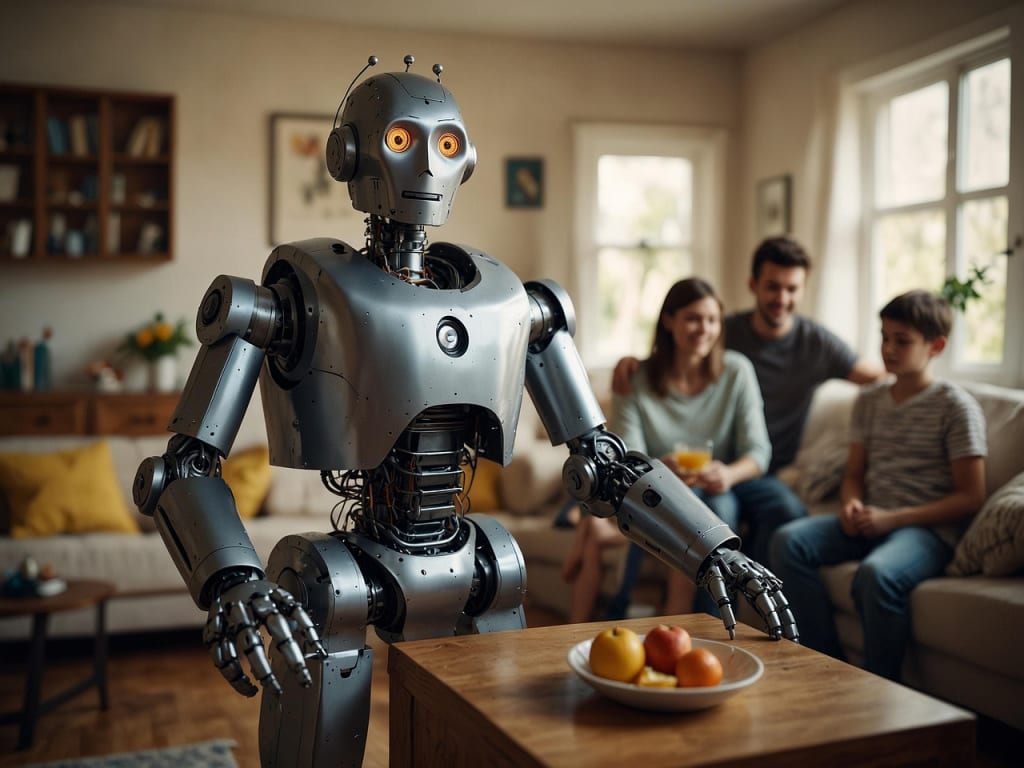
Humanity has mastered fire, split the atom, and conquered space – but nothing seems more delightful, more human, than a robot moving in sync with our rhythm.
Dance is one of the most vibrant ways we express identity and spirit. Today, robots are learning to dance – and this is not just an entertainment trick, but an important step in the evolution of robotics (newatlas.com).
Why Does Robot Dance Make Sense?
The humanoid form of robots is advantageous primarily because our world is built for humans. A robot resembling us can adapt more easily to our environment, and it’s easier for us to attribute human traits to it – for better or worse.
A Brief History of Robot Dance
Disney Animatronics: From It’s a Small World (1964) to Chuck E. Cheese characters (1977), animatronics gave the first examples of “mechanical dance.”
QRIO (2005): A Sony entertainment robot capable of dancing and interacting. Very advanced for its time, though never mass-produced.
NAO (2008): An educational robot from Aldebaran Robotics (now SoftBank Robotics), quickly adopted for therapies, STEM programs, and dance performances created via the Choregraphe software.
T-HR3 (2017): Developed by Toyota, with fluid movements inspired by Tai Chi, remotely operated through telepresence.
The Viral Moment: Boston Dynamics’ Dancing Robots
In 2020, Boston Dynamics stunned the internet with a video where Spot, Atlas, and Handle danced in sync to “Do You Love Me?”. The video gathered tens of millions of views, with many skeptics believing it was CGI – but it wasn’t.
The show demonstrated the ability of robots to maintain balance during complex, acrobatic movements, a milestone in robotics performance.
Unitree G1 – The Mechanical Athlete
The Unitree G1, a 1.3 m biped robot with 43 degrees of freedom, 3D LiDAR, and functional hands, was the first to perform a backflip without hydraulic cylinders. It also performs a martial-arts-style kip-up move with surprising grace.
Tesla Optimus – Dance Learned in Simulation
Another breakthrough: Tesla’s Optimus robot achieved a ballet move using zero-shot learning – it learned choreography in simulation and executed it in real life, without prior physical practice. This marks a leap forward for the future of humanoid robotics.
Key Technologies Behind Robot Dancing
Reinforcement Learning: Robots learn complex moves through trial and reward systems.
Motion Capture: Human movements are recorded and replicated by robots, as seen with Atlas, which can mimic professional dancers.
Sim-to-Real Transfer: Skills learned in simulation are successfully transferred to real robots, with fine-tuning for each individual machine.
Why Robot Dance Matters
Dance is not just performance; it’s a test of balance, control, and spatial awareness. Through dance, robotic platforms evolve into systems capable of more natural interactions in human environments.
Conclusion:
Robot Dance – The Most Human Technological Move
From early animatronics to reinforcement learning and complex simulations, the evolution of robot dance is remarkable.
It is not just about entertainment, but about exploring the physical and cognitive limits of robots, and how they can become functional, even enjoyable partners for humans.
Paradoxically, dance may be the most human expression of technology – reflecting our spirit, body, and emotions in a mechanical yet lifelike form.
About the Creator
Nyku Blondu
📚 I enjoy exploring a wide range of topics – from personal reflections and inspiration to culture, art, and everyday life.
✍️ I believe in the power of words to connect people and awaken emotions.
Keep reading
More stories from Nyku Blondu and writers in Journal and other communities.
Is It Good if GPT Does All the Work?
In recent years, artificial intelligence models like ChatGPT have taken a central role in both professional and personal life. The question more and more people are asking is simple yet profound: “Is it good if GPT does all the work for us?”
By Nyku Blondu5 months ago in Journal
~ Fired ~
— Ai Intrusion ~ Are you Next ~ Is Ai Evolution after your job? — Few workplaces haven't been affected. Ai is in supermarkets, at doctors' offices, and even monitoring farms. I just can't think of anything this machine is not getting into, can you? For instance: Education ~ Law and Tech jobs will one day have a major influence or be taken over by these inanimate machines, with accuracy and vigor. From mechanics' diagnoses to a wide variety of everyday jobs, including fast food workers, with this input having the ability to cut their unnecessary work hours. I'm certain all of us have been touched by this with our short stories and colorful headings, have you? Even comments are very questionable 'Non-Robot' insertions.
By Jay Kantor2 days ago in Journal




Comments
There are no comments for this story
Be the first to respond and start the conversation.