
THE LAST FLASH OF URANIUM
Humanity's Final Mistake, Earth's Long Poisoning, and the Fight to Outlive the Glow (The last disaster)
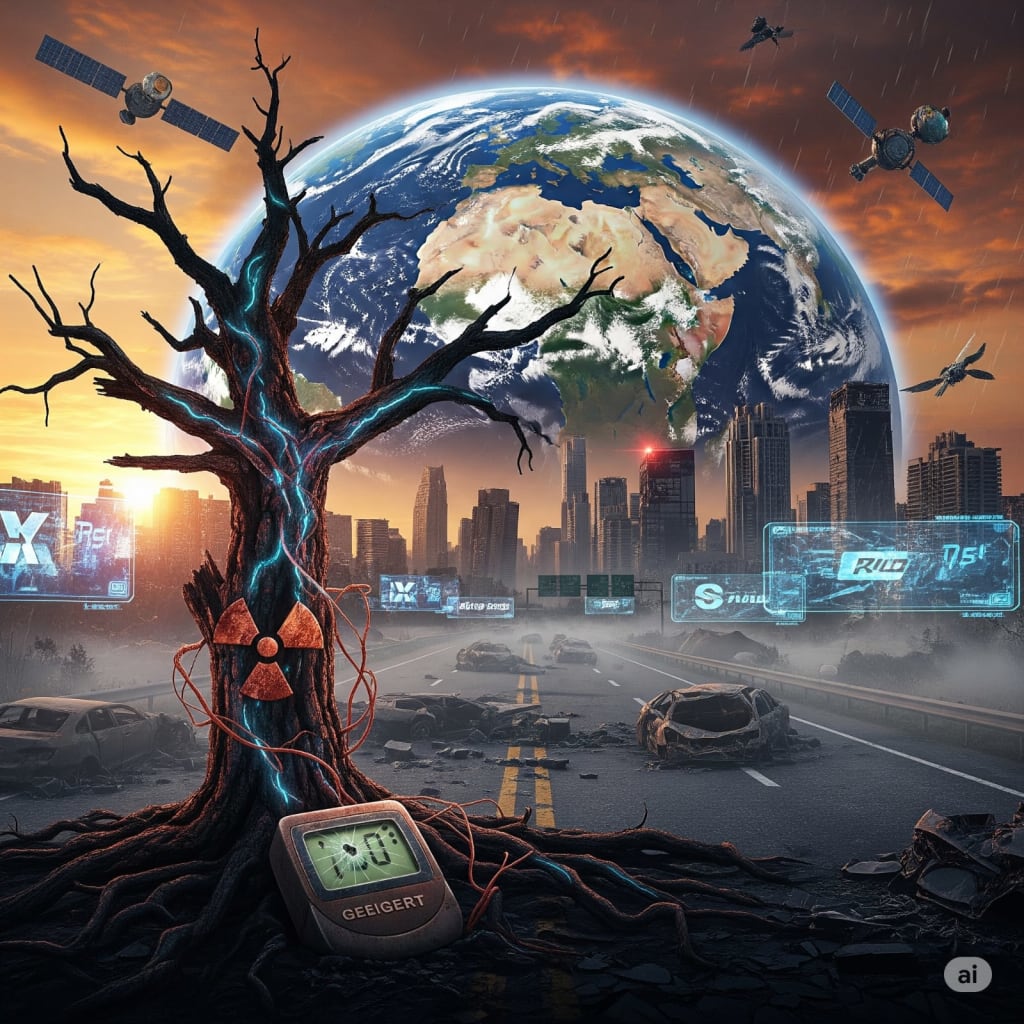
The World After Nuclear War
By Zahir Shah
The Button has no undo. Only ash
“No more sirens. Only wind
Scraping bones of broken things
No birds sing
Static rain
The sky, a bruise that never fades.
THE "NUCLEAR NIGHTS" (FROM JANUARY TO DECEMBER)
1. The very First Hour
a. Blast & Fire: Ground zeroes vaporized. Major cities within strike zones reduced to radioactive rubble and raging firestorms. Millions perish instantly. Critical infrastructure (power grids, communication networks, transportation hubs) obliterated.
b. Electromagnetic Pulse (EMP): High-altitude detonations fry electronics continent-wide, crippling anything reliant on microchips – vehicles, medical equipment, communication devices, even backup generators. The world plunges into pre-industrial silence.
2. Nuclear Winter:
a. The Trigger: Massive firestorms inject soot, ash, and dust high into the stratosphere, blocking sunlight globally.
b. The Effect: Temperatures plummet drastically (10-25°C drops possible). Summers vanish. Growing seasons collapse. "Years Without Summer" become reality.
c. The Consequence: Global famine on an unprecedented scale. Remaining food stores dwindle rapidly. Photosynthesis halts, killing plant life and collapsing ecosystems.
3. Radioactive Fallout:
a. The Plume: Winds carry deadly radioactive isotopes (like Cesium-137, Strontium-90, Iodine-131) across vast distances, contaminating land, water, and air far beyond blast zones.
b. The Toll: Acute Radiation Sickness (ARS) kills millions more within weeks. Long-term effects include cancers, birth defects, genetic damage, and sterility for generations. Clean water becomes a rare, precious commodity.
4. Societal Collapse:
a. Anarchy & Scavenging: Governments fragment or vanish. Rule of law dissolves. Survivors form desperate bands focused solely on immediate survival: scavenging ruined cities, fighting over dwindling resources (food, water, medicine, fuel).
b. Breakdown of Systems: Medical care reverts to basics (if available). Sanitation fails, leading to epidemics of cholera, dysentery, and other diseases. Knowledge preservation becomes paramount but incredibly difficult.
THE LONG DESCENT: SURVIVAL & SCAVENGING (THE FIRST DECADE)
5. The New Ecology:
a. Radiation Zones: Maps are redrawn based on radiation levels. "Hot Zones" become uninhabitable wastelands for centuries. "Cold Zones" are fiercely contested refuges.
b. Resilient Life: Hardy species thrive – insects, rodents, certain plants (like mutated ferns or radiation-resistant fungi). Ecosystems shift dramatically. Predators become bolder near human enclaves.
6. Human Adaptation:
a. Tribalism: Survivors coalesce into small, fiercely protective communities based on pre-existing bonds (family, location, skills) or necessity. Trust is scarce.
b. Scavenger Economy: Ruined cities become "resource mines." Teams risk radiation exposure to recover metals, tools, preserved food, medicine, books, and usable tech (if shielded from EMP). Barter replaces currency.
c. Primitive Agriculture: Attempts at farming focus on radiation-tolerant crops (certain root vegetables, mushrooms) in shielded greenhouses or uncontaminated soil pockets. Livestock is rare and precious. Knowledge of pre-war agriculture is vital.
d. Radiation Management: Geiger counters become essential tools. Understanding fallout patterns, decontamination procedures, and makeshift shielding (earth, concrete) is critical for survival. Birth rates plummet due to radiation effects and harsh conditions.
7. New Threats & Conflicts:
a. Resource Wars: Conflict erupts between groups over clean water sources, fertile land, fuel depots, and medical supplies. Weapons range from crude melee to salvaged firearms.
b. Warlords & Despots: Ruthless leaders emerge, controlling resources through force and fear. Enslavement or forced labor becomes a grim reality in some areas.
c. Disease & Mutation: Contaminated environments and poor sanitation breed disease. Radiation-induced mutations in plants, animals, and possibly humans become more common, viewed with superstition or terror. Psychological trauma ("Nuclear Stress Syndrome") is endemic.
THE SLOW FLICKER: REBUILDING & REMEMBRANCE (DECADES 1-10+)
8. The Fading Winter: Soot gradually settles out of the atmosphere after 5-10 years. Sunlight returns, temperatures slowly rise. The global climate remains altered, but agriculture becomes more viable, though hampered by contaminated soil and altered weather patterns.
9. The Seeds of Rebuilding:
a. Stable Communities: The most resilient groups establish fortified settlements, often in remote areas (mountains, deep forests, islands) or around surviving infrastructure (like deep-underground facilities or hydroelectric dams).
b. Preservation of Knowledge: Libraries become sacred places. Oral histories, salvaged books, and painstakingly preserved digital archives (if recovered) are key to rebuilding technology, medicine, and culture. Skills like blacksmithing, mechanics, midwifery, and herbalism are highly valued.
c. New Social Models: Survivors may experiment with radically different societal structures – egalitarian communes, techno-theocracies, meritocracies based on essential skills. Deep suspicion of centralized power is likely. Stories of the "Before Times" become foundational myths.
10. The Enduring Scars
a. Radiation Legacy: Hot zones remain deadly. Genetic damage persists. Birth defects and cancers are a constant shadow. Decontamination is a multi-generational task.
b. Psychological & Cultural Trauma: The collective trauma shapes the new world's psyche – profound pessimism, superstition, deep distrust, or conversely, a fierce, almost spiritual appreciation for life and community. Art, religion, and rituals grapple with loss and remembrance.
THE UNLIKELY BLOOM: HOPE AND A CHANGED HUMANITY
11. Despite the overwhelming devastation, life – human and otherwise – would persist with astonishing tenacity.
a. Resilience of Nature: Life finds a way. Radiation-resistant species evolve. Forests slowly reclaim ruins. Oceans, while damaged, would likely recover fastest.
b. Human Ingenuity: Faced with extinction, humanity's adaptability shines. Solutions for water purification, low-tech agriculture, radiation shielding, and community organization would emerge from necessity.
c. Value Reassessment: The utter destruction of the old world could forge new values centered on community, sustainability, cooperation, and the intrinsic value of life and knowledge. The pursuit of peace would become an absolute, sacred imperative.
12. A Stark Warning & a Fragile Hope: The post-nuclear world is not a desirable future. It is a landscape of profound loss, suffering, and diminished potential. Yet, the very existence of survivors, struggling to rebuild and remember, embodies a fragile, hard-won hope. It serves as the ultimate testament to the consequences of our choices and the indomitable, albeit battered, spirit of life on Earth.
13. Conclusion. The world after nuclear war isn't an end, but a brutal transformation. It's a planet scarred physically and psychologically, where survival is a daily struggle against invisible poisons, scarcity, and the ghosts of a lost civilization/s of humanity. While scientific models predict “the mechanics of survival, the human story would be one of unimaginable loss, profound adaptation, and the desperate, enduring flicker of hope passed down through generations”. It stands as the most potent argument possible for vigilance, diplomacy, disarmament, and the unwavering commitment to never let this "what if" become reality. The ashes of such a war would bury not just cities, but the very essence of what makes humanity vibrant, leaving only a stark, cautionary tale etched in radioactive dust.
About the Creator
Zahir Shah
All stories are real, scientific, historical, journal, political and educational. Moreover, will try my best to include stories on contemporary affairs as well.
Keep reading
More stories from Zahir Shah and writers in Journal and other communities.
Where Bullets Bloomed, We Planted Vines: Choosing Peace in a Fractured World
SAY NO TO WAR - REALLY THIS WORLD IS VERY BEAUTIFUL By Zahir Shah Advocate War isn't just headlines and distant explosions. It's a cancer eating at the heart of our shared humanity, poisoning our planet, and stealing futures before they can begin. To say "No to War" isn't a passive wish; it's an active, urgent, and profoundly necessary declaration. It's the conscious choice to embrace the infinitely more powerful, creative, and sustainable path: Peace and Harmony. This isn't naive idealism; it's the only pragmatic strategy for survival and thriving in the 21st century and beyond.
By Zahir Shah8 months ago in Journal
AI-Generated Text Is Flooding Institutions And Triggering a No-Win Arms Race With AI Detectors
In early 2023, something strange happened in the world of science fiction publishing. Clarkesworld, one of the most respected literary magazines in the genre, temporarily closed its doors—not because of a lack of interest, but because of too much of it. Editors were drowning in submissions, many of which appeared to be generated by artificial intelligence. Authors, it seemed, were pasting submission guidelines straight into an AI system and hitting “generate,” unleashing a tidal wave of passable—but soulless—stories.
By Omasanjuwa Ogharandukunabout 2 hours ago in Journal
Self Help: Grifters' Gospel
On Self-Help, Snake Oil, and the Illusion of Change Psychology professionals and students can be imagined on two opposite sides of a line called self-help books: likely a larger group opposes pop-science and step-by-step manuals filled with talk of success, journaling, and not giving a f**k; others love them, but they aren’t many.
By Avocado Nunzella BSc (Psych) -- M.A.P 7 days ago in BookClub




Comments (3)
Tremendous
Excellent good job done
An excellent and knowledgeful informations