

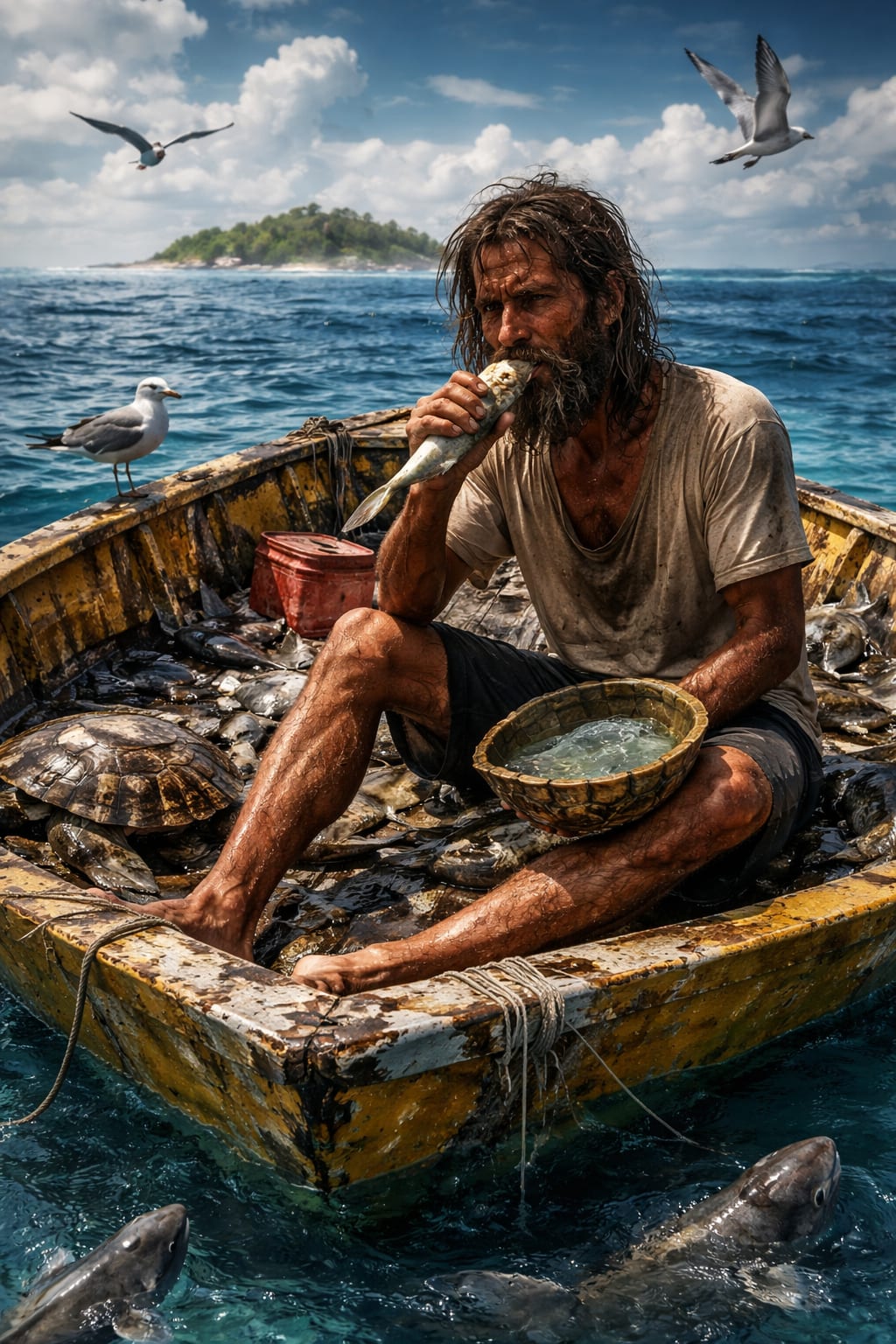
On November 17, 2012, a small fiberglass fishing boat left the Pacific coast of Mexico near Costa Azul. On board were two men: an experienced fisherman named José and his young crewmate, Ezequiel. They were heading out for what should have been a routine two-day shark fishing trip into the vast waters of the Pacific Ocean.
They carried fuel, bait, ice, a radio, and enough food and water for a short journey.
They never imagined they would not see land again for more than a year.
Shortly after they set their lines in deep water, the weather turned violently against them. A sudden storm rolled in, bringing towering waves and punishing winds. The engine failed. The radio was damaged. The boat, barely seven meters long, was swallowed by the immensity of the Pacific.
For days, they drifted helplessly. Rain lashed their faces. The sun burned their skin. Their ice melted, spoiling the fish they had caught. Food ran out quickly. Fresh water disappeared even faster.
When thirst became unbearable, they did something desperate but necessary: they drank rainwater when storms passed overhead. They caught turtles with their bare hands. They grabbed fish that swam too close to the boat. They ate seabirds that landed to rest, consuming them raw. Hunger stripped away disgust.
Weeks turned into months.
The ocean became both prison and provider. Some days it was calm, a mirror reflecting endless sky. Other days it was merciless, waves crashing into their tiny vessel, threatening to flip it at any moment.
Ezequiel struggled the most. He was young and inexperienced, unprepared for the psychological torment of isolation. He lost hope. He refused to eat raw animals. His strength faded. José tried to encourage him, promising rescue, promising home. But hope is harder to maintain than hunger.
After about four months at sea, Ezequiel died.
José was alone.
The silence that followed was heavier than the storms. For days, he spoke to his deceased companion, unwilling to accept the reality. Eventually, he performed a quiet farewell and let the ocean take the body.
Now survival was not just physical—it was mental.
José created routines. He talked to himself. He imagined conversations with his family. He thought constantly about his mother and dreamed of the food she used to cook. He marked time not by dates but by the cycles of the moon. He observed birds carefully, knowing that certain species indicated proximity to land. He learned to read the currents and the color of water.
To avoid dehydration, he collected rainwater in containers and even inside turtle shells. During dry spells, he rationed carefully. When sharks circled the boat, he remained still. When the sun scorched his skin, he covered himself with anything available to prevent burns.
His beard grew long. His hair became tangled. His body thinned dramatically. But he refused to surrender to despair.
There were moments when ships appeared on the horizon. He waved frantically, shouted until his throat burned. None saw him. Each missed opportunity crushed him—but not completely.
Drifting westward across thousands of miles, his small boat crossed one of the largest oceans on Earth. The Pacific is vast beyond imagination; entire continents could fit within its waters. Yet somehow, currents carried him steadily toward land.
After 437 days at sea—over fourteen months adrift—his boat approached a tiny coral island in the Marshall Islands, more than 6,000 miles from where he began.
On January 30, 2014, island residents noticed a strange, wrecked boat near the shore. Inside it was a bearded, skeletal man who could barely stand.
He had survived on raw fish, turtles, seabirds, and rainwater. He had endured storms, starvation, loneliness, and the constant threat of death.
Rescuers were stunned. Doctors were astonished that his organs still functioned. Though weak and traumatized, he was alive.
News of his survival spread around the world. Many questioned how it was possible. Experts explained that the human body can adapt in extraordinary ways when survival becomes the only goal. But beyond biology, there was something else: willpower.
José later said that thoughts of his family kept him alive. Every time despair whispered that death would be easier, he imagined their faces. He imagined stepping onto land again.
The ocean had taken his companion, stripped away comfort, erased time, and tested every limit of human endurance. Yet it could not break his determination to live.
His story remains one of the longest recorded survival ordeals at sea—a reminder that even in the most hopeless circumstances, the human spirit can endure longer than anyone believes possible.
For 437 days, a man floated across the largest ocean on Earth.
And he survived.
About the Creator
Ibrahim Shah
I am an Assistant Professor with a strong commitment to teaching,and academic service. My work focuses on fostering critical thinking, encouraging interdisciplinary learning, and supporting student development.
Keep reading
More stories from Ibrahim Shah and writers in Journal and other communities.
Miracle In The Andes Survivors
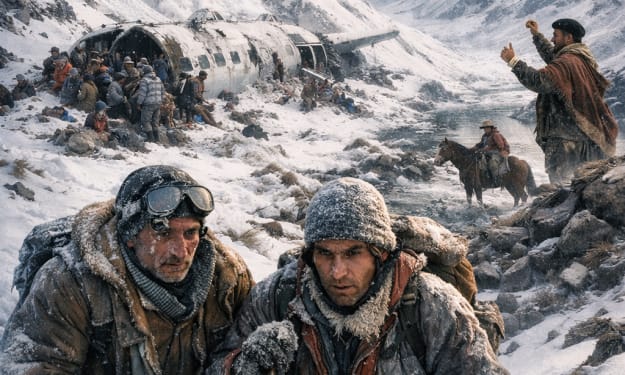
On October 13, 1972, a chartered plane carrying a Uruguayan rugby team known around the world as the Miracle in the Andes. The aircraft, operated by the Uruguayan Air Force, was transporting members of the Old Christians Club rugby team from Montevideo to Santiago. On board were 45 people, including players, friends, and family members. As the plane crossed the Andes, turbulent weather and navigational errors led the pilot to misjudge his position. Believing he had cleared the mountains, he began descending—directly into the snow-covered peaks.
By Ibrahim Shah 2 days ago in Fiction
Aren't You Dammed Tired Of Being Told What To Think
America, regardless of your leanings, your appearance, or your politics, you should be tired of being told what to think and hearing it out of people who aren't trustworthy are intelligent to begin with.
By Jason Ray Morton about 16 hours ago in Journal
The Missing Ingredient
The first time I saw her, she was wearing a velvety, red ribbon in her hair. She carried a small leather backpack everywhere. She searched the forest by turning stones, checking beneath shrubs, listening to the wind as if it might carry an answer.
By Imola Tóth7 days ago in Fiction



Comments
There are no comments for this story
Be the first to respond and start the conversation.