
Why My Eyes Relaxed Without Me Trying
The quiet shift that made me realize eye strain was never about effort.

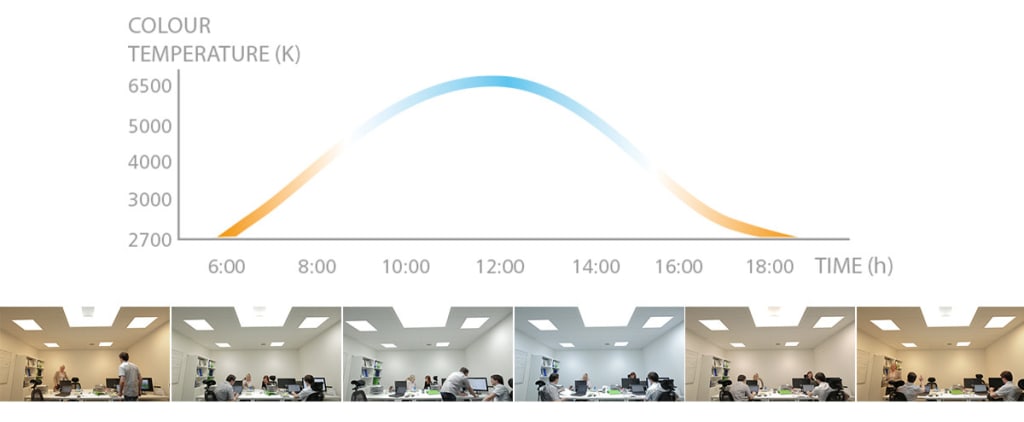
For years, I assumed eye strain was something I needed to manage.
Blink more. Look away from the screen. Adjust brightness. Take breaks. Drink water. Remind myself to relax my face and shoulders.
I did all of it.
Sometimes it helped. Often it did not.
What confused me most was how inconsistent the strain felt. On some days, my eyes felt tired by midmorning. On others, they lasted longer without complaint. The work was the same. The screens were the same. My habits were the same.
The difference turned out to be something I was not trying to manage at all.
The light.
Eye Strain Is Not Always About Overuse
We often think eye discomfort comes from doing too much.
Too much screen time. Too much focus. Too much visual effort.
But the eyes are not just muscles that get tired. They are sensory organs connected directly to the nervous system. When the visual environment sends conflicting or stressful signals, the eyes work harder even if the task is simple.
That effort feels like strain.
And most of the time, we respond by trying to fix ourselves instead of the environment.
The Day I Stopped Thinking About My Eyes
The moment I noticed something had changed was surprisingly ordinary.
I was halfway through the day when I realized I had not rubbed my eyes once. No dryness. No tension behind them. No urge to squint or look away.
More importantly, I had not been reminding myself to relax.
My eyes felt calm without effort.
That absence was what made me notice.
Why the Visual System Stays Tense
The eyes are constantly adjusting.
They respond to brightness, contrast, flicker, glare, and spectral balance. When lighting contains harsh peaks or inconsistent output, the visual system remains active, correcting and compensating.
This constant correction keeps the nervous system engaged.
Even if you are not consciously uncomfortable, your eyes never fully rest.
Over time, that state feels like fatigue.
Gentle Light Changes the Equation
When lighting is designed around human biology, the eyes behave differently.
Brightness feels even instead of sharp. Contrast feels natural instead of forced. There is no subtle glare pulling attention or causing micro tension in the muscles around the eyes.
The visual system stops correcting.
That is when relaxation happens.
Not because you tried to relax, but because there was nothing left to fight.
Why Eye Comfort Affects More Than Vision
Eye strain rarely stays isolated.
When the visual system is stressed, the brain works harder to process information. Focus becomes more fragile. Mental fatigue arrives sooner. Headaches become more likely.
This is why eye comfort often improves mood and concentration at the same time.
When my eyes relaxed, my thoughts did too.
The Nervous System Follows the Eyes
The eyes send powerful signals to the brain.
If visual input feels harsh or unstable, the nervous system stays alert. Muscles tense slightly. Breathing becomes shallower. Attention scatters.
When visual input feels balanced, the nervous system downshifts.
This is not relaxation as an activity. It is relaxation as a state.
That state is what my eyes found.
Why I Had Been Trying So Hard Before
Looking back, I realized how much effort I had been spending compensating.
Adjusting posture. Shifting focus. Taking breaks that felt necessary instead of restorative.
None of those habits were wrong. They were responses to an environment that required adaptation.
Once the environment stopped demanding it, the habits faded on their own.
Comfort That Does Not Announce Itself
The most interesting part was how subtle the change felt.
There was no moment of relief. No realization that something was fixed.
Just the quiet absence of strain.
This is what supportive environments do best.
They disappear.
Why This Matters in Everyday Spaces
Most people spend long hours indoors.
If lighting quietly strains the eyes, that strain accumulates into fatigue, reduced focus, and emotional irritability. Over time, people assume this is normal.
It is common.
But it is not inevitable.
Lighting that respects the eyes allows people to move through the day without visual resistance.
Conclusion
My eyes relaxed without me trying because the environment stopped asking them to work so hard.
Once the visual system was supported instead of challenged, comfort followed naturally. Not as a sensation, but as a lack of tension.
Sometimes the most meaningful improvements are the ones that remove effort instead of adding techniques.
When the eyes feel calm, the rest of the body often follows.
About the Creator
illumipure
Sharing insights on indoor air quality, sustainable lighting, and healthier built environments. Here to help people understand the science behind cleaner indoor spaces.
Keep reading
More stories from illumipure and writers in Journal and other communities.
When the Air No Longer Felt Heavy by Midday
I used to notice the heaviness around the same time every day. Late morning would pass without issue, but by midday something shifted. My shoulders felt heavier. My breathing felt shallower. Focus became harder to hold onto, even though the day was far from over.
By illumipurea day ago in Journal
~ Fired ~
— Ai Intrusion ~ Are you Next ~ Is Ai Evolution after your job? — Few workplaces haven't been affected. Ai is in supermarkets, at doctors' offices, and even monitoring farms. I just can't think of anything this machine is not getting into, can you? For instance: Education ~ Law and Tech jobs will one day have a major influence or be taken over by these inanimate machines, with accuracy and vigor. From mechanics' diagnoses to a wide variety of everyday jobs, including fast food workers, with this input having the ability to cut their unnecessary work hours. I'm certain all of us have been touched by this with our short stories and colorful headings, have you? Even comments are very questionable 'Non-Robot' insertions.
By Jay Kantor4 days ago in Journal
UI for AI Agents: What’s Working in 2026
You reckon designing for AI agents is just slapping a chat window on your app? Mate, we're way past that now. 2026 hit different. The whole UI game flipped when AI agents stopped being glorified chatbots and became actual autonomous teammates. I've spent the past few months neck-deep in agentic design work, and let me tell you, the old playbooks? Completely useless.
By Sherry Walker7 days ago in Journal
Why Black History Matters in America?
The United States of America is celebrating their 250th anniversary in 2026. I'm proud to be an American and as someone who was born here, I wouldn't imagine myself living anywhere else. This is a country where opportunities are possible. Where anyone can be successful in anything they desire to do. Equality, community, and togetherness are the backbones of what America is and should be about. However, we have an administration who wants to erase and disregard those who have made positive, meaningful impacts in our country, specifically Black figures, such as Martin Luther King, Jr., Rosa Parks, and Maya Angelou. President Trump and his administration have been constantly complaining and fighting against what they call the "Woke agenda". They use this excuse as a distraction from other issues they refuse to address, such as the high cost of living, climate change, and inflation. That equality is dividing America, when in reality, it's bringing us together. Being woke is not tied to a specific political party. No matter where you stand on the political spectrum, you can still care about other people and their plights. Compassion and empathy for others isn't tied to a political party, either. We were taught as children to treat others the way we want to be treated and not judge others because they're different from us. Caring about others isn't a personal attack on your beliefs. It doesn't make you any less of a person. People who are easily offended over African American figures, past or present, or anything related to it, are grasping at straws. Current and future generations need to know who people like Harriet Tubman and Shirley Chisholm were, especially in the classroom. Black History is part of American History. It should be recognized, not hidden or forgotten. Besides, you can't shield children from everything, just because your feelings are easily hurt.
By Mark Wesley Pritchard 3 days ago in The Swamp




Comments
There are no comments for this story
Be the first to respond and start the conversation.