
5 Awful Habits That Make People Dislike You Immediately
Avoid These Five Common Behaviors That Can Turn People Off Instantly


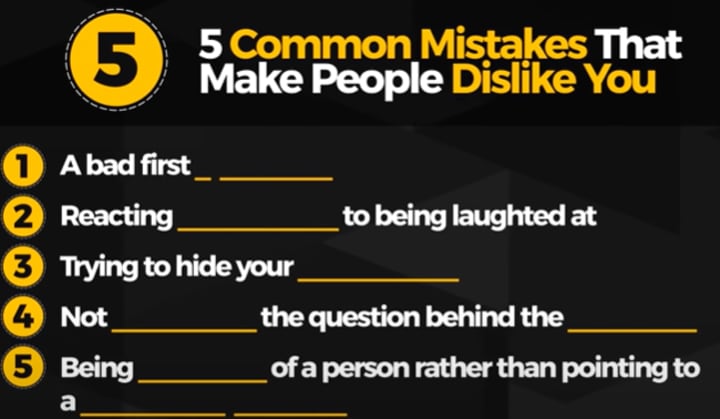
1)A bad first 7 seconds impression:
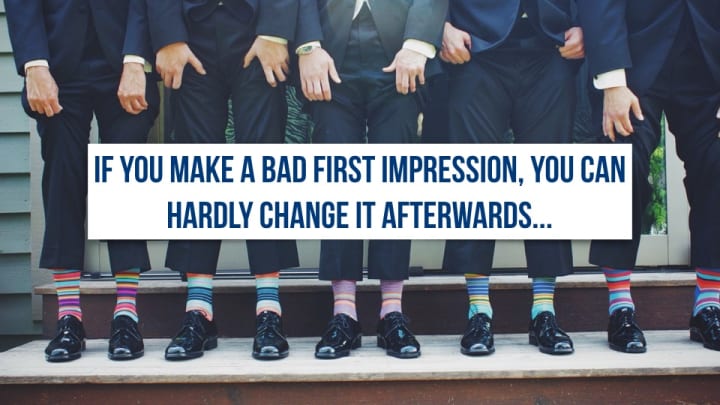
Making a bad first impression can be a common mistake that can make people dislike you. Research has shown that people form an impression of someone within the first few seconds of meeting them. Here some common factors that can all play a role in creating a negative impression:
1.Rude or disrespectful behavior: This can include being dismissive or insulting to others, interrupting people while they speak, or making derogatory comments.
2.Poor hygiene or grooming: This can include bad breath, body odor, dirty clothing or hair, and an unkempt appearance.
3.Negative attitude: A consistently negative outlook or a tendency to complain frequently can be off-putting to others.
4.Lack of consideration or empathy: Failing to show concern or understanding for others' feelings or needs can make people feel disrespected and unvalued.
5.Inappropriate behavior: This can include being overly aggressive or confrontational, making inappropriate jokes or comments, or behaving in a socially unacceptable manner.
2)Reacting defensively to being laughted at
Reacting defensively to laughter can be a common mistake that can make people dislike you. It's important to remember that laughter can have many different meanings and it's up to you to choose how you interpret it.
If someone is laughing at something you said or did, it doesn't necessarily mean that they're laughing at you or trying to be hurtful. They could be laughing because they find the situation amusing, or because they appreciate your sense of humor.
Reacting defensively to laughter can make people feel uncomfortable or put off. It can also make it difficult for others to connect with you and may lead to strained relationships. Instead of reacting defensively, try to stay positive and see the humor in the situation. This can help diffuse any tension and make it easier for people to connect with you.
In some cases, it may be appropriate to address the laughter if it's truly hurtful or disrespectful. However, it's important to do so in a calm and respectful manner, rather than reacting defensively or lashing out. By approaching the situation with a positive attitude and a willingness to communicate, you can help build stronger relationships and avoid making people dislike you.
3)trying to hide your weaknesses
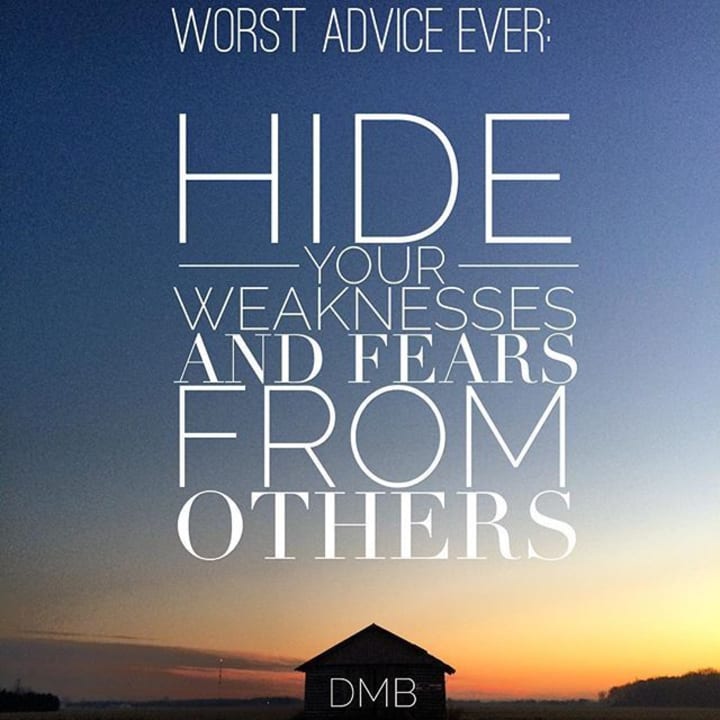
Trying to hide your weaknesses can be a common mistake that can make people dislike you. While it's natural to want to present yourself in the best light possible, hiding your weaknesses can actually have the opposite effect and make you seem less trustworthy and less likable.
When you try to hide your weaknesses, it can come across as disingenuous or dishonest, which can make people feel uncomfortable or put off. It can also make it difficult for others to relate to you or connect with you on a deeper level.
On the other hand, admitting your weaknesses can actually be a sign of strength. When you're willing to be vulnerable and honest about your shortcomings, it shows that you're self-aware and open to feedback. It can also help build trust and deepen relationships, as others will appreciate your honesty and authenticity.
So, don't be afraid to be yourself and embrace your imperfections. When you're willing to be honest about your weaknesses, you're more likely to build positive relationships and make people like you for who you are.People can partner with you knowing you’re imperfect, but if they think you’re lying to sell yourself they will never.
4)not answering the question behind the question
Not answering the question behind the question can be a common mistake that can make people dislike you. Oftentimes, when people ask a question, there may be an underlying motive or concern that they're not expressing directly.
If you don't address the question behind the question, you may miss the opportunity to build trust and understanding with the person you're speaking with. By addressing the underlying concern, you can help create a more positive and productive conversation.
For example, if someone asks you if you're available to work on a project, the question behind the question might be whether you're reliable and trustworthy. By addressing this concern directly and explaining why you're committed to the project and capable of meeting deadlines, you can help build trust and confidence in your abilities.
By answering the question behind the question, you're more likely to build positive relationships and make people feel heard and understood. So, the next time you're in a conversation, make sure to pay attention to the underlying motives or concerns, and address them directly to help create a more positive and productive dialogue.
5)being critical of a person rather than pointing to a specific behavior

Being critical of a person rather than pointing to a specific behavior can be a common mistake that can make people dislike you. When you criticize someone, it can feel like a personal attack, which can be hurtful and damaging to your relationship.
Instead of being critical of a person, it's important to focus on specific behaviors that you find problematic. By separating the behavior from the person, you can help create a more productive conversation that focuses on addressing the issue at hand, rather than attacking the person.
For example, instead of calling someone a bad friend or a bad roommate, it's more effective to point out specific behaviors that are causing problems. You might say something like, "When you don't clean up after yourself in the kitchen, it makes me feel frustrated and disrespected." By focusing on the behavior and how it's affecting you, you can create a more positive and productive conversation that is more likely to result in a positive outcome.
So, the next time you need to have a difficult conversation, try to focus on specific behaviors rather than being critical of the person. By doing so, you can help create a more positive and productive dialogue that is more likely to lead to a positive outcome.
About the Creator
Keep reading
More stories from money tips and writers in Lifehack and other communities.
4 AI Robots That Will Make You MONEY
what is ai? Artificial Intelligence (AI) refers to the simulation of human intelligence in machines that are programmed to perform tasks that would normally require human intelligence to accomplish. AI involves the development of algorithms and computer programs that enable machines to learn from data, recognize patterns, make decisions, and solve problems in a way that resembles human thinking. AI technology can be applied to a wide range of fields, including healthcare, finance, manufacturing, transportation, and many others. The potential applications of AI are vast, and it has the ability to transform the way we live, work, and interact with technology. However, there are also ethical considerations around the development and use of AI, and it is important to ensure that these technologies are designed and used in a responsible and ethical manner.
By money tips3 years ago in Education
Carrying Sound Through Tulsa
A piano carries more than sound. It carries time. Even when silent, it holds the imprint of hands that once rested on its keys, of rooms that shaped its voice, and of moments that unfolded quietly around it. In Tulsa, a city where music has long been woven into daily life, moving a piano feels less like relocating an object and more like guiding a piece of lived experience into a new chapter.
By House Doctor4 days ago in Lifehack
One Day, One Life: How 24 Hours Can Change Everything"
Have you ever woken up and wondered, “Is this it?” Maybe you feel stuck—trapped in a daily routine that leaves you empty. You go to work, come home, scroll through your phone, and repeat it all the next day. Deep down, you know there’s more to life, but the thought of change feels overwhelming. So, you stay where you are, waiting for the “right time.” But what if I told you that your entire life could change in just one day? Not next year, not in five years—today. This book is about that day. The day you stop waiting. The day you decide to take control of your life. It’s not about making massive changes all at once or becoming a completely different person overnight. It’s about how small decisions, mindset shifts, and one bold action can set you on a new path—a path you’ve always wanted but were too scared to take. This is your wake-up call. Because your life doesn’t change someday. It changes the day you decide it will. Chapter 1: The Trap of Waiting “I’ll start tomorrow.” How many times have you said those words? Tomorrow, you’ll exercise. Tomorrow, you’ll quit the job you hate. Tomorrow, you’ll take the leap. But tomorrow always turns into the next tomorrow, and nothing ever changes. I know this because I’ve been there. I spent years waiting for the perfect moment to start living the life I wanted. I told myself I wasn’t ready, that I needed more time, more money, more confidence. But the truth is, there’s never a perfect moment. There’s only now. Ask yourself: What are you waiting for? Reflection Question: What’s one thing you’ve been putting off because you’re waiting for the “right time”? Chapter 2: Small Decisions, Big Changes We often think that life-changing moments are dramatic—quitting a job, moving to a new city, starting over. And while those moments are important, they rarely happen without smaller decisions leading up to them. It’s the small choices you make every day that create your future. Choosing to wake up 30 minutes earlier to focus on yourself. Choosing to say no to things that drain you. Choosing to take one small step toward your dream, even if it scares you. Let me tell you about Sarah. She was stuck in a job she hated, but she didn’t know how to start over. One day, she decided to spend 10 minutes after work each evening researching jobs in a field she was passionate about. That small decision led to her applying for a position, which led to an interview, which led to a new career. It didn’t happen overnight, but it started with one small choice. Reflection Question: What small decision can you make today to move closer to the life you want? Chapter 3: The Power of Courage Change requires courage. It’s terrifying to step into the unknown, to leave behind the familiar, even if the familiar is what’s holding you back. But courage isn’t about being fearless—it’s about acting despite your fear. Think about the boldest people you admire. They didn’t wait until they felt ready. They acted while they were scared. Take James, for example. He had always wanted to start his own business but was terrified of failing. One day, after years of fear, he decided to take one bold action: he called a friend who had experience starting a business. That one phone call gave him the clarity to take the next step. Today, he’s running a thriving company. Courage doesn’t mean jumping blindly. It means taking one brave step, and then another, and another. Reflection Question: What bold action can you take today that scares you but could change your life? Chapter 4: The Day That Changes Everything Here’s the secret: your life changes when you decide it will. It doesn’t happen by accident. It happens when you wake up, look at your life, and say, “Enough.” That day can be today. Right now. You don’t need to have it all figured out. You just need to start. Start small. Say no to something that doesn’t serve you. Say yes to something you’ve been afraid to do. Take one step toward the life you want. Because here’s the truth: one small decision leads to another, and another. And before you know it, you’re not the same person you were yesterday. Final Message Your life is happening right now. The question is: are you going to let it pass you by, or are you going to take control? You don’t need a perfect plan. You don’t need permission. You just need to decide. The day that changes your life isn’t some far-off moment in the future. It’s not when you have more money, more time, or more confidence. It’s today. So, take the first step. Make one small decision. Be brave, even if it’s just for a few seconds. Because one day—this day—can change everything.
By DJADA Mahamatabout 24 hours ago in Lifehack




Comments
There are no comments for this story
Be the first to respond and start the conversation.