
How to Prevent Weeds & Moss from Growing on Artificial Grass
Let’s be real— you got artificial grass to have an easy, always nice-looking lawn, right?
Let’s be real— you got artificial grass to have an easy, always nice-looking lawn, right? But guess what? Even the best artificial grass Bradford meets a sly little problem: weeds and moss trying to pop through and mess up your perfect green. Just because it’s not real grass doesn’t mean nature will leave it alone! But don’t worry— I’ve been there, deep in the dirt with a weed brush, mumbling to myself. In this blog, I’m sharing all the ways to really keep weeds and moss off your fake grass. Whether you’re all about a great garden or just like to keep it neat, I have tips that’ll make sure your lawn stays fresh, green, and easy. Let’s go!
1. Know Your Enemy: Why Weeds & Moss Grow under Fake Grass:
Even though it's man-made and looks perfect, fake grass can still have green plants grow on it. Here's why:
a. Base Openings: Dirt or sand below can hold seeds of weeds.
b. Edge Spaces: The sides and joins pull in seeds and bits from the air.
c. Shade & Moisture: Moss loves areas that are damp and not dry.
d. Bad Drainage: Too much water under the grass helps moss and weeds to start growing.
Knowing these things helps you make plans—so you don't just pick at random bits all the time.
Pro-Tip: After a lot of rain, take a walk on your grass. If pools stay for over 15 minutes, mark those places—they will draw moss later.
2. Smart Installation Steps:
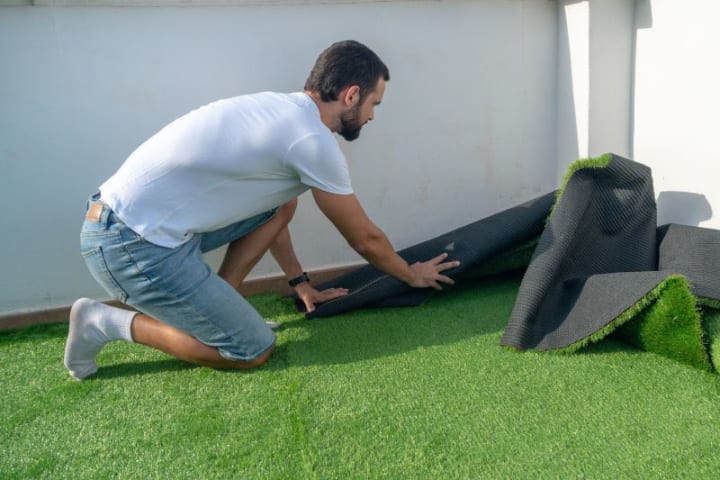
Stop weeds before the grass rolls out:
• Dig Deep: Take out all old grass and at least 3 inches of topsoil.
• Put Down a Good Weed Barrier: A cloth that breathes but stops seeds from coming up with the soil.
• Place a Tight Base Layer: Use sharp sand or smashed rocks for water to flow away.
• Secure the Edges: Use strong borders or spikes to keep the fabric and grass tight.
Pro-Tip: Use strong landscaping tape on the joints of the membrane. Gaps let weeds through; full cover keeps them out.
3. Regular Upkeep: Keep It Clean and Fluffed:
A quick weekly clean stops weed:
• Brushing the Fibres: Use a stiff nylon broom to raise the grass, show the infill, and push out trash.
• Sweeping: Clear out leaves, sticks, and soil that keep water—clean these fast.
• Rinsing: Use a soft spray from a hose to wash away dirt and light spores, keeping the fill in place.
Upkeep isn't super hard, but being regular is vital.
Pro-Tip: Set your “lawn clean up” at the same time as another task—like cleaning your windows or washing your car. Hit two birds with one stone!
4. Weed-Proof Your Lawn:
Even top guards can fail, so gear up:
• Early Weed Killer: Applying a granular, turf-safe substance in the spring creates a chemical barrier that prevents seeds from sprouting.
• Spot Treatment: For weeds you can see, go for a safe, fake-grass-ok liquid weed killer—spray right on and yank out when limp.
• Vinegar Mixes: Plain house vinegar (mixed 1:2 with water) hits small weeds hard. Wash the spot after 10 minutes to keep the grass safe.
Do not use garden weed killers with glyphosate—they can change the color of your fake grass and hurt local animals.
Pro-Tip: Put little flags on spots you treat. This helps you know where not to touch or sit for 24 hours, making sure it works best.
5. How to Beat Moss: Sunlight & Drainage Techniques:
Moss likes wet and dark spots. To fight it:
• Improve the Drainage: Put rough sand into wet areas and use a rake to even out the spots.
• Let in Sunlight: Cut back big tree parts hanging over or move pots that make too much shade.
• Employ Moss-killer: Use a moss-killing product that doesn't hurt the grass, in months when it's wet. It makes sure the moss doesn’t get what it needs to live.
Pro-Tip: If you have spots with lots of shade, think about using some gravel or a deck area instead of grass—it stops moss from always coming back.
6. Edge & Seam Care: Block Weak Spots:
Weeds slip in at the edges:
• Concrete Edging: A hard edge stops seeds from getting in.
• Seam Sealer: Put on a clear, water-proof coat on the seams once every 12–18 months.
• Regular Checks: Each month, look all around for raised membrane or turf edges; push down and add spikes if you need to.
Pro-Tip: Put small stones or thin strips of slate near your grass. They look nice and stop weeds.
7. When You Should Call the Experts:
At times, doing it yourself won't cut it:
• Persistent Weed Problems: If weeds keep coming back fast, you might need to get pros to lay down fresh membrane and infill.
• Water Issues: For yards that often flood, an expert can put in deep drainage to move the water away.
• Commercial Grade Treatment: Pros use tough, lawn-safe mixes that work better than home fixes.
Paying for pro help every year or two can be good for top-notch lawns.
8. Long-Term Care: Ways to Keep Weeds Out:
Turn these into your yard habits:
• Brush Often Used Places Every Week: Places like doors and patios need regular checks.
• Remove Trash Fast: Don't let leaves and clippings sit on your grass.
• Look at Edges Each Month: A fast check can stop big weed invasions.
• Move Tables & Toys Around: Moving things stops the grass from getting too hard and moss from hiding.
FAQs:
1. Can I spray my fake grass with a pressure washer?
Yes, but only on a soft mode (no more than 30 bar), and keep it at least 30 cm back. Too much force can push out the fill and may rip edges. It's better to use a normal hose with a wide-fan tip for daily wash.
2. Will harsh weed killers hurt my fake grass?
Yes, tough weed killers with glyphosate or sulphate might fade the threads and harm the base. Always pick ones that are safe for fake grass and can break down in nature, as shown on the label.
3. How long does it take for pre-emergent weed treatment to start showing results?
Most types stop seeds from starting right away but keep new weeds away for up to half a year. Also, pull out any small weeds by hand that show up.
About the Creator
Essential Differences Between MMA Flooring and Epoxy Flooring Systems
Ever walk into a big store, a hospital, or maybe even a high-end garage and catch yourself thinking, “Wow, that floor actually looks great—what’s it made of?” Turns out, there’s a good chance you’re standing on either MMA flooring or epoxy flooring. These two pop up all over the place, and for good reason. People pick them for all sorts of different spaces. At a glance, they seem pretty similar. But trust me, they’re not the same at all.
By Muhammad Hanzla4 days ago in Lifehack
Mismanaging Your Emotions At Work Leads To Occupational Burn Out
People being forced to fake how they feel in the work place is one of the main causes of occupational burn out. That’s according to new research by Emlyon Business School. Researchers have discovered that the surface acting creates a form of exhaustion which drains the ability an employee possesses to be able to organise themselves and take part in everyday work-related tasks. This effects an organisation’s ability to function well and cater for it’s own staff and customers. This creates a huge impact on the ability each individual has to manage their own cognitive capacity as well as eroding their sense of authenticity. This puts a huge impact on team trust and makes engaging in leadership more difficult.
By Ashish Prabhu5 days ago in Lifehack




Comments
There are no comments for this story
Be the first to respond and start the conversation.