

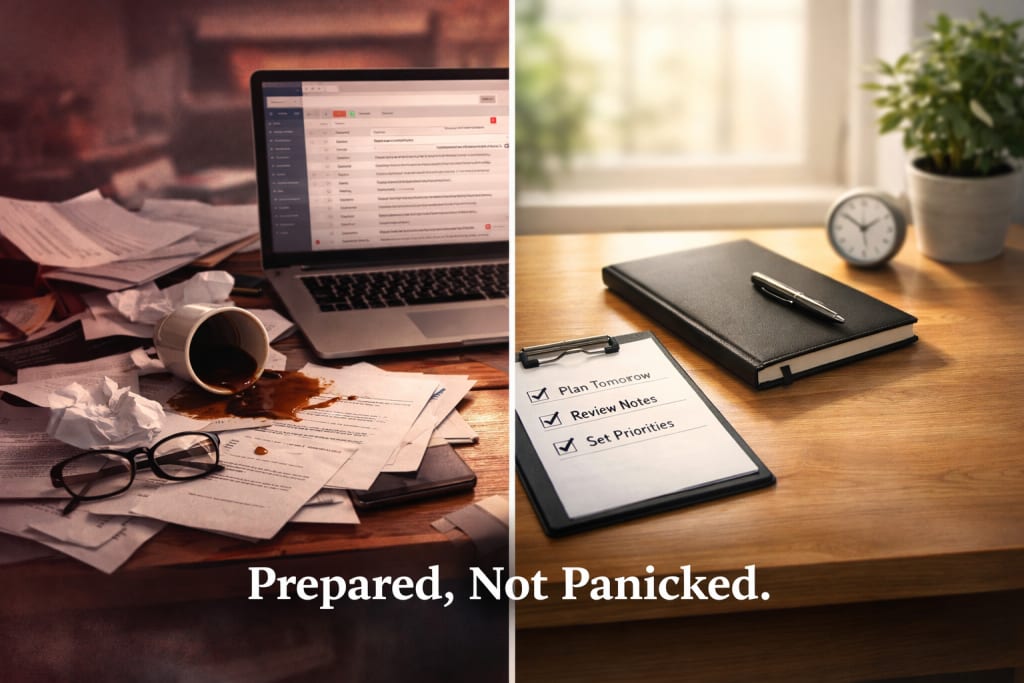
Stress has a way of disguising itself.
For years, I thought my stress came from deadlines, from difficult conversations, from unexpected problems that seemed to arrive without warning. I tried everything people recommended. I read about mindfulness. I experimented with breathing exercises inspired by apps like Headspace. I even watched productivity lectures from speakers like Simon Sinek, hoping some shift in mindset would quiet the constant tension in my chest.
Some of it helped — temporarily.
But the anxiety always returned.
Then I noticed something uncomfortable: my stress wasn’t coming from life being hard. It was coming from me being unprepared.
That realization changed everything.
The Illusion of Random Stress
We often label stress as something external. A boss sends an email. A client asks for revisions. A family member calls with unexpected news. A bill arrives earlier than expected.
We tell ourselves, “Of course I’m stressed. Look at everything happening.”
But when I started paying attention, I saw a pattern. The most intense stress wasn’t triggered by big crises. It was triggered by small surprises.
An email I forgot to reply to.
A meeting I hadn’t prepared for.
A task I delayed until the last minute.
A conversation I knew I needed to have but avoided.
The stress didn’t begin when the problem appeared.
It began long before — when I chose not to prepare.
The Habit That Changed Everything
The habit that removed most of my stress was simple:
Daily preparation.
Not meditation.
Not positive affirmations.
Not a radical life overhaul.
Just intentional preparation.
Every evening, I began asking three questions:
What are the top three things I must handle tomorrow?
What could go wrong?
What can I prepare in advance?
That’s it.
Sometimes preparation meant drafting an email before I needed to send it.
Sometimes it meant organizing documents before a meeting.
Sometimes it meant mentally rehearsing a difficult conversation.
Preparation transformed unknowns into knowns. And anxiety feeds on unknowns.
Why Preparation Reduces Anxiety
Anxiety thrives in ambiguity.
When your brain senses uncertainty, it interprets it as potential danger. That’s evolutionary wiring. Thousands of years ago, uncertainty could mean a predator behind the bushes.
Today, uncertainty often means an unread message.
But your nervous system doesn’t distinguish well between physical and psychological threats. Both feel real.
Preparation narrows uncertainty.
When you review your schedule, anticipate questions, and plan responses, you send a message to your brain: I am not walking into chaos. I know what’s coming.
And when the brain feels informed, it calms down.
A Small Example That Proved It
There was a time when presentations terrified me. The night before, I would scroll endlessly, trying to distract myself. The morning of, my stomach would tighten.
One day, instead of distracting myself, I over-prepared.
I practiced aloud.
I anticipated objections.
I wrote down answers to difficult questions.
I visualized the room.
The presentation wasn’t perfect.
But something surprising happened.
I wasn’t anxious.
My heart rate stayed steady. My thoughts were clear. I wasn’t bracing for impact — I was executing a plan.
That’s when it clicked: stress had been my body reacting to my own lack of readiness.
The Hidden Cost of Avoidance
Avoidance feels relieving in the moment. When you postpone a task, you feel temporary comfort.
But avoidance compounds stress.
The longer something remains unprepared, the more mental space it occupies. It lingers in the background of your mind, quietly draining energy.
Preparation, on the other hand, creates closure.
Even partial preparation reduces stress dramatically. Writing the outline of a project can calm you more than finishing it under pressure.
Because preparation replaces dread with direction.
The Difference Between Control and Readiness
Preparation doesn’t guarantee outcomes.
You can prepare for a meeting and still face unexpected questions. You can plan your week and still encounter disruptions.
But preparation isn’t about control.
It’s about readiness.
When you’re ready, you adapt better. You think more clearly. You respond instead of react.
That alone reduces the majority of everyday stress.
What Preparation Looks Like in Real Life
Preparation is not glamorous. It doesn’t trend on social media. It doesn’t feel transformative in the moment.
It looks like:
Laying out your clothes before work.
Reviewing your calendar before sleeping.
Saving emergency funds instead of spending impulsively.
Writing bullet points before a call.
Clarifying expectations before starting a task.
Small acts.
Massive impact.
The Compounding Effect
After a few weeks of practicing daily preparation, something subtle changed.
My mornings felt lighter.
My inbox felt less threatening.
Unexpected events felt manageable.
Not because life became easier.
But because I had reduced self-inflicted chaos.
Preparation didn’t remove all stress. Life still delivers surprises.
But it removed unnecessary stress — the kind created by procrastination, disorganization, and vague intentions.
And that was most of it.
Why It Works Better Than Meditation Alone
Meditation helps you cope with stress.
Preparation prevents much of it.
Both are valuable. But if you are constantly entering situations unprepared, no amount of deep breathing will fully calm your nervous system.
The real relief comes when you know you’ve done your part.
There is a quiet confidence in preparedness. It doesn’t shout. It doesn’t demand attention.
It simply steadies you.
The Habit That Changed My Mindset
The biggest shift wasn’t productivity. It was identity.
I stopped seeing myself as someone overwhelmed by life.
I began seeing myself as someone who anticipates and prepares.
And that identity shift reduced anxiety more than any relaxation technique ever had.
If you feel constantly stressed, ask yourself a hard question:
Is life truly chaotic —
or are you walking into it unprepared?
Sometimes the simplest habit makes the deepest change.
For me, it wasn’t meditation.
It was preparation.
About the Creator
LUNA EDITH
Writer, storyteller, and lifelong learner. I share thoughts on life, creativity, and everything in between. Here to connect, inspire, and grow — one story at a time.
Keep reading
More stories from LUNA EDITH and writers in Lifehack and other communities.
Being Human Is Heavy
No one tells you that being human comes with a weight you cannot put down. Not when you’re born, not when you learn to walk, not even when you learn to love. It arrives quietly, accumulating over years, stacking itself in invisible layers until one day you wake up tired for no clear reason. You blame sleep. You blame work. You blame age. But the truth is simpler and harder: being human is heavy.
By LUNA EDITHabout a month ago in Lifehack
How to Find Affordable Flights for Valentine’s Day (2026 Guide)
Valentine's Day is one of the busiest romantic travel weekends of the year. Whether you're planning a quick trip around town or a warmer getaway, airfare demand typically increases as February 14th approaches.
By Patricia Hart6 days ago in Lifehack
6 Free Ways to Satisfy Your Shopping Urges
Sometimes, getting a little treat is the only thing that makes you feel better. Unfortunately, the cost of those little treats adds up--and before you know it, your new purchases are just old belongings taking up space in your house. Buying new things doesn't help much, either.
By Kaitlin Shanks2 days ago in Lifehack




Comments
There are no comments for this story
Be the first to respond and start the conversation.