
WHAT ARE THE MOST IMPORTANT THINGS TO COMMUNICATE IN A MARRIAGE?
Key Elements of Communication in Marriage include Trust,Respect,Emotional Support and Clear Honest Dialogue.

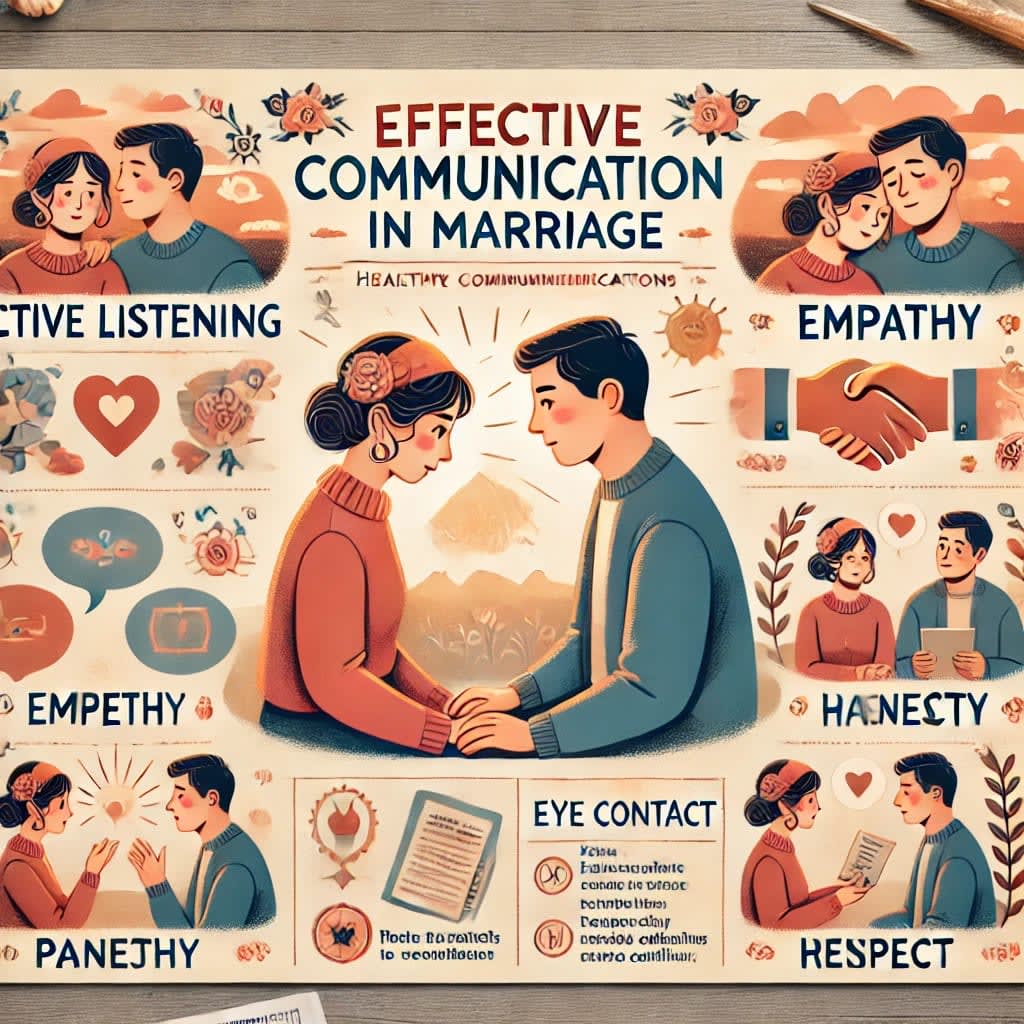
Effective communication is the cornerstone of a successful marriage. It strengthens the bond between partners, fosters understanding, and resolves conflicts. For a marriage to thrive, several key aspects of communication need to be prioritized. Here are the most important things to communicate in a marriage:
Emotions and Feelings
The ability to express emotions is crucial in any relationship, but it’s particularly vital in a marriage. Partners need to communicate how they feel, both the positive emotions such as love, appreciation, and joy, and the negative ones like frustration, anger, or sadness. When one partner is feeling down or stressed, it's important to share that feeling with the other to prevent emotional distance from Growing.
Being able to express feelings openly and without judgment helps both partners feel valued and understood. This encourages empathy and emotional intimacy, which are key to a long-lasting and fulfilling relationship.
For example, instead of saying "I am fine" when you're upset, it's better to express "I feel upset because of what happened earlier, and I need some time to process it." This kind of openness invites the other partner to support you and shows trust in the relationship.
Expectations
Communicating your expectations is essential in preventing misunderstandings. Often, disagreements arise from unmet or unclear expectations about responsibilities, emotional needs, or future goals.
Discussing and understanding each other’s expectations helps avoid resentment and conflict. Expectations may be related to household chores, finances, intimacy, or life goals. It’s important to have regular check-ins about your relationship expectations to make sure both partners are on the same page.
For example, one partner might expect to share chores equally, while the other might assume that the division will be based on time availability. Openly discussing such issues helps to align expectations and maintain harmony.
Boundaries
Setting and respecting personal boundaries is crucial for maintaining a healthy marriage. These boundaries can be emotional, physical, or even social. Every individual needs personal space, and it’s important to communicate those needs to your partner. Respecting each other’s boundaries allows for individuality while maintaining the unity of the relationship.
For example, one partner may need alone time after a busy day, while the other might want to spend time together. It's important to communicate these needs clearly, so both partners can respect each other's space and emotional requirements.
Conflict Resolution
Disagreements and conflicts are natural in any marriage, but how they are communicated makes all the difference. Couples must communicate effectively during conflicts to prevent escalation and ensure that issues are resolved constructively.
Instead of resorting to blaming or shouting, it’s essential to communicate with a focus on finding solutions. Using “I” statements (like “I feel hurt when...”) rather than “you” statements (like “You always...”) helps reduce defensiveness and promotes a more understanding conversation.
It’s also important to listen actively during conflicts, meaning giving your partner your full attention, not interrupting, and trying to understand their perspective. A marriage thrives when both partners feel heard and respected, even during disagreements.
Intimacy and Affection
Emotional intimacy is an essential part of marriage. Communicating needs and desires in this area is vital for maintaining closeness. Every partner has different ways of expressing and receiving love—whether through physical touch, words of affirmation, acts of service, or quality time. Regularly communicating about how you both prefer to give and receive affection helps maintain a strong emotional connection.
For example, one partner might feel loved through physical touch, like hugging or holding hands, while the other may prefer verbal affirmations. Understanding and expressing these preferences can help both partners feel loved and secure in the relationship.
Future Plans and Goals
A marriage involves two people with individual aspirations, but for the relationship to work, both partners need to be aligned on major life decisions. It’s important to communicate openly about future plans, such as career goals, where to live, having children, or financial goals. Regular discussions about long-term goals ensure that both partners understand each other’s dreams and can support one another in achieving them.
For example, if one partner wants to move abroad for work and the other prefers to stay close to family, it’s important to discuss these wishes early on and compromise where necessary. Communicating future plans ensures that both partners can make informed decisions together.
Appreciation and Gratitude
A crucial but often overlooked aspect of communication in marriage is showing appreciation. It’s easy to take your spouse for granted, but regularly expressing gratitude helps both partners feel valued. Acknowledging your spouse’s efforts, whether they are big or small, goes a long way in maintaining a positive atmosphere in the relationship.
Simple gestures, such as saying "thank you" for cooking dinner or complimenting your spouse for their support, can strengthen the bond and remind both partners of their commitment to each other.
Personal Growth and Self-Care
Lastly, it’s important to communicate about personal growth and self-care. Marriage is a partnership, but each individual must also nurture their own well-being. Encouraging each other to pursue hobbies, career growth, and self-improvement allows both partners to bring their best selves to the relationship.
This includes acknowledging when you need time for yourself, or when your partner needs space to focus on personal goals. Supporting each other's growth without feeling threatened strengthens the marriage over time.
IN THE END
In a marriage, communication is not just about talking but about truly understanding each other. By communicating openly about emotions, expectations, boundaries, conflict resolution, intimacy, future goals, appreciation, and personal growth, couples can build a foundation of trust, respect, and love that will last. Effective communication helps prevent misunderstandings and fosters a deep, meaningful connection that can weather any storm.
About the Creator
Badhan Sen
Myself Badhan, I am a professional writer.I like to share some stories with my friends.
Keep reading
More stories from Badhan Sen and writers in Marriage and other communities.
WHAT IS MORE IMPORTANT IN A MARRIAGE?
In a marriage, both love and respect are crucial, but the importance of each can vary depending on the perspective and the individuals involved. While love is often seen as the foundation of a romantic relationship, respect is the glue that holds it together in the long run. A marriage thrives when both love and respect coexist, as they support and reinforce each other.
By Badhan Senabout a year ago in Marriage
Lab-Grown Diamond Gifts For Her
Lab-Grown Diamond Gifts For Her Women Don’t Need Any Introduction Or Fixing, Changing, Or Defining Her Role In Our Lives, She Deserves To Be Celebrated Whenever We Get The Chance To, For Her Strength, Her Inner Beauty, Her Flaws, Her Emotions, Her Dreams, And Her Resilience. So Why Not Skip All Ordinary Gifts By Choosing Something That Lasts Forever So That She Can Cherish It Today, Tomorrow And Everyday - “A Lab Created Diamond Jewelry” Which Can Become A Reminder That Shines With Her On A Daily Basis, Because When You Celebrate Her, You Celebrate The World She Holds Together For You, Because She Also Deserves Something As Real And Brilliant As She Is.
By GemOne Diamond3 days ago in Marriage
The Man Who Returned Lost Things
Every city has a person nobody remembers seeing. In this city, it was Kareem. He worked inside a narrow glass office beside the last metro platform — the lost-and-found department. The place where forgotten pieces of life gathered quietly: umbrellas still wet from rain, single gloves without partners, wallets filled with family photos, school bags heavier with responsibility than books.
By shakir hamid6 days ago in Marriage




Comments
There are no comments for this story
Be the first to respond and start the conversation.