
The First Time I Tried to Glue My Confidence Back On
What really happens after the box arrives—and what I learned about patience, mirrors, and respecting the sticky stuff

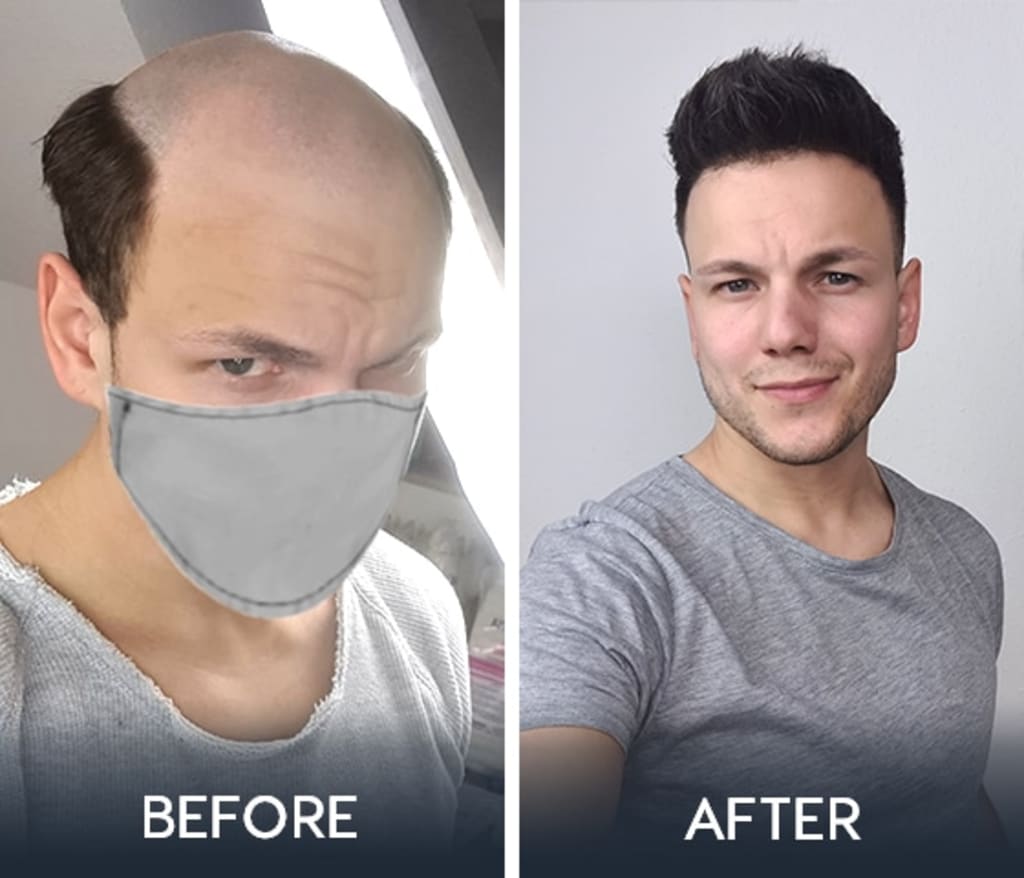
You’ve seen the videos.
A barber snaps a hair unit onto someone’s head like it’s a phone case. A quick blend. A sharp lineup. Dramatic before-and-after. Music swelling.
Then your box arrives.
And it’s just you.
In your bathroom.
Holding something that looks like possibility—and panic.
That was me.
I remember placing the unit on the counter and just staring at it. The base was thin, almost translucent. The hair felt soft and real. It wasn’t a costume. It wasn’t a wig from a Halloween store. It was carefully made—human hair ventilated into a light base, shaped to sit where mine had slowly disappeared.
I had ordered it from NewTimes Hair after weeks of hesitation. Not because of marketing, but because I kept reading quiet, practical discussions about base types, density, trimming, and attachment methods. It felt less like buying hair and more like learning a trade.
But none of that mattered in that moment.
Because I had glue in one hand.
And doubt in the other.
What’s Actually Under the Style
Before I tried installing it, I made myself understand what I was dealing with.
A hair system is simple in theory: a thin base with hair attached. That base bonds to clean scalp. Adhesive holds it. A clean blend makes it disappear.
It’s not magic. It’s mechanics.
Mine wasn’t a full cap. Just a partial piece covering the thinning area. That alone made it feel less overwhelming. Lighter. More believable.
Still, understanding the parts didn’t mean I understood the process.
The Part No One Talks About: Prep
If you fail, you fail here.
My first instinct was to rush. Place it. Press it. Be done.
Instead, I forced myself to slow down.
I shaved the install zone to clean skin. Washed. Dried completely. Wiped the area to remove oil. No shortcuts. I’d read enough to know: clean skin sticks better than “almost clean” skin.
Then I set up two mirrors.
One in front. One handheld.
The back edge is the silent enemy. Everyone focuses on the hairline. But if the back floats, you’ll feel it all day.
I practiced placing the unit without adhesive first. Lift. Place. Lift again. Learn the angle.
It felt ridiculous.
It worked.
Tape, Glue, and the Thin-Layer Lesson
I started with tape around the sides and glue at the front hairline. That combination felt manageable.
Here’s what I learned the hard way: beginners use too much glue.
Too much glue stays wet.
Wet glue makes the unit slide.
Sliding creates panic.
Thin layers win.
I spread a light coat. Waited until tacky. Added another thin coat. Waited again. Then aligned the front hairline carefully—about four fingers above my eyebrows—and rolled it back slowly.
Press. Hold. Breathe.
For ten minutes, I wore a band across the front to keep it flat while it cured.
It wasn’t cinematic.
It was quiet concentration.
The Mirror Moment
When I removed the band and styled it lightly, I didn’t feel shock.
I felt balance.
The geometry of my face made sense again. The proportions that had slowly shifted over the years were restored—not exaggerated, not overly dense, just natural.
And here’s the truth: it didn’t feel like adding something.
It felt like removing distraction.
Maintenance Is the Real Story
No one wants to hear this, but here it is: a hair system is not zero maintenance.
You don’t rip it off. You don’t glob adhesive. You don’t blast it with high heat daily. You don’t drown the base in heavy wax.
Removal matters as much as installation.
The first time I removed it, I almost rushed. Then I remembered: today’s cleanup determines tomorrow’s hairline.
So I went slow. Lifted an edge. Added remover. Waited. Rolled residue off the base gently with my fingers before finishing with a cloth. Washed the scalp thoroughly. Dried fully. No oily shortcuts.
Clean removal is future-proofing.
And hair dryness? That’s the silent killer. When hair gets crunchy, it sheds faster. So I learned simple habits: lukewarm water. Gentle shampoo. Conditioner on mid-lengths, never near the base. Pat dry. Warm air, not hot.
The goal isn’t squeaky hair. It’s soft hair.
The Routine That Saved My Sanity
Perfection is exhausting. Rhythm is sustainable.
So I made it simple:
Front edge check: once a week.
Full clean and rebond: every few weeks, depending on sweat and workouts.
Light styling. Low heat.
After a month, it stopped feeling like a project.
It felt like brushing my teeth.
What It Really Gave Me
The unit itself—crafted with a thin base, natural density, real human hair—was well made. It blended well with what I still had. It moved naturally. That mattered.
But what mattered more was learning I could handle it myself.
The first install took me nearly two hours.
Now it takes thirty minutes.
Not because the product changed.
Because I did.
The internet makes it look instant. It isn’t. It’s prep, place, press, clean up. Respect the sticky stuff. Go slow.
That’s it.
The first time I glued it on, I thought I was attaching hair.
Looking back, I was attaching patience. Discipline. Ownership.
And that part sticks even better than adhesive.
About the Creator
John Brown
Hair loss & scalp health writer sharing research-based insights, industry trends, and practical solutions. Focused on education, not medical advice.
Keep reading
More stories from John Brown and writers in Men and other communities.
More Than Just a "Wig": A Modern Guide to Men’s Toupees and Hair Systems
More Than Just a "Wig": A Modern Guide to Men’s Toupees and Hair Systems Hair loss is a journey that millions of men embark on, often involuntarily. For a long time, the word "toupee" was associated with unnatural, "obvious" hairpieces that sat awkwardly on the head. However, thanks to advancements in technology and craftsmanship, the modern hair system is a game-changer.
By John Brown26 days ago in Styled
Close Friendships
I met Lou in the spring of 2019. I was recently widowed, trying to find my place in the world without my wife of 39 years. I met him on the tennis court. He was the convener of a mixed doubles drop-in session. I was picking up activities I had not done since I was a teenager. The funeral director had warned me that I needed a social network, that otherwise I would just hang around the house and fade away. We had just moved to a new city four months previous, so this was a concern for me. I had written "Tennis? Bridge?" on a note pad as ideas for meeting people.
By Paul A. Merkley2 days ago in Men
Michael Jackson: The Life and Legacy of the King of Pop
Michael Jackson was an American singer, songwriter, dancer, and philanthropist whose impact on popular culture remains unmatched. Known worldwide as the “King of Pop,” he revolutionized music, dance, and visual performance, shaping the modern entertainment industry. With record-breaking albums, innovative music videos, and a career spanning over four decades, Jackson became one of the most successful and recognizable figures in global history.
By Haroon Pasha4 days ago in Men




Comments
There are no comments for this story
Be the first to respond and start the conversation.