
American Man Injected Snake Venom for 20 Years, His Blood May Lead to a Universal Antivenom
Breakthrough Study Shows Broadly Neutralizing Antibodies Against Cobras, Mambas, and Taipans

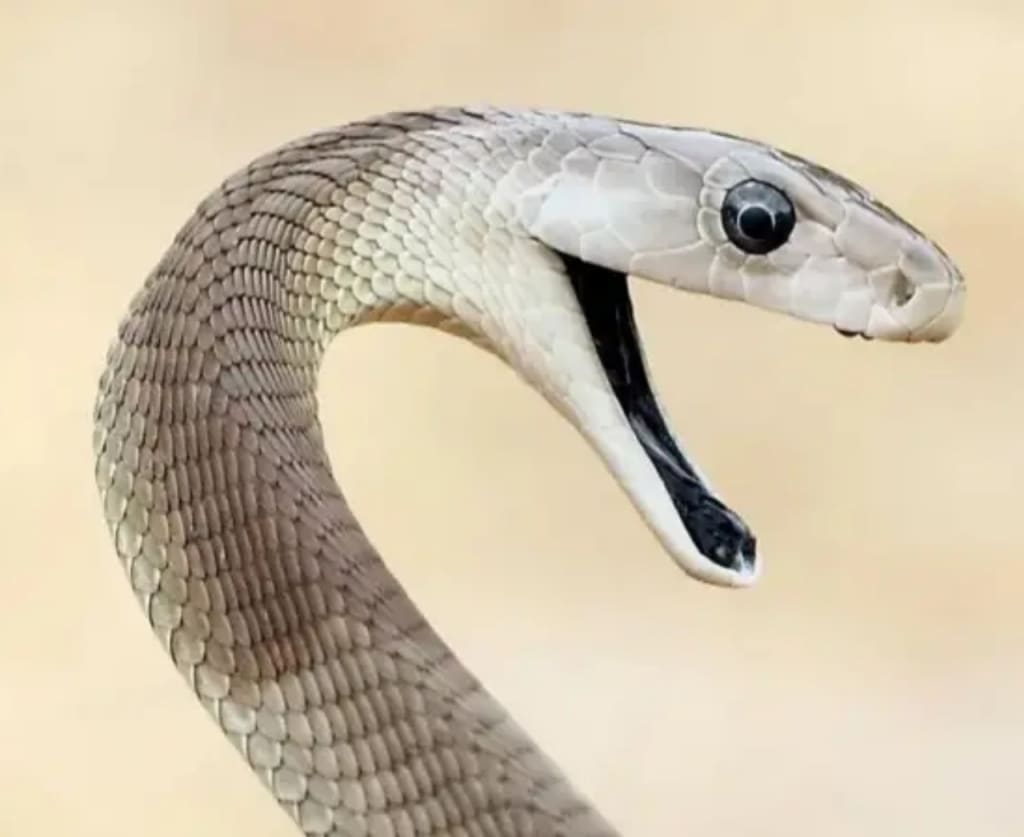
Scientists say that antivenom has been developed from the antibodies of an American man who deliberately injected himself with snake venom for two decades.
Antibodies found in Tim Friede’s blood suggest they may provide protection against the venom of various snakes, whereas current treatments require doctors to know the specific type of snake that bit a person.
Friede’s 18-year mission to find a single antivenom effective against different types of snakebites could mark an important step forward.
It is worth noting that more than 140,000 people worldwide die each year from snakebites or suffer lifelong disabilities as a result.
In total, Friede was bitten by snakes more than 200 times and also received over 700 injections of snake venom, prepared from some of the deadliest snakes such as mambas, cobras, and taipans.
Initially, Friede documented his feats on YouTube and aimed to build immunity to protect himself from snakebites. However, the former truck mechanic said that when he was bitten by two cobras in succession, he fell into a coma.
“I didn’t want to die. I didn’t want to lose a finger,” he said.
Friede says he wanted to find better treatments for the rest of the world. “It just became a part of my life. I kept preparing myself, preparing more and more, for the people who die from snakebites 8,000 miles away from me.”
“I want to study your blood.”
Currently, antivenom is produced by injecting snake venom into animals. The animals’ immune systems then produce antibodies to fight the venom, and scientists extract these antibodies to create antivenom treatments.
However, venom and antivenom must be closely matched because each species’ venom differs from another’s.
Even within the same species, there are wide variations—for example, antivenom developed from snakes in India is less effective against the same species in Sri Lanka.
Researchers began searching for a type of immune defense known as broadly neutralizing antibodies. Instead of targeting the unique components of each venom, scientists focused on the parts common to all venoms.
That’s when Dr. Jacob Glanville, chief executive of the biotech company Centivax, met Tim Friede.
“It immediately occurred to me that if anyone in the world had developed antibodies capable of broadly neutralizing venom, it would be Friede,” he said. “So I contacted him.”
“I told him this might sound strange, but it would be better if we could match against your blood.”
Friede agreed, since the process only involved drawing blood and did not require further venom exposure.
The study focused on one of the two main families of venomous snakes, the elapids, which include coral snakes, mambas, cobras, taipans, and kraits.
Elapids use neurotoxins in their venom, which can cause paralysis or stop vital muscles from functioning.
The researchers selected 19 of the most dangerous elapids identified by the World Health Organization and began testing Friede’s blood.
Details of their work were published in the journal Cell. They identified antibodies that neutralize two classes of neurotoxins.
They also added a drug targeting a third class to create their antivenom cocktail.
This cocktail was tested on mice and protected them against venom from 13 of the 19 snake species. It provided partial protection against the remaining six.
The team is continuing to work on the antibodies and is investigating what a fourth component might be to neutralize all elapid venoms.
The second major group of snakes, vipers, rely more on hemotoxins rather than neurotoxins. These directly affect the blood.
Overall, snake venom contains about a dozen different types of toxins, including cytotoxins that directly kill cells.
Professor Peter Kwong, a researcher at Columbia University, said, “I believe that within the next 10 to 15 years, we will have some effective solution against all types of venom.”
Meanwhile, analysis of Friede’s blood samples continues.
Professor Kwong added, “Tim’s antibodies are truly extraordinary. He has significantly enhanced his immune system.”
The ultimate hope is to develop either a universal antivenom that works for everyone or a single injection effective against elapids.
Professor Nick Casewell of the Liverpool School of Tropical Medicine said the report is new and provides strong evidence.
However, he cautioned that much work remains to be done.
He also emphasized that extensive testing is required before this antivenom can be used in humans.
Friede said, “I feel good being part of an effort to do something positive for humanity. I’m proud of it.
About the Creator
Keep reading
More stories from Pets and animals and writers in Petlife and other communities.
Capuchin Monkey Assaulted at City Zoo: Viral Video Triggers Animal Welfare Investigation
Outrage and Reflection After Monkey Assault Incident at City Zoo In a disturbing incident that has sparked widespread anger and renewed calls for stricter enforcement of animal protection rules, a visitor at a local zoo was caught on camera striking a monkey inside its enclosure. The event, which unfolded on a busy weekend afternoon, has triggered an internal investigation, possible criminal charges, and a broader community conversation about how humans interact with animals in captivity. According to zoo officials, the incident occurred near the primate habitat during peak visiting hours. Witnesses reported seeing an adult visitor lean over a protective barrier and reach into a section of the enclosure where a young capuchin monkey was perched near the glass viewing area. Within moments, the individual allegedly struck the monkey before staff intervened.
By Pets and animals 5 days ago in Petlife
MY CREW
shared affection. "Welcome home, my boys," I murmured, my voice thick with emotion, as I watched you two navigate your burgeoning friendship. The late afternoon sun cast long shadows across the living room, illuminating the dust motes dancing in the air, and for the first time in a long time, my heart felt truly, completely at ease. The journey from the ache of loss to this vibrant, hopeful present had been unexpected, profound, and undeniably beautiful, all thanks to the silent language of love spoken by these magnificent creatures who had found their way into my life.
By Vera Mylesa day ago in Petlife



Comments
There are no comments for this story
Be the first to respond and start the conversation.