
Dog Reactivity on Walks Explained
Your dog isn’t being stubborn — they’re overwhelmed by the world outside

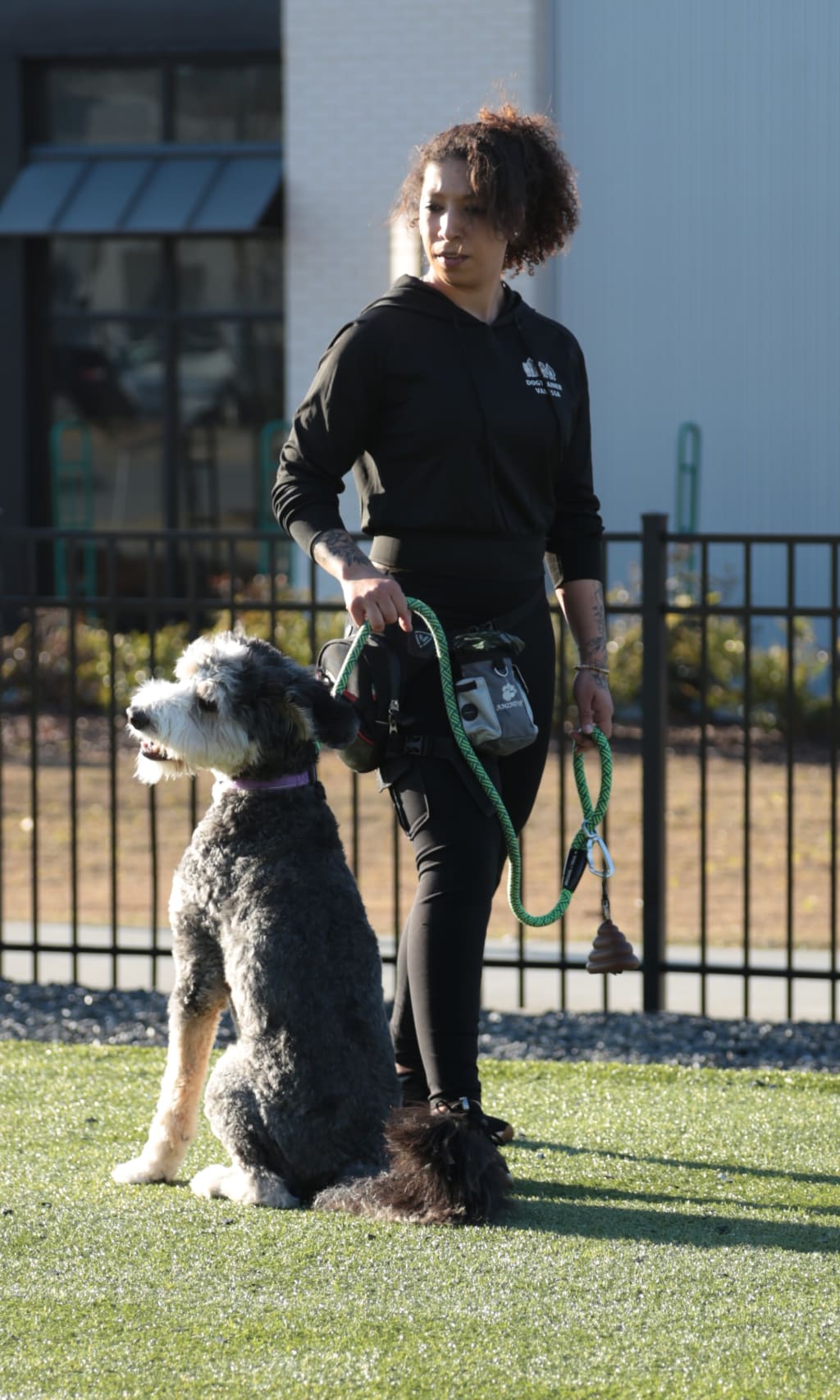
If dog reactivity shows up the moment you step outside, you are not alone. Dog reactivity is one of the most common reasons people reach out to me. For many owners, walks slowly turn stressful instead of enjoyable.
Although it feels personal, dog reactivity is usually not about disobedience. Instead, it is about how dogs experience the world. Outside feels busy, loud, and unpredictable. Because of that, reactions make sense.
The good news is this. Dog reactivity develops over time. That also means dog reactivity can improve with the right plan, patience, and consistency.
What Dog Reactivity Means
Dog reactivity is not one specific behavior. It is a response to something in the environment.
- Some dogs react because they feel unsure.
- Other dogs react because they feel frustrated.
- Some dogs react because everything feels too exciting.
Although the reactions may look similar, the cause behind dog reactivity can be very different. That difference matters when choosing how to train.
Think about people for a moment. One person snaps because they feel stressed. Another snaps because they feel rushed. Same reaction. Different reason. Dogs work the same way.
How Dog Reactivity Often Starts
Dog reactivity usually starts small.
At first, there may be light pulling on the leash.
Later, barking at the window becomes common.
Over time, reactions on walks grow stronger.
Because these signs seem manageable, they often get ignored. Unfortunately, repetition builds habits. As a result, dog reactivity becomes harder to change later.
Common Reasons for Dog Reactivity
Dog reactivity often develops through everyday routines. In many cases, it happens without anyone meaning to cause it.
Lack of Calm Social Exposure
Dogs need calm and structured exposure to the world. Without it, new sights and sounds feel overwhelming.
When dogs do not learn how to stay neutral, everything feels important. Because of that, dog reactivity grows instead of fading.
Socialization That Creates Too Many Expectations
This is very common.
- Meeting every dog.
- Greeting every person.
- Stopping often during walks.
Although this seems friendly, it creates expectations. Dogs start to believe every interaction will happen. When it does not, frustration builds. Over time, that frustration fuels dog reactivity.
Window and Yard Barking
Window and fence barking practice dog reactivity every day.
- A dog appears.
- Barking starts.
- The dog leaves.
From the dog’s point of view, barking works. Because it works, the behavior repeats. Later, the same response shows up on walks.
Pulling That Gets Rewarded
Many dogs learn that pulling leads to good things.
- Pulling toward the dog park may get them there.
- Pulling toward another dog may lead to a greeting.
Even when this works only sometimes, the habit sticks. Inconsistent rewards make dog reactivity harder to reduce.
Too Much Unstructured Play
High-energy play can add fuel to dog reactivity.
When dogs stay excited for long periods, settling becomes difficult. Self-control drops outside of playtime. Calm behavior must be taught on purpose.
What Helps Improve Dog Reactivity
Dog reactivity feels overwhelming. Still, progress is very possible with clear steps.
Teaching Eye Contact
Eye contact helps dogs slow down.
When a dog looks at you instead of a trigger, their body relaxes. Start practicing this skill in calm spaces. Then, slowly add distractions.
With time, this skill supports dog reactivity training by building focus.
Using Clear Feedback
Many owners find it helpful to use a simple marker, such as a clicker. This tool helps dogs understand exactly which behavior earned a reward.
A clicker does not fix dog reactivity by itself. However, it improves timing and communication when used correctly.
Managing Triggers Correctly
Avoiding everything forever does not teach coping skills. At the same time, pushing too close too fast causes setbacks.
Instead, work at a distance where your dog can stay calm. As success builds, slowly reduce that distance. This approach supports learning without overwhelm.
Removing Triggers You Create
- Not every person needs a greeting.
- Not every dog needs interaction.
- Not every situation needs engagement.
Neutral behavior builds confidence. When expectations drop, dog reactivity loses intensity.
Staying Calm and Consistent
Dogs notice small details.
Leash tension sends a message.
Body posture adds pressure.
Inconsistent timing creates confusion.
Because of this, calm handling matters. Predictable actions help dogs feel safe. Safety supports better behavior.
Patience Matters
Dog reactivity does not disappear quickly.
Progress often looks like:
- Shorter reactions
- Faster recovery
- Less intensity
Each small win matters. Together, they lead to real change.
Final Thoughts from a Trainer
Dog reactivity is not a personality flaw. It is a learned response.
When dogs learn better ways to handle the world, reactions fade. Calm grows with repetition. Neutral behavior builds with consistency. Progress happens step by step.
About the Creator
Pup's & Paws
Dog trainer, part-time treat dispenser, full-time translator of canine nonsense. I teach dogs manners and humans patience. Come for the tips, stay for the chaos.
Keep reading
More stories from Pup's & Paws and writers in Petlife and other communities.
Why Your Dog Listens at Home but Not Outside
If your dog listens at home but suddenly ignores you outside, you’re not alone. This is one of the most common reasons people contact me for training help. When a dog listens at home, it means the foundation is already there, even if it doesn’t feel like it once distractions show up.
By Pup's & Paws8 days ago in Petlife
The Summer I Was Chosen by a Northern Mockingbird
During the long, suspended days of the pandemic, a wild mockingbird began visiting my driveway and chose me, again and again. What started as a strange encounter became a brief, meaningful connection that I still carry with me.
By Erica Roberts 29 days ago in Petlife
How to Identify Food Allergies in Dogs: Symptoms, Testing, and Treatment Options
Food allergies in dogs can be frustrating—for both pets and their owners. Persistent itching, upset stomach, ear infections, and skin irritation often leave families wondering what’s really going on. While environmental triggers like pollen or dust are common culprits, food allergies in dogs are also a significant cause of chronic discomfort.
By Independence Veterinary Clinic2 days ago in Petlife


Comments
There are no comments for this story
Be the first to respond and start the conversation.