

As a healthcare practitioner, you know how important it is to use and recommend quality products to your clients or patients. If you choose to use topical pain relievers containing CBD, you want to have a complete understanding of what exactly CBD is and how it can help your patients.
You might also have questions like:
How is CBD different from THC, and what exactly is a cannabinoid?
How does CBD interact with the human body?
What are the benefits of using CBD in topical pain relievers?
How can I be sure the products I buy are of the highest quality?
These questions plus more can be answered in the infographic below:
As discussed in previous blog posts, our bodies contain the endocannabinoid system, made up of cell receptors and corresponding molecules in our bodies’ various systems. When certain cannabinoids bind with key cannabinoid receptors, they relay messages and give cells specific instructions.
Origins of CBD
To understand the origins of CBD, it’s crucial to understand the difference between cannabinoids and phytocannabinoids. As you may already be aware, both bind to cannabinoid receptors within the endocannabinoid system.
However, cannabinoids naturally occur in the body and are not ingested from outside sources. Phytocannabinoids, such as CBD, are cannabinoids found in plants, such as cannabis. When ingested, they bind to endocannabinoid receptors and can also have effects on the body. A perfect example is tetrahydrocannabinol (THC), the phytocannabinoid in the cannabis plant that makes you high. But let’s put that aside for now and simply focus on the botanical evolution of cannabis and CBD.But Where on Earth Did it All Start? (Literally)
Now, let’s talk about the evolution of the cannabis plant. Does the word paleontologist ring a bell? You guessed it – Ross from the TV series Friends! No one really ever understood what Ross’ work was, but paleontologists play a pivotal role in our understanding of our ancestry and the world around us. They examine fossils to learn about extinct organisms and their successions through time.
Ross was all about dinosaurs, but there are many “Rosses” out there who do the same for plants. And they are having quite a hard time assessing the exact period of cannabis evolution, since the cannabis plant lacks a good fossil print. That’s partially because soft organisms don’t leave as good of a print as those that are firm with distinct edges.
However, it’s estimated that Cannabis Sativa and Cannabis Indica emerged 1.05 million years ago.
For years, botanists and agronomists have speculated about the origin of Cannabis Sativa. One of the first known scientists to investigate this was Iraqi botanist, Ibn Wahshīyah, in 904 AD, who suggested its origins might be in India or China.
Later analysts confirmed Wahshiyah’s theory and pointed the plant’s origin to the Níngxià Province, China, and dated it back 19.6 million years. Low and behold, a map of fossil pollen studies constructed with the aid of modern times computer mapping software indeed identified the north-eastern Tibetan Plateau as the origin of the Cannabis Sativa. The plants growing in this harsh geographical region support two hypotheses:
Phytocannabinoids protect plants from ultraviolet light (UVB) at higher altitudes, generated by the Tibetan uplift.
Phytocannabinoids deter vertebrate herbivores (animals that feed on plants).
As you can see, phytocannabinoids are powerful compounds found in plants! What gives them this ability to protect and deter animals away? That would be terpenes, the organic natural compounds within plants. In the case of cannabis, there are 100 known terpenes within the various strains and are what give the plant its various odors.
Sativa plants produce more THC than CBD, and have a sweet, herbal scent. They are native to tropical climates and can grow over 6 meters high.
Indica plants produce more CBD than Sativa, with a THC-to-CBD ratio closer to 1:1. Indica also imparts a skunky, unpleasant odor, likely a defense mechanism to keep the predators at bay. They grow shorter than Sativa and have a denser branch structure.
Ruderalis plants have the lowest levels of THC and have thick, sturdy stems. Native to Central Asia, they are short plants that have adapted to growing in environments without much sun.However, as stated above, the abundant hybridization of these plants over the years has made it difficult to actually obtain their “pure” forms. It seems that trying to categorize cannabis has become pointless. A great example of the arbitrariness of these designations is illustrated by “AK-47,” a hybrid that won “Best Sativa” in the 1999 Cannabis Cup, and “Best Indica” four years later.
Fortunately for us, cannabis has been studied over the course of many years, which allows us to understand its usage and structure, from phytocannabinoids to terpenes to fatty-acids that are good for the skin.
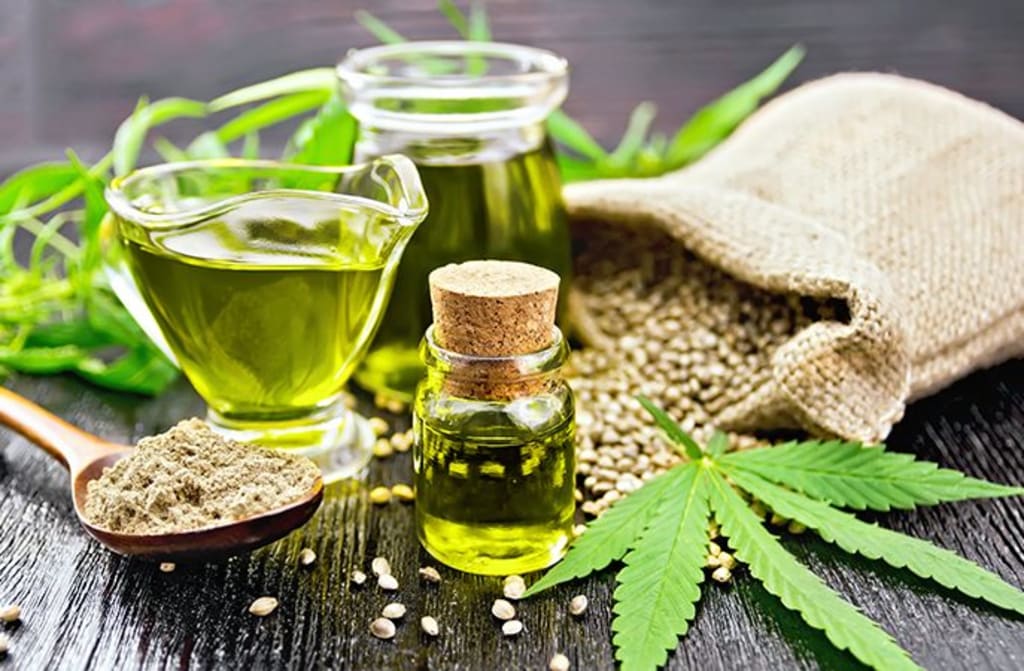
Having knowledge of various phytocannabinoids, such as CBD, and utilizing them in modern-day health products allows for more naturally-derived remedies to enter the market. For instance, CBD CLINIC™ has utilized the existing scientific-backed knowledge to create two innovative product lines sold exclusively to healthcare professionals. We use US-grown high-quality hemp oil or extract from the Cannabis Sativa L. plant in our products, which has been engineered to contain negligible trace amounts of THC (less than 0.3% by law). This means your clients have no risk of failing a THC-drug test or intoxication by using our topicals. You and your clients will benefit from all of the wonderful qualities of hemp that make it a great addition to topical products.
Want to learn more about CBD massage oil? Sign up for our newsletter below to learn more about what CBD CLINIC has to offer you and your patients.

About the Creator
Keep reading
More stories from Justin Lubomirsky and writers in Potent and other communities.
Mindfulness and Yoga Exercises for Kids
The coronavirus pandemic has put our everyday lives on hold, forcing schools to close and kids to spend most of their time inside at home. Even if they have an outdoor space like a backyard available to them, your kid(s) might be starting to go a bit-stir crazy (as you may be, as well).
By Justin Lubomirsky6 years ago in Longevity
Europe in the Vise: Chronicle of a Continent Facing the Three Wills of the World
Every morning, Europe wakes up with the lingering sensation of having shrunk during the night. Not geographically, nor demographically, but symbolically, strategically, and existentially. Around it, three distinct "wills" have risen—three ways of wielding power and relating to the world that have little to do with European slowness, its internal debates, or its moral hesitations. Vladimir Putin, Donald Trump, and Xi Jinping do not form an official alliance, let alone a coordinated conspiracy. Yet, they embody something deeper and more unsettling for the Old Continent: the brutal return of raw, unabashed power, while Europe continues to view itself as a historical exception—a "post-tragic" space that has supposedly moved beyond the law of the strongest. The rest of the world, however, never signed up for this fiction.
By Laurenceau Porte30 days ago in Potent
Choose Your Own Adventure: St Helena Station
*****Preface***** I have been obsessed with Choose Your Own Adventure stories since I was a kid. I credit them with my love of reading and writing. I've been struggling to get my own kids to embrace words the same way I have but they love video games and our occasional Dungeon's and Dragon's game... which gave me an idea. I'll write an interactive story. So far its working; my middle son loves it and can't wait for the next section to come out.
By Sandor Szaboa day ago in Fiction



Comments
There are no comments for this story
Be the first to respond and start the conversation.