collectibles
The best vintage and current marijuana collectables on the web.
.“I Left My Name in a Place That Forgot Me”
I Left My Name in a Place That Forgot Me I left my name in a place that forgot me. Not all at once, not dramatically, but the way dust settles on furniture no one uses anymore—quiet, patient, inevitable. It happened in the city where I learned how to make myself smaller. At first, my name was spoken often. It lived on tongues, warm and familiar. It was called from doorways, written in notebooks, saved in phones with little symbols beside it—stars, hearts, inside jokes only we understood. My name meant something then. It meant me. But places, like people, have short memories. I noticed the forgetting in fragments. A pause before someone said my name, as if searching through a cluttered drawer. A smile that didn’t quite reach recognition. Conversations that continued smoothly whether I was present or not, like I was an optional detail in the background. I became excellent at standing still. The café on Seventh Street used to know me. The barista once wrote my name carefully on every cup, looping the letters like they mattered. Over time, the spelling changed. Then the question disappeared altogether. “Name?” became “Next.” I drank my coffee anyway. At work, my ideas were echoes. I’d say something in a meeting, softly, carefully—always careful—and the room would absorb it without reaction. Minutes later, someone else would repeat the same words, louder, more confident, and the room would light up in agreement. I learned that invisibility isn’t about being unseen. It’s about being seen through. I still showed up. I always showed up. That’s the cruel trick of emotional erasure—you don’t disappear, you just stop leaving an imprint. You sit at tables where your chair could be empty and no one would shift. You speak, and the sound passes through people like light through glass. At night, I walked streets that no longer felt like mine. Buildings remembered everyone but me. Windows glowed with lives continuing, overlapping, moving forward. I wondered how many times I had walked past the same people without them noticing I had ever been there before. I wondered when I stopped being memorable. I left my name everywhere, hoping it would stick. In journals no one read. In messages left on “seen.” In photos where I stood at the edge, half-cropped, half-forgotten. I left it in apologies I didn’t owe and explanations no one asked for. I left it in rooms where I laughed at the right moments and nodded at the right times, performing presence like it was a role I could perfect if I tried hard enough. But the place kept forgetting me. There was a moment—there’s always a moment—when the forgetting became undeniable. A gathering. A familiar room. Familiar faces. Someone asked, “Do you remember when she used to come with you?” She. I was sitting right there. No correction followed. No embarrassment. Just a casual rewrite of my existence. I felt something tear, softly, inside my chest—not pain exactly, more like a thread snapping after being pulled too long. I realized then that I had been grieving myself without knowing it. Grief doesn’t always arrive with funerals and flowers. Sometimes it arrives when you understand that the version of you who mattered in a place no longer exists—and no one noticed when she left. I stopped trying after that. Not in a dramatic way. I didn’t announce my departure or burn bridges. I simply withdrew my name. I stopped offering it up like a fragile gift. I let conversations happen without inserting myself. I let silence sit where my voice used to fight for space. The strange thing about becoming invisible is that it teaches you how loud the world is without you. I watched people interrupt each other, compete, perform. I watched how quickly attention shifted, how easily affection was replaced. I learned that memory is not a measure of worth—it is a measure of convenience. And still, I stayed longer than I should have. Because leaving a place that forgot you feels like admitting defeat. It feels like confirming what you feared all along—that you were never essential, only present. But one day, I understood something else. A place that forgets you is not a place you failed to belong to. It is a place that failed to hold you. So I left. Not physically at first, but emotionally. I stopped anchoring my identity to rooms that refused to remember my shape. I stopped hoping for recognition from people who had already moved on without saying goodbye. I took my name back. I carried it carefully, like something newly learned. I spoke it to myself when no one else did. I wrote it in places that welcomed it—in moments of solitude, in small joys, in the quiet pride of surviving unseen. And slowly, something changed. In new spaces, my name landed differently. It was heard. It was returned. It was spoken without effort. Not loudly, not dramatically—just honestly. I realized then that invisibility is not always about being ignored. Sometimes it’s about being in the wrong light. I left my name in a place that forgot me, yes. But I found myself in a place that didn’t need to be reminded.
By Talhamuhammad12 days ago in Potent
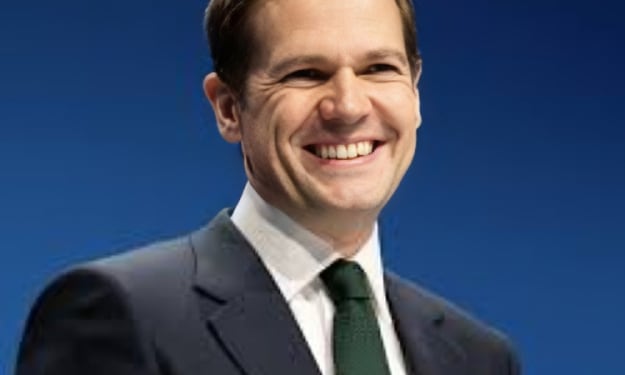
Robert Jenrick
Introduction Robert Jenrick is a well-known British politician. He belongs to the Conservative Party in the United Kingdom. Over the years, he has worked in many important government roles. He is especially known for his views on housing, immigration, and law. Some people support his ideas, while others criticize them, but there is no doubt that he is an important figure in modern British politics.
By Farhan Sayed18 days ago in Potent
What Today's Ultra-Potent Weed Really Means for Your Mind: Beyond the Buzz.. AI-Generated.
Cannabis has undergone a transformation unlike any other recreational drug in the past two decades. The mellow weed of the 1970s had THC (tetrahydrocannabinol) levels of about 2% to 3%, whereas today's strains frequently have potencies that exceed 25%. Dabs and oils, for example, can contain as much as 90% THC. However, despite the fact that headlines scream about "super weed" and its mind-melting potency, focusing solely on potency misses the real problem: our understanding of cannabis has not kept up with its evolution. Yes, today's marijuana is much stronger. However, this does not automatically make it riskier. The fact that we don't know much about how these high-potency strains affect the developing brain, mental health conditions, and long-term cognition makes it dangerous. We have adopted a permissive attitude that frequently overlooks the science—or lack thereof—as cannabis culture enters the mainstream and legalization spreads. Psychological effects of cannabis have been undervalued due to its laudation as a "natural" or "safe" alternative to drugs, alcohol, and opioids. Even though cannabis is physically and addictively less harmful than many legal substances, that does not mean it is harmless. The dangers are real, especially for young users. High-potency cannabis use is linked to higher rates of anxiety, depression, and even psychosis, according to recent research. In 2019, research was published in The Lancet Psychiatry indicating that daily use of high-strength cannabis was linked to a fivefold increase in the risk of developing psychotic disorders, particularly in urban areas where high-strength weed is widely available. Nevertheless, despite this data, many casual users continue to be unaware of the potential effects on mental health. The lack of public understanding is even more troubling. We have barely scratched the surface of understanding how these changes affect the brain, particularly in adolescents, with cannabis now being a lab-enhanced, genetically modified powerhouse. Cannabis interacts with the endocannabinoid system, which is important for brain development, mood regulation, and stress response. During crucial developmental years, regular interference with that system may have ripple effects, which we are just beginning to investigate. The issue of regulation and consistency comes next. In contrast to pharmaceuticals, the potency, chemical composition, and quality of cannabis products can vary greatly, particularly in markets where there is no strict oversight. Users can't always tell what they're consuming, and researchers can't always see clear cause-and-effect relationships because of this inconsistency. So, what concerns should we have? Not only is the weed potent, but we are also flying blind. Our cultural, legal, and medical frameworks haven't changed fast enough to help people with mental health issues related to cannabis, create safety standards, or educate people on responsible use. The nuance has been lost as the conversation about cannabis has shifted from prohibition to normalization. This is not a defense of legalization. In point of fact, legal regulation is one of the few means of ensuring that products are safer, education is improved, and research is more robust. But it is a reason to slow down our enthusiasm for culture and ask better questions. Not "How high can I go with this?" but rather "How will this impact me in the long run?" In the end, the issue is more than just the potency of today's marijuana. The assumption that we already comprehend it is the problem. We are not. And until we do, not only our lungs but also our minds may be at risk.
By Ashfaque Mahmud 🇧🇩10 months ago in Potent
Protection Spell: Shield of Light
You will be protected from psychic attacks, harmful influences, and negative energies with this protection spell. It can be used for personal safety, home security, or even family safety. It involves visualization, chanting, and natural elements to enhance its effectiveness.
By Masaddeque al Shishir11 months ago in Potent
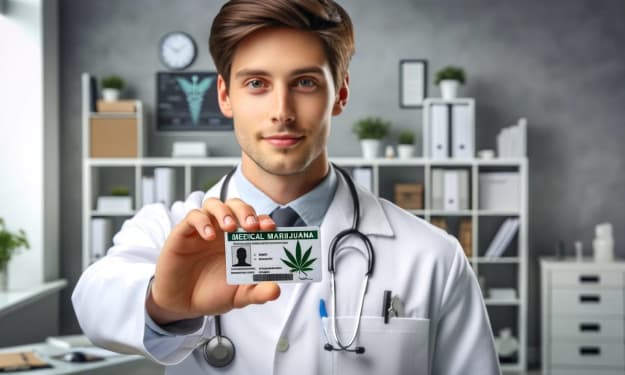
How to Get a Medical Marijuana Card Online: A Step-by-Step Guide
In recent years, medical marijuana has become widely accepted as a viable treatment for various conditions such as chronic pain, anxiety, and epilepsy. Thanks to advancements in telehealth services, getting a medical marijuana card is now more accessible and convenient than ever. If you’re thinking about applying for one, this guide will help you navigate the steps to obtain your medical marijuana card online quickly and legally.
By Get Glass Distributionabout a year ago in Potent
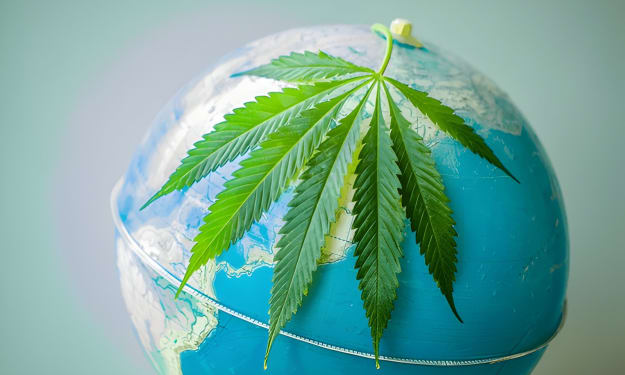
Cannabis Around the World: A Cultural Perspective
The cannabis plant was deeply rooted within the culture of most societies in the world. For centuries, people used it for medicinal, spiritual, and social purposes. From ancient Asian civilizations to current moves toward legalization in the West, cannabis has never stopped being a powerful force shaping the lives and traditions of people worldwide. This blog expands into the fact that other cultures embraced cannabis as part of their tradition and the influence of modern trends in its usage.
By Get Glass Distributionabout a year ago in Potent
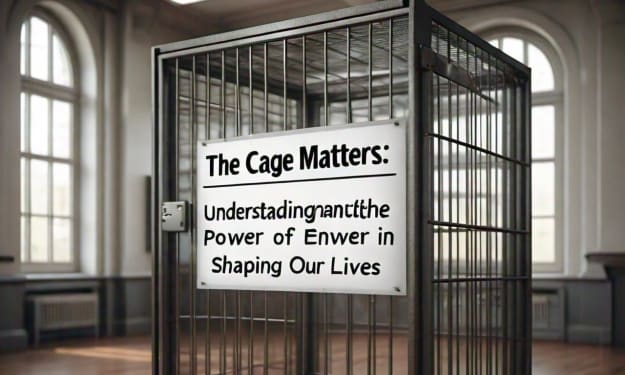
The cage matters: understanding the power of the environment in shaping our lives.. AI-Generated.
The Cage Matters: Understanding the Power of Environment in Shaping Our Lives We often underestimate the impact of our surroundings on our behavior, thoughts, and emotions. However, the truth is that our environment plays a significant role in shaping our experiences and outcomes. The concept of "the cage" refers to the physical and metaphorical spaces we inhabit, and its influence on our lives cannot be overstated. By understanding the profound impact of our environment, we can take deliberate steps to shape our surroundings in ways that foster well-being, creativity, and personal growth.
By John Stephen Izuchukwu2 years ago in Potent