
The Last Whistle
Some journeys don't have a map, only a track that fades into the dark.
The platform wind bit at Arthur’s exposed neck, a cold, wet dog nosing for a weakness. It was a miserable hour past midnight, and the only light came from a single, stuttering lantern hanging precariously from a rusted iron beam. His breath plumed in front of him, thick and heavy, like the fog that usually hugged the river on nights like these. He adjusted the strap of his worn duffel bag, the weight on his shoulder nothing compared to the one pressing behind his ribs, a dull, constant ache that had become his only real companion.
He pulled the crumpled ticket from his coat pocket, the paper soft and damp from handling. 'Destination: Unassigned,' it read. A joke, he figured, or maybe just brutal honesty. Nobody ever really told you where you were going, not truly. You just picked a direction and hoped you weren't walking off a cliff. He hadn't bought this ticket. Found it, actually. Tucked under a loose floorboard in the old office, after the lock was changed and his name was scrubbed from the employee roster. A cruel memento, maybe. A sign. Whatever it was, here he stood.
A low, guttural moan rumbled down the tracks, growing louder, closer. Then the single headlight, a Cyclops eye, pierced the gloom. It wasn’t a sleek, modern contraption, but an old beast of a locomotive, steam hissing from its guts, smoke belching like a dying dragon. Black, rusted, a ghost from another era. It screeched to a halt, a tortured metal groan, right in front of him. The lone conductor, a shadow in a cap pulled low, gave a curt nod, never speaking. Arthur just stared, then walked up the two grimy steps and disappeared into its belly.
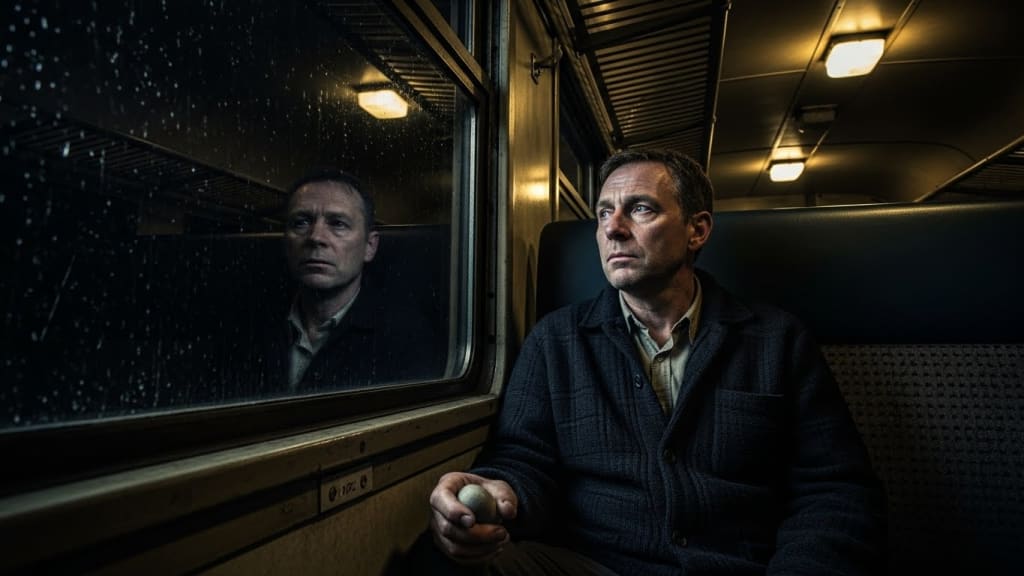
The carriage was cold, colder than the platform. Empty too, mostly. Just three other souls scattered in the dim, flickering glow of the overhead bulbs. A woman wrapped in a shawl, eyes staring straight ahead, unblinking. A man hunched over a newspaper from a week ago, pretending to read. And a kid, maybe seventeen, earphones on, head lolling against the window, already lost to whatever sound was blasting into his skull. Arthur found a seat near the back, by a window streaked with grime, and dropped his bag to the floor with a thud. The seat fabric was scratchy, smelling faintly of stale cigarettes and something he couldn’t quite place – regret, maybe, or forgotten journeys.
The train jerked, then began to roll. Slow at first, a reluctant heave, then picking up speed. The rhythmic click-clack of the wheels on the tracks started, a monotonous drumbeat against the silence of the other passengers. He watched the station lights shrink, then vanish into the ink black night. There was nothing out there now. Just the faint, distorted reflection of his own face in the glass, a stranger staring back, hollow-eyed and tired.
His mind, a broken reel, kept skipping back. The phone call. Her voice, thin, brittle. ‘It’s over, Arthur. I can’t.’ Like a physical punch to the gut. Then the other call, the one from HR, clinical, devoid of human warmth. ‘Restructuring. Your services are no longer required.’ Two blows, one-two, leaving him winded, leaving him with nothing but the four walls of his small, dusty flat and the constant hum of the fridge. He’d stared at those walls for days, felt the slow creep of panic, the dull paralysis. What next? The question had echoed so loud it hurt his ears.
He remembered her laugh, the way her hair smelled like summer rain after they’d been caught in a sudden downpour. Remembered the pride, a sharp, exhilarating thing, when he’d closed that big deal, the handshake from the boss, the promise of more. All gone. Like smoke. He’d tried to hold on, clawed at the slipping edges, but it was all just too smooth, too fast. He hadn’t even known what he was losing until it was already gone. And now this train, this rolling coffin of lost causes.
The wheels kept turning, a relentless, hypnotic cadence. Click-clack, click-clack. The kid was still slumped, the woman still staring. The newspaper man had folded his paper neatly, placed it on the empty seat beside him, and closed his eyes. They were all on this train, he figured, all going somewhere that wasn't a real place. A place for people who'd run out of places. A quiet, forgotten corner of the mind, maybe. A place where you could finally stop pretending.
He pressed his forehead against the cold glass, the vibration a dull thrum against his skull. The darkness outside was absolute, a thick, suffocating blanket. No stars. No moon. Not even the distant glow of a city. Just an endless, featureless void. He felt a weird calm settle over him, not peace, not exactly, but a kind of resignation. The kind that comes when you’ve fought every battle and lost, and there’s just nothing left to do but let the current carry you.
His hand went into his pocket, found the smooth, cool river stone he’d carried since he was a boy. He rubbed it with his thumb, worn smooth by years of worry and hope. It felt lighter now, somehow, than it used to. Everything felt lighter, hollowed out. The train slowed imperceptibly, just a slight easing of its relentless momentum, before it picked up speed again. A momentary hesitation, a false hope. No, it was just the rhythm. Always moving, never stopping. Always to nowhere.
He pulled his hand from his pocket, opened his palm. The stone, dark and unassuming, sat there, reflecting the dim carriage light. He closed his fingers around it, just as the train let out a long, mournful whistle that seemed to stretch into the endless night.
About the Creator
HAADI
Dark Side Of Our Society




Comments
There are no comments for this story
Be the first to respond and start the conversation.