
What Feelings?
How To Recognize Your Past to Heal in the Present


Feelings - Feelings are subjective experiences that can be positive or negative, and can be influenced by sensations, thoughts, images, or situations. Feelings can also involve emotional or moral sensitivity. Merriam-Webster Dictionary
Everyone has feelings. They are part of our human nature. We can't avoid them because they are with us no matter what we do, who we meet, and where we go.
They are our emotional outlet when we are affected by something. They are how we learn. Feelings are all around us, in other people, and in situations that influence us in a positive or negative way.
Trauma survivors have tons of repressed feelings that have been buried. These emotional wounds tether them to the past.
To be able to heal from trauma, survivors must acknowledge their feelings first. There is no other way to begin the healing process, which is not as simple as just remembering a feeling, out of the blue and dealing with it.
So, where do you start? How do you begin to heal when those feelings won't resurface easily because they have been pushed down and forgotten for decades?
Your Complex PTSD brain has made you "forget" because you were too young to understand and handle what was happening to you. The trauma was too much for your young mind to process.
You may have always known that you were abused as a child, or you might be a survivor, like me, who was living in denial. I didn't want to remember my past.
It was too painful, and I was not ready or willing to begin to even try going down into my dark past. I wanted to forget. I tried hard to start living again and keep busy, not feeling anything.
I was fine without my feelings. My brain, on the other hand, had other ideas.
When a survivor becomes an adult and life begins to look up again, you start relaxing. Maybe you start breathing for yourself for the first time, so to speak.
As an adult, the law gives you free will to make your own decisions. It is overwhelming for someone who has never had free will to be living free.
Then, once your body and mind decide that you are in a good place and feel safe, those feelings from your childhood will start resurfacing. It will happen whether you want it to, or not.
You will start experiencing triggers from years, maybe even decades ago that suddenly crash into your newfound freedom.
These feelings can wreak havoc in your now well-adjusted and happy adult mind. That is what happened to me: my feelings resurfaced from a lifetime ago that I thought I had buried firmly in my past.
Unprocessed memories must surface to be dealt with. These trauma memories need to be time-stamped, reorganized, and stored in the correct part of the brain.
Until a survivor deals with these unprocessed memories, they will keep returning. It can be the most embarrassing and inconvenient time to flashback to a traumatic event.
Feelings have no appointment in your busy calendar, and they will not phone you to make an appointment.
No, your feelings just appear - demanding all of your time in that moment.
Feelings from traumatic events can be like a toddler having a tantrum of epic proportions in the middle of the mall. You cannot walk away and are forced to stop and feel.
I started remembering things in my late teens. To begin with, I had nightmares and flashes of darkness and uncomfortable painful feelings.
They evoked a deep fear inside me, and I couldn't make sense of any of it. It was like my mind was making soup of someone else's life from a horror movie.
There was no way these feelings were my own.
I was in denial.
Feelings, whether they provoke negative or positive emotions, need some kind of outlet while we process them.
The first step is to take a leap of faith and realize that these feelings are real. These traumatic events happened, and they happened to you.
It was not a story from a book you read, or a movie you saw. These feelings were from your life, from a long time ago.
I've written about coping strategies from triggers before, but I've never explored our relationship with the arts and music as a way of therapy.
Bringing Music and the Arts into your life, is something that you can do without a therapist. It helped me, and so I'm paying it forward to you - hoping it will do the same for you.
Let me show you how you can have a go at creating without even thinking about it.
Try to close your eyes and allow your body to relax. Focus on your breathing as your body relinquishes the day's stressors away from your body.
Breathe in and out a few times until you are relaxed.
What do you feel?
If you can't think of an answer, then maybe you could draw, paint, play, or sing it?
Whatever those feelings show you in that moment, it might be time to let them out and feel them?
How about giving it a try?
I am a victim of child abuse and trauma and I have always had a love for music and the creative side. When I had no voice, I expressed myself through art and music.
You don't have to be an expert at drawing or creating paintings, you can just experience it through your feelings. Let the art flow through you and create what comes into your mind.
How are those feelings making you feel today?
If drawing and painting are not your thing, then how about listening to music or trying to write? When I was a selective mute as a child, I spoke through my own comic pictures and then eventually added words to my pictures.
In addition, I often sang to myself or hummed tunes, and I liked to drum my hands on my legs when I sat on my feet.
As an adult, my love for the arts and music has followed me. Once I started remembering feelings from my painful past, I picked up my flute or my guitar and let the music flow through my fingers.
I sometimes played for hours until my fingers got blisters, but I felt better. The music helped me deal with those dark memories of my past until I could make sense of them. I could then start writing my feelings in my journal.
Once I had got to this point in my healing, I realized I needed to get professional help to deal with my past.
I still play music today and I write every single day. It is important to acknowledge your feelings no matter what they are.
No feeling is wrong, they just are.
We need our feelings to process the world around us, and when we do, we feel better. My therapist encourages me to use music and writing to heal in between sessions.
I adapt my music to suit the mood I am in. Sometimes, music and art are not enough because I need more. That is when I turn to sports like running. The beat of the music in my earbuds and my pounding feet on the ground feel great after a hard day at work.
What do you think is your best self-regulating therapy to keep your feelings in check?
Are you like me and turn to music, arts, and sports? Or, do you find yourself doing something else to process emotions?
Whatever you do and wherever you are, be kind to yourself. Remember that you do matter, and feelings come and go.
My name is Lizzy. I'm a trauma survivor, a wife, a mom, a teacher, and an author.
If you enjoy reading about what it's like to live after trauma, then please follow me.
For more about me: www.elizabethwoodsauthor.com
Support my writing:
https://www.paypal.com/donate/?hosted_button_id=5GDPYPE5W5XCW
Thank you for buying me a coffee to encourage me to write more educational, engaging, and inspiring stories.
About the Creator
Elizabeth Woods
My name is Lizzy and I'm an author, elementary school teacher and an MFA creative writing student. I write emotion-filled fiction narratives for people who have no voice like trauma survivors. This is my website: elizabethwoodsauthor.com
Keep reading
More stories from Elizabeth Woods and writers in Psyche and other communities.
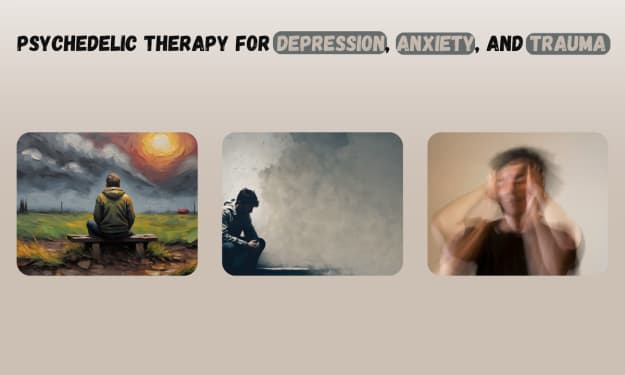
Psychedelic Therapy for Depression, Anxiety, and Trauma
For people who have tried talk therapy, medication, journaling, meditation and still feel stuck psychedelic-assisted approaches can feel like an unexpected opening. Not a shortcut, not a miracle, but a different way of working with the mind when conventional paths fall short. Interest continues to grow because these therapies don’t aim to suppress symptoms; they invite people to understand them.
By Adrienne D. Mullins8 days ago in Psyche
Why Black History Matters in America?
The United States of America is celebrating their 250th anniversary in 2026. I'm proud to be an American and as someone who was born here, I wouldn't imagine myself living anywhere else. This is a country where opportunities are possible. Where anyone can be successful in anything they desire to do. Equality, community, and togetherness are the backbones of what America is and should be about. However, we have an administration who wants to erase and disregard those who have made positive, meaningful impacts in our country, specifically Black figures, such as Martin Luther King, Jr., Rosa Parks, and Maya Angelou. President Trump and his administration have been constantly complaining and fighting against what they call the "Woke agenda". They use this excuse as a distraction from other issues they refuse to address, such as the high cost of living, climate change, and inflation. That equality is dividing America, when in reality, it's bringing us together. Being woke is not tied to a specific political party. No matter where you stand on the political spectrum, you can still care about other people and their plights. Compassion and empathy for others isn't tied to a political party, either. We were taught as children to treat others the way we want to be treated and not judge others because they're different from us. Caring about others isn't a personal attack on your beliefs. It doesn't make you any less of a person. People who are easily offended over African American figures, past or present, or anything related to it, are grasping at straws. Current and future generations need to know who people like Harriet Tubman and Shirley Chisholm were, especially in the classroom. Black History is part of American History. It should be recognized, not hidden or forgotten. Besides, you can't shield children from everything, just because your feelings are easily hurt.
By Mark Wesley Pritchard 3 days ago in The Swamp



Comments
There are no comments for this story
Be the first to respond and start the conversation.