
Wit Enough to Wound, Not Enough to Heal
~My counsel saves many, save the one who speaks it!
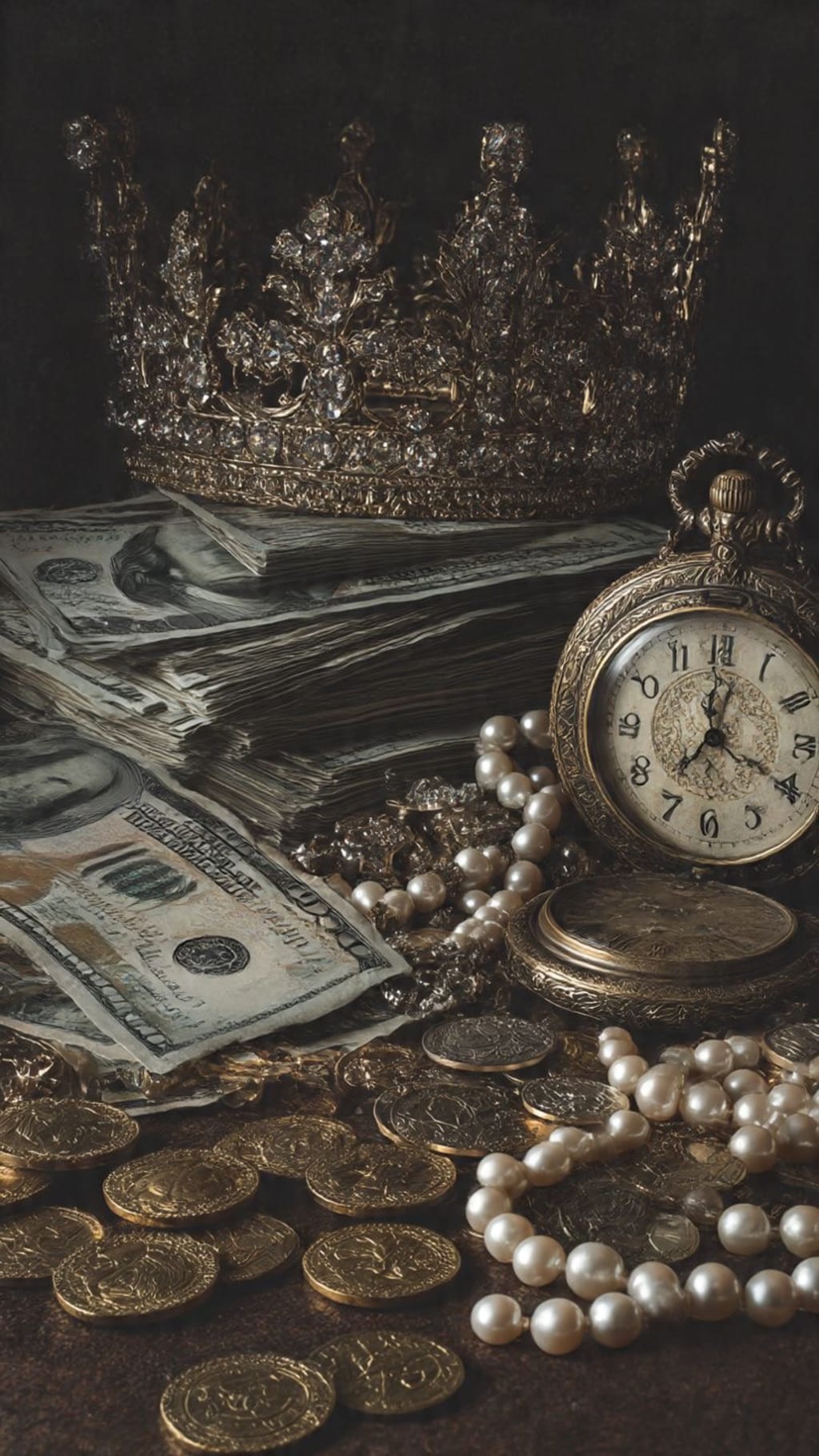
Darkness covers all around, but who said that it is meant to be feared?
My mind feels like a blank canvas from a distance. Quiet. Empty. Easy to misunderstand. But when I look closer, I see scattered washes of color—bits and blots of water-painted shapes, overlapping and unfinished. They look like fragments of many miniature drawings. Each one holds meaning, yet none of them explain the whole. Sometimes I think that if there were time, we could open them one by one and try to understand what they’re saying. I know it wouldn’t be possible to sort them all, but at least we could try. But I forgot—you have no time.
So, I keep my mind mostly shut. I open it only to myself, because I can untangle some of these things on my own. Or at least, I tell myself that I can. The truth is, every time I open one image, the others begin to blur and distort. The colors bleed into each other. The shapes lose their edges. And then I get caught inside them. I don’t know if this is how understanding works for me—whether clarity comes slowly, or whether it arrives only after the confusion has had its say. For now, I sit with the canvas as it is. Not empty. Not finished. Just waiting.
I tried to empty myself of it—pressed the noise louder, filled the silence with anything I could reach—but the feeling only sank deeper, like water bleeding into paper and warping the lines I once trusted. I’ve been inside this room so long that time feels diluted, the walls knowing my breath better than the sky ever did, and it scares me how distant the outside has become when I once belonged to roads and wandering and open air. I feel surrounded yet untouched, as if I’m being seen without being met, and when nothing inside me feels understood, solitude starts to resemble mercy.
So, I stay folded inward, telling myself that stillness might untangle what movement never could, yet every time I open one thought the rest blur and smear, colors losing their edges, meanings dissolving into each other, and I find myself sinking—not forward or back, just deeper into the canvas. I don’t know if this is healing or a quieter way of disappearing, if fixing myself means breaking open or learning how to let something breathe, but for now I remain suspended—neither empty nor whole—holding everything, explaining nothing.
Every passing day, every passing breath seems to add weight to what I carry, though it doesn’t sit with me constantly—it comes and goes, and that scares me almost as much as the heaviness itself. I never know which version of me will surface, which edge I’ll wake up standing on, and I’m frightened by how easily I shift without warning. The name I’ve learned for it—borderline personality disorder—makes sense in a way that feels too precise, because I am always on the border, always on the verge of replacing myself with another version that takes control.
Sometimes, I am light and jolly, sometimes terrified, sometimes flamboyant, paranoid, angry, burning with rage, or sinking into sadness, or lifted into a brief, blinding euphoria. I’ve lost track of how many versions there are now. My memory feels fogged, unreliable, and the forgetting makes everything harder—harder to anchor myself, harder to leave these states once I settle into them, because I play the role so convincingly until someone points out that I’ve changed, or until I catch myself acting unfamiliar, like I’ve walked into my own life mid-scene. Waking up inside this constant internal drama is exhausting, and some days the sheer effort of holding myself together feels like more than I know how to give.
I know I am sharper than most minds around me, and that awareness itself becomes a burden—I avoid conversations that feel careless or hollow because listening to nonsense exhausts me, especially when I know it won’t be understood no matter how patiently I explain. I despise dishonesty, hate the way lies and manipulation rot trust, yet I catch myself performing the same contradictions, playing quiet games to get what I want or maybe just to escape the weight of being exactly who I am.
Sometimes, I rewrite myself entirely—claim a different place of origin, borrow a life I once imagined, hide my real edges behind a carefully chosen mask—speaking as someone else because it feels safer than standing fully inside my own truth. I keep my identity fluid, shifting, obscured, as if revealing where I’m from or who I truly am might pin me down in a way I can’t survive. And somewhere between the frustration with others and the deception I turn inward, I wonder if I’m running toward a dream or running away from my originality, afraid that if I stop performing, there will be nothing solid left to hold me together.
My only anchor feels like my love for my to-be husband, yet even that trembles sometimes, because he too seems caught in the same endless race—chasing money, following paths carved into him long before he could question them, moving within the neat cages of what life is supposed to look like. I watch him run and wonder if he knows he’s wearing shackles, or if comfort has made them invisible. And maybe that’s where my loneliness sharpens—I feel misplaced in time, like my soul belongs to an older era where life was slower, deeper, less manufactured.
Everywhere I look, people move like synchronized machines, different faces but identical objectives, ticking along the same timelines, measuring existence in milestones and outcomes rather than meaning. I stand among them feeling ancient and out of sync, aching to live rather than function, terrified that even the person I love might drift further into the rhythm of the world while I remain standing still, listening for something real in a crowd that no longer knows how to pause.
If this is happening because my mind moves too fast, because I see too much and connect too many things at once, then I keep wondering what the point of being clever even is, if it only ends with me trapped inside my own head. I ask myself whether this is the cost of thinking differently from most people—whether everyone who stands a little off the common path eventually finds themselves isolated there, aware but powerless. That awareness is what hurts the most: I can see my problems clearly, name them, dissect them, understand their roots, and yet I remain unable to resolve them, which leaves me feeling helpless and, at times, deeply angry. It feels cruel to be smarter than the pain and still ruled by it. What confuses me even more is how easily I show up for the one I love—how naturally solutions form when he asks for help, how instinctively I guide him out of his storms, finding exits and alternatives with clarity and patience. For him, my mind becomes sharp and generous, a tool that works. For me, it turns inward and knots itself, as if the compassion and intelligence I offer others refuse to recognize me as someone equally deserving of rescue.
So, I end these pages not with an answer, but with a vigil—standing watch over my own mind like a kingdom divided against itself. To think deeply is both my crown and my curse; my thoughts outrun my peace, and my reason sharpens the blade that turns inward. I know the truth of my wounds, yet knowing is no salve, only sight, and sight without rest is torment. I lend my light freely to those I love, guiding them through their night, while I remain awake in my own, asking why wisdom deserts its maker.
Perhaps, this is the bargain of such a mind—to see the storm before it breaks and still be soaked by the rain. If fate insists, I dwell upon the edge, then let me at least speak it plainly: I am not broken, only besieged; not lost, only wandering in too much knowing. And like all dark hours that dare call themselves eternal, I wait—patient, wary, resolute—for the dawn that must, in time, remember my name.
~Yours Truly
About the Creator
Keep reading
More stories from writers in Psyche and other communities.
Can I trust a chatbot with my mental health?
The author used artificial intelligence in the crafting of this report. An increasing number of Americans has turned to artificial intelligence when in emotional distress, according to a survey by the National Alliance for the Mentally Ill and Ipsos. While many argue this is providing important access to information, NAMI wants to make sure the responses AI generates are accurate, sensitive and don’t cause harm.
By David Heitz7 days ago in Psyche
Self Help: Grifters' Gospel
On Self-Help, Snake Oil, and the Illusion of Change Psychology professionals and students can be imagined on two opposite sides of a line called self-help books: likely a larger group opposes pop-science and step-by-step manuals filled with talk of success, journaling, and not giving a f**k; others love them, but they aren’t many.
By Avocado Nunzella BSc (Psych) -- M.A.P 6 days ago in BookClub



Comments
There are no comments for this story
Be the first to respond and start the conversation.