
Empowering the Disaster Management Crew
Building Resilient, Tech-Driven and Future-Ready Emergency Response Systems
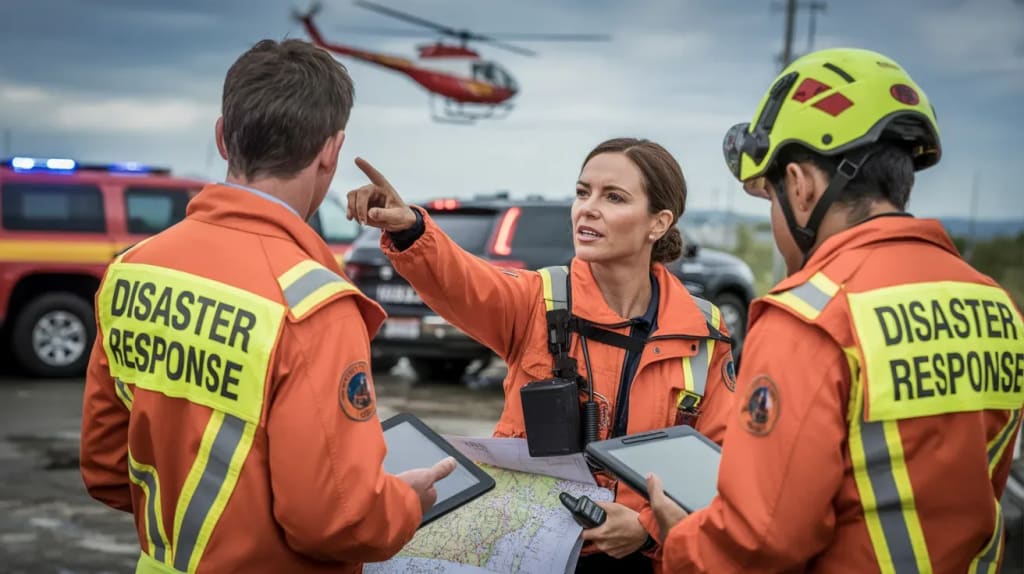
In today’s high-risk world, empowering the disaster management crew is no longer optional—it is a strategic necessity. Climate change, rapid urbanization, pandemics, industrial accidents, and extreme weather events have significantly increased the frequency and intensity of disasters. Emergency response teams are expected to act within minutes, make high-stakes decisions, and coordinate complex operations under pressure.
Empowering disaster management professionals requires more than basic training. It demands advanced technology integration, operational preparedness, mental resilience, leadership development, infrastructure modernization, and data-driven emergency planning.When disaster response teams are fully equipped and supported, they reduce casualties, protect critical infrastructure, and accelerate recovery efforts.
This in-depth guide explores how governments, institutions, and organizations can strengthen disaster response capacity through modern strategies aligned with search intent, operational excellence, and long-term resilience.
Understanding the Role of a Disaster Management Crew
A disaster management crew typically includes:
- Emergency responders
- Search and rescue teams
- Medical personnel
- Fire and civil defense units
- Crisis communication officers
- Logistics and supply chain coordinators
Their core responsibilities include risk assessment, emergency preparedness, evacuation planning, search and rescue operations, medical response, relief distribution, and post-disaster recovery.
Empowering these professionals improves operational readiness, inter-agency coordination, and community resilience.
Why Empowering the Disaster Management Crew Is Critical
Global disaster risks are becoming multidimensional. Floods, earthquakes, wildfires, hurricanes, technological failures, and health emergencies often overlap, creating compound crises.
Empowered disaster response teams help:
- Reduce emergency response time
- Improve coordination across agencies
- Minimize infrastructure damage
- Ensure public safety
- Strengthen disaster risk reduction (DRR) systems
Preparedness directly impacts survival rates. A trained and technologically equipped crew can make the difference between chaos and controlled response.
Advanced Training and Capacity Development
Continuous skill enhancement is the foundation of disaster response empowerment.
1. Scenario-Based Simulation Training
Realistic disaster simulations—such as earthquake drills, chemical spill responses, and mass casualty exercises—improve decision-making under pressure. Simulation-based learning enhances adaptability and operational accuracy.
2. Technical Rescue Certification
Training in collapsed structure rescue, water rescue, hazardous material handling, and emergency medical care builds specialized expertise.
3. Incident Command System (ICS) Implementation
A structured command hierarchy ensures accountability, role clarity, and effective crisis leadership during emergencies.
4. Cross-Border and Inter-Agency Exercises
Joint drills with neighboring regions and international agencies improve coordination during large-scale disasters.
Capacity development ensures teams remain competent, confident, and crisis-ready.
Leveraging Technology to Strengthen Disaster Response
Modern disaster management depends heavily on smart technology and real-time intelligence systems.
Real-Time Monitoring and Early Warning Systems
Satellite imagery, weather forecasting models, and Geographic Information Systems (GIS) provide accurate risk mapping and hazard prediction.
Artificial Intelligence and Predictive Analytics
AI-powered systems analyze historical disaster data to forecast patterns and optimize resource allocation.
Drones and Robotics
Unmanned aerial vehicles assist in damage assessment, victim location, and delivery of emergency supplies in hard-to-reach areas.
Digital Communication Platforms
Secure communication networks, emergency mobile apps, and centralized dashboards reduce misinformation and ensure seamless coordination.
Integrating advanced technology significantly enhances operational efficiency and situational awareness.
Mental Health, Wellbeing, and Workforce Sustainability
Disaster response environments are physically exhausting and emotionally intense. Long working hours, traumatic exposure, and high-risk conditions can lead to burnout and post-traumatic stress.
Empowering disaster management crews includes:
- Psychological counseling services
- Stress management workshops
- Peer-support programs
- Rotational duty schedules
- Post-mission debriefing sessions
A mentally resilient workforce performs better under pressure and maintains long-term effectiveness.
Infrastructure Modernization and Equipment Readiness
Modern equipment and logistics infrastructure are critical for operational success.
Key investments should include:
- Advanced rescue vehicles
- Thermal imaging devices
- Portable field hospitals
- Emergency power generators
- Satellite communication tools
- Personal protective equipment (PPE)
Outdated or insufficient equipment slows response operations and increases safety risks. Modern infrastructure ensures speed, safety, and reliability.
Data-Driven Decision Making in Disaster Management
Accurate data is essential for effective disaster risk reduction and crisis management.
Data-driven disaster response enables:
- Real-time tracking of affected populations
- Monitoring of relief distribution
- Resource optimization
- Post-disaster performance evaluation
Centralized data platforms improve transparency, accountability, and strategic planning for future emergencies.
Strengthening Community Engagement and Public Awareness
Disaster management is not limited to official agencies. Community participation plays a vital role in emergency preparedness.
Community Preparedness Programs
Public education campaigns teach citizens how to prepare emergency kits, follow evacuation plans, and respond to early warnings.
Volunteer Response Networks
Local volunteers can assist in relief distribution and information dissemination.
Public-Private Partnerships
Collaboration with telecommunications providers, transport companies, and logistics firms strengthens supply chains during crises.
An informed and prepared community reduces panic and supports efficient disaster response operations.
Policy Framework and Institutional Support
Government support is fundamental to empowering the disaster management crew.
Key policy measures include:
- Sustainable funding for emergency preparedness
- National disaster risk management frameworks
- Climate adaptation policies
- International cooperation agreements
- Regulatory standards for emergency infrastructure
- Strong governance ensures continuity, scalability, and long-term disaster resilience.
- Climate Change and Future Risk Preparedness
Climate-related disasters are increasing globally. Floods, heatwaves, droughts, and wildfires require integrated climate-resilient strategies.
Future-focused disaster management must prioritize:
- Early warning systems
- Urban flood mitigation plans
- Coastal defense infrastructure
- Sustainable land-use planning
- Green infrastructure development
The Future of Empowering the Disaster Management Crew
The next generation of disaster response will combine human expertise with intelligent systems.
- Emerging trends include:
- Smart emergency operation centers
- AI-powered crisis dashboards
- Drone swarm search technology
- Cross-border emergency collaboration
- Blockchain-based relief tracking systems
- Innovation, training, and collaboration will shape the future of disaster management systems worldwide.
FAQs
1. What does empowering the disaster management crew involve?
It includes advanced training, modern technology, mental health support, policy backing, and infrastructure development.
2. How does technology improve disaster response?
Technology enables real-time monitoring, predictive analysis, efficient communication, and faster rescue operations.
3. Why is mental health support important for disaster responders?
It prevents burnout, reduces trauma impact, and maintains operational performance during high-stress situations.
4. What role does community engagement play in disaster preparedness?
Community awareness improves cooperation, reduces panic, and strengthens overall emergency response efficiency.
5. How can governments enhance disaster management capacity?
Through funding, policy reforms, climate resilience planning, inter-agency coordination, and technology investment.
Conclusion
Empowering the disaster management crew is a comprehensive process that integrates training, technology, leadership, policy, and community resilience. In a world facing increasing environmental and technological risks, preparedness is the most powerful defense.
By investing in human capacity, digital innovation, and sustainable planning, nations can create resilient emergency response systems capable of protecting lives, infrastructure, and future generations. Empowered disaster management teams are the foundation of safer, stronger, and more resilient societies.
Find the article interesting? Visit our other blogs.
About the Creator
Backlinks Cart
Mohsin (CEO BacklinksCart Agency).
Check Our Agency Backlinks Platfrom " Backlinkscart.com"
For any edits or link insertions. Whatsapp" +92 309-1821105"
Gmail: [email protected]
Keep reading
More stories from Backlinks Cart and writers in Serve and other communities.
ChatPic.org Platform Analysis: Speed, Privacy & Sustainability in Image Hosting
Introduction In the modern internet landscape, visual communication has become central to how people interact online. Whether in gaming forums, tech communities, educational discussions, or private chats, images are now used as fast carriers of information. Screenshots explain problems instantly, memes communicate humor within seconds, and visual references simplify complex ideas.
By Backlinks Cartabout 19 hours ago in Photography
The Missing Ingredient
The first time I saw her, she was wearing a velvety, red ribbon in her hair. She carried a small leather backpack everywhere. She searched the forest by turning stones, checking beneath shrubs, listening to the wind as if it might carry an answer.
By Imola Tóth6 days ago in Fiction




Comments
There are no comments for this story
Be the first to respond and start the conversation.